According to the recent research by Mailgun, about 39% of email senders seldom or never clean their email lists. The results aren’t immediate, but one day bounce rates spike, replies drop, or emails start landing in spam folders. That’s usually the moment marketers start looking for an email verification tool to deal with consequences.
But what if they could prevent them?
This guide explains why email verification is important and how to build it into your workflow before low-quality data starts costing you money.
TL;DR: Why verify email address lists?
Here’s why you should consider verifying your email list in the near future:
- Sending emails to invalid addresses increases bounce rates, damages your sender reputation, and makes it harder to reach the inbox.
- The benefits of email verification include better deliverability, stronger sender reputation, and fewer spam-related issues. Clean lists also produce more reliable open, reply, and conversion metrics.
- Best practices include verifying email addresses at signup, running bulk verification 24–48 hours before major sends, and re-verifying your database every 3–6 months.
Bottom line: The cleaner your email list, the more likely your messages are to reach real prospects, land in the inbox, and generate results.
What is email verification?
Email verification is the process of validating email addresses before sending a campaign. The purpose of verification is to remove invalid and high-risk contacts from your list, helping you protect your sender reputation and achieve better email marketing results.
While it’s possible to verify emails manually by checking their syntax or searching for them online, I don’t recommend this approach. It’s much more reliable to use special tools to run the process automatically.
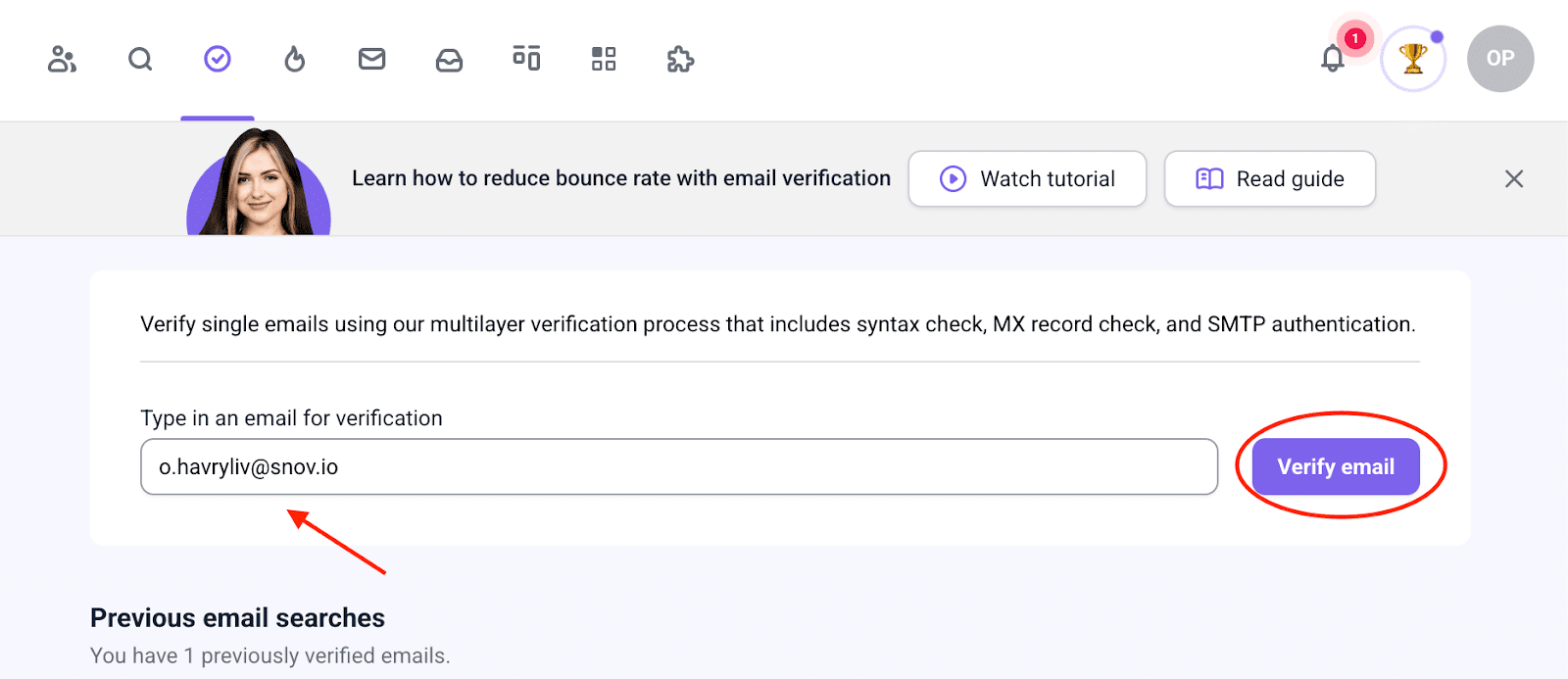
Verification tools like Snov.io perform a series of technical checks. They verify the domain, check mail server availability, confirm mailbox existence, and identify potential risks before you launch your campaign.

Why is email verification important?
Your email list degrades every year. People change jobs, companies shut down, and prospects might type a fake address into your signup form just to grab the discount. That means a list you built 12 months ago could already have thousands of invalid addresses on it. The worst part? You might not know this until your deliverability takes a hit.
It’s natural that email lists decay. You can’t control it. What you can control, however, is how often you verify your email list to keep the number of invalid contacts to a minimum. I recommend that users clean their lists every 3-6 months to maintain strong email deliverability.
Email Deliverability Specialist

For B2B teams, this decay is even faster because job shifts happen constantly. The business email someone gave you 6 months ago may now bounce straight back, signaling to mailbox providers you are not a credible sender.
Over time, those signals add up until your sender reputation and inbox placement rate drop.

The real benefits of email verification
The quality of your email list affects nearly every email marketing metric, from bounce rates and deliverability to engagement and revenue. Below are what you gain when you verify email lists regularly.
Your sender reputation stays intact
Mailbox providers keep score. Every time you send to an invalid address, it counts against you, resulting in hard bounces, landing in the spam folder, or worse, being blacklisted entirely.
Email verification removes the addresses most likely to trigger those negative signals, so your reputation stays high over time.
Bounce rates drop dramatically
One of the clearest benefits of email verification is its impact on your bounce rate. A hard bounce rate above 2% is critical – exceeding it prompts email service providers (ESPs) to monitor you closely. Hit it repeatedly, and you’ll face sending restrictions.
A clean, verified list keeps bounce rates low and inbox placement high.
You avoid spam traps
Spam traps are email addresses set up specifically to catch senders with poor list hygiene. They look like legitimate addresses, but sending to them can get your domain blacklisted surprisingly fast.
Verification helps identify these risky addresses before they become a problem, which is one of the biggest reasons why email verification is important.
You get more accurate analytics
Invalid emails can compromise engagement metrics, making open, click-through, and reply rates less representative of your actual audience. This means every optimization decision you make is based on distorted data.
Verification removes that dead weight and gives you metrics you can actually trust and act on.
You stop wasting money
Often, email platforms charge based on the number of contacts or emails sent. Sending to thousands of invalid addresses doesn’t just hurt deliverability — it’s money you’re spending for zero return.
Verification ensures your budget is going toward reaching real people rather than dead inboxes.
You get more conversations, hence more opportunities
For sales teams, every verified contact is another potential decision-maker you can reach, which means more replies, meetings, and deals. For marketers, it means better engagement and campaigns that justify the effort put into them.
The importance of verification becomes especially clear when you consider the downstream impact on revenue, not just on deliverability.

Which metrics tell you whether your list needs cleaning
Here are a few numbers that make it easy to diagnose whether your list needs attention:
- Bounce rate — If it’s above 5%, your list needs proper hygiene.
- Deliverability rate — If it consistently falls below 90%, that’s a sign it’s high time to verify your email list.
- Spam rate — If it’s above 2%, it’s a warning sign that something may be wrong with your email list.
- Open and reply rates — When these metrics trend downward over time, you’d better validate contacts on your list.
As you can see, regular monitoring of email engagement and deliverability metrics is important to catch the moment when you should pay closer attention to the quality of your list.

How to choose an email verification tool
Before committing to one verification tool, I recommend looking at the following factors:
- Accuracy — Look for 98% or above. Anything lower and you’re still sending to a meaningful number of bad addresses.
- Verification depth — The more steps the verification process includes, the fewer invalid contacts will slip through and end up hurting your campaign performance.
- Bulk verification — If you have large lists, you can’t do without fast, reliable batch processing.
- Real-time API — Tools that offer this functionality will enable you to verify addresses the moment they enter your system, not just after the fact.
- CRM and platform integrations — Verification should feed directly into your existing tools without manual exports and imports.
- GDPR compliance — It’s non-negotiable if you’re working with contacts in the EU.
If you need a reliable email verification tool right away, Snov.io covers all the above factors. With it, verified lists consistently hit 98%+ accuracy, bounce rates stay below 2%, and the bulk verifier can handle up to 100,000 contacts at a time.
→ Want the list to choose from? Read my honest review of the best email cleaning services in 2026.
How to implement email verification in your workflow
The purpose of verification isn’t just a one-time list clean; every email needs verification at multiple points as it moves through your pipeline.
Add real-time validation and double opt-in
Don’t let low-quality addresses in to begin with. Snov.io’s verification API integrates with web forms, checking each address as soon as it’s submitted.
But even a valid email address doesn’t necessarily belong to someone who wants to hear from you. For this reason, consider making double opt-in part of the whole process. With this approach, new subscribers receive a confirmation email and must click a link or enter a code before being added to your list.
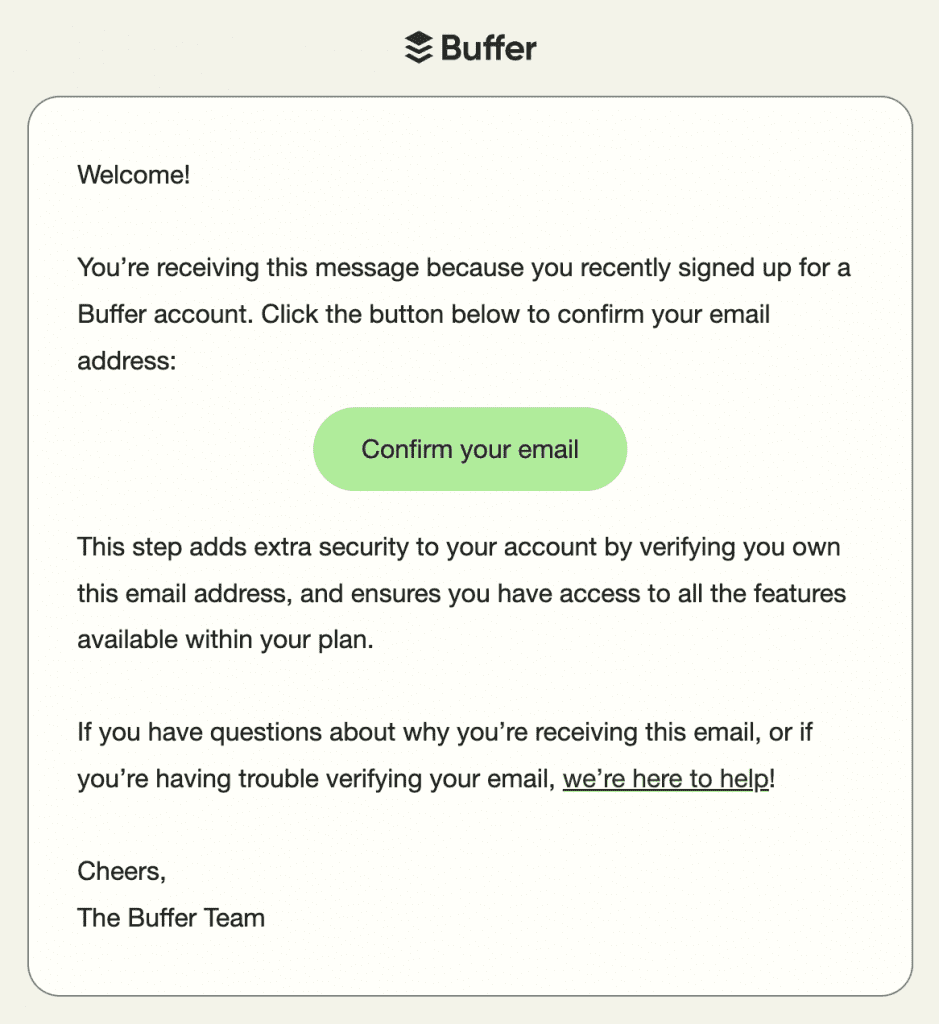
Anyone who doesn’t confirm (whether they made a typo, entered a fake address, or just wasn’t genuinely interested) never makes it in.
Sure, you’ll end up with a slightly smaller list, but one that bounces less and engages more.
Run bulk email validation before major campaigns
Even with real-time validation in place, existing lists pick up invalid data over time. Verify your list 24 to 48 hours before any major send.
Here’s how to do it with Snov.io, for example:
Go to the Verifier in your Snov.io dashboard, select Bulk Verification, and upload your list.
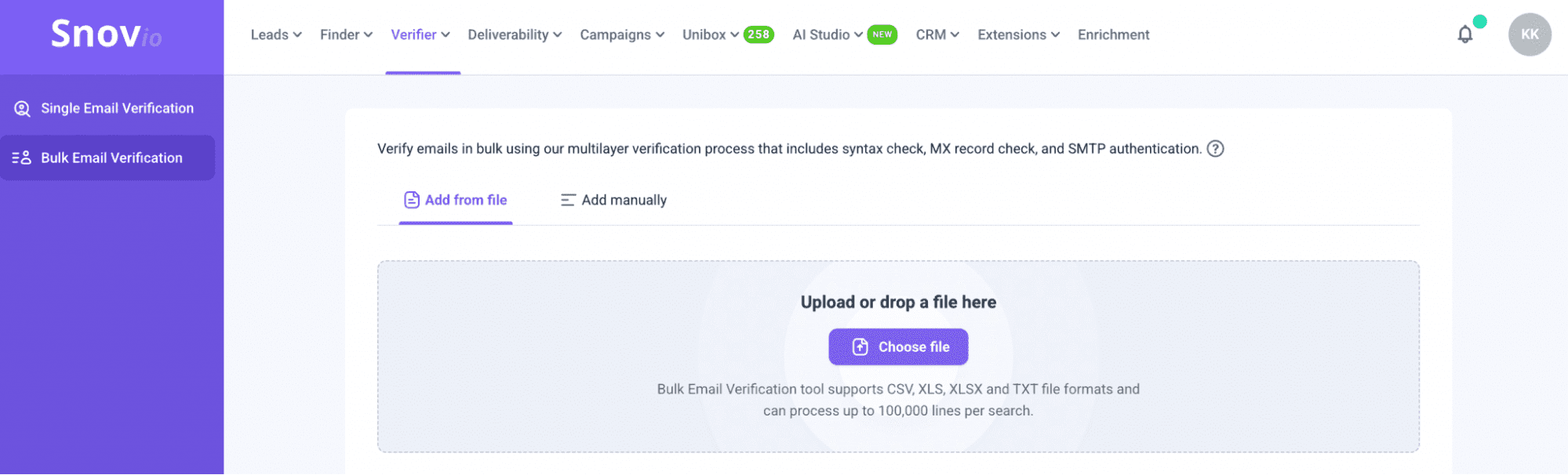
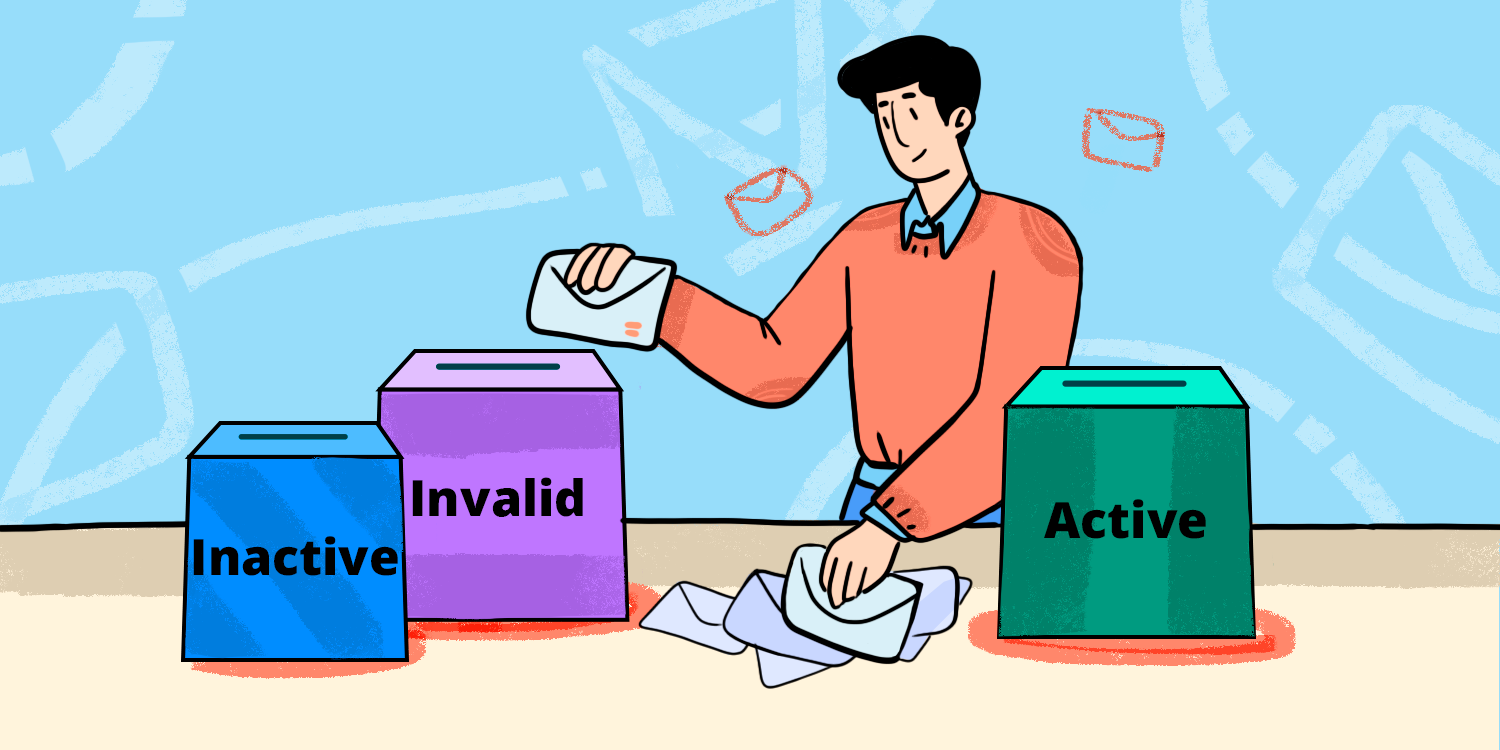
Snov.io then runs each address through its 7-tier verification process and assigns a verification status, such as Valid, Invalid, or Unknown.
The process takes a few minutes, but the payoff is immense.
Implement a sunset policy for list segmentation
A sunset policy is a strategy of segmenting your email lists to prevent sending emails to unengaged subscribers. Set a condition for marking your contacts as ‘sunsetted’ (e.g., two months). That means all contacts that haven’t been engaged for this period will be removed from the main list.
Though not very popular, experts recommend this tactic as one of the most effective ways to manage your list.
Sync verified flags to your CRM
This gives your sales or marketing team instant visibility into contact quality while allowing campaign tools to automatically exclude invalid addresses.
For instance, Snov.io integrates directly with HubSpot, Salesforce, Pipedrive, and other major CRMs, so you always see your contact’s verification status within the pipeline.
Adopt verification as part of your email strategy
Email verification isn’t a one-and-done task. Lists decay continuously, and a list that was clean 6 months ago may already have a meaningful percentage of invalid data.
To keep your data clean over time, follow a regular verification schedule:
- Real-time validation catches invalid addresses at the point of entry.
- Bulk verification runs 24 to 48 hours before every major campaign.
- Full database re-verification occurs every 3 to 6 months.
- CRM sync keeps verification status up to date across all your tools.
When verification is embedded at every stage, as in this example, the benefits of email verification compound over time.
And last but not least, if your email health is struggling or you simply want to make sure your emails are reaching inboxes, I’d strongly recommend warming up your email account. It’s one of the simplest ways to support long-term deliverability.
Key takeaways: Why regular email verification is a must in 2026
Better data leads to better results. The fewer invalid addresses on your list, the lower your bounce rates and the better your chances of reaching the inbox.
Email verification isn’t an afterthought. It’s where every successful email campaign starts.
If you’re ready to clean up your list, Snov.io can help you do it in just a few clicks.