


One company posts a job opening. Another struggles to fill several roles at once. And both could become your clients. The question is how to find these companies, get their attention, and give them a reason to choose you.
Below, let’s explore how to do just that, along with the right tools that can support your recruitment lead generation efforts.
TL;DR
Lead generation for recruitment agencies means identifying companies with hiring needs, finding the right decision-makers, and turning them into clients.
Key ways to build a steady pipeline of staffing leads:
- Define your ideal client profile by industry, company size, location, and hiring needs.
- Monitor job postings, repeat vacancies, funding rounds, and company growth to spot potential clients.
- Combine personalized cold emails, LinkedIn touches, and phone calls to reach decision-makers.
- Introduce strong candidates to companies that may need their skills.
- Reconnect with past clients and candidates, ask for referrals, and build partnerships.
- Publish niche content, salary guides, and hiring market reports to attract potential clients.
- Use tools like Snov.io, LinkedIn Sales Navigator, and TheirStack to find prospects, automate outreach, and manage follow-ups.
You can handle lead generation in-house, outsource prospecting, or combine both, depending on your recruitment business development goals.
Why lead generation works differently for recruitment and staffing agencies
In recruitment, a prospective client may not need an outside recruiter for months. Hiring needs come and go, so timing is one of the most important factors in finding potential clients.
Generally speaking, here are several factors that make recruitment lead generation different:
- Demand follows hiring. New vacancies, expansion, and hard-to-fill roles create opportunities.
- Revenue varies by model. Permanent agencies usually earn a fee per successful placement. Staffing agencies often build recurring revenue through ongoing contracts.
- Several people shape the decision. Depending on company size, that could be a founder, a hiring manager, an HR director, or a Head of Talent Acquisition.
- The competition is fierce. Many employers already have in-house recruiters or preferred agencies, so you need to show what you bring that they don’t already have.
Good lead generation for staffing agencies, then, is about more than a contact list and a cold email. You need to identify relevant hiring opportunities, reach the right people, and demonstrate why employers should work with you.

How to generate leads for recruitment (and staffing) agencies
Let’s break down how to get clients for a recruitment agency, from finding companies worth approaching to starting that very first conversation.
1. Define your niche and ideal client profile (ICP)
Trying to serve every industry and role spreads your prospecting thin and makes outreach feel generic. Begin with the companies most likely to need your recruitment services.
Define your ICP based on:
- Industry: IT, healthcare, finance, manufacturing, logistics, etc.
- Roles and seniority: Software engineers, sales managers, healthcare professionals, executives, etc.
- Company size: Startups, SMBs, or large enterprises
- Location: The geographic markets you can serve
- Hiring patterns: Companies that regularly recruit for your specialist roles
Also consider whether potential clients have sufficient recruitment budgets, recurring hiring needs, and experience working with external agencies.
Use Snov.io’s AI Buyer Persona Generator to build your ICP.
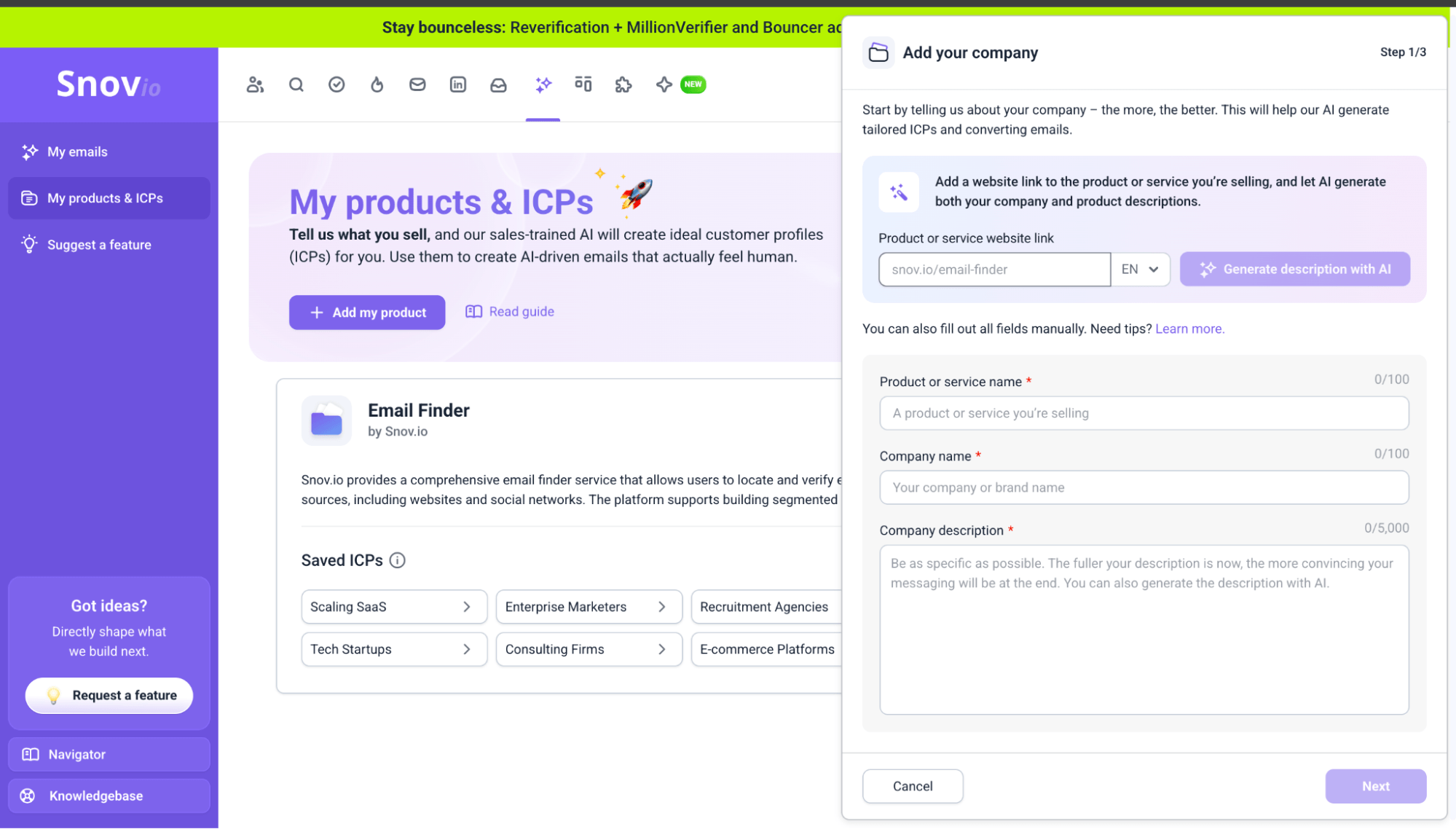
Describe your services, target industries, specialist roles, and coverage area. The tool then suggests buyer profiles, including likely company sizes, decision-maker titles, and common pain points.
2. Track hiring signals to find companies that need recruiters now
Hiring signals show which companies are likely to need recruiters soon, and tracking them lets you rank prospects by timing as well as fit.
Useful ones include:
- New job postings: Especially multiple vacancies for roles within your niche.
- Repeatedly advertised positions: May indicate difficulty attracting suitable candidates.
- Long-open vacancies: Could suggest an unsuccessful hiring process, although this isn’t proof that external support is needed.
- Funding rounds and acquisitions: Often precede business expansion and increased hiring.
- Headcount growth: New departments or rapidly expanding teams can indicate future recruitment demand.
- New office openings: May create demand for local talent and recruitment partners.
- Leadership changes: New executives or HR directors may introduce different hiring plans and agency partnerships.
Monitor these signals through company career pages, LinkedIn, job boards, funding announcements, and hiring intelligence platforms (such as the ones I listed below).
It also helps to separate direct signals, like active vacancies, from indirect ones, like funding or expansion. Direct signals point to opportunities you can act on now, while indirect ones help you spot future clients before your competitors do.
3. Find the right decision-maker contacts
Once you’ve spotted your potential clients on the lead-gen horizon, find the people responsible for recruitment decisions. The relevant contacts depend on company size and structure:
- Founders and Co-Founders: At smaller companies, they often make hiring calls themselves.
- Hiring Managers: They feel the pain of an open role and know exactly what they need.
- HR Directors and Heads of Talent Acquisition: They usually set recruitment strategy and decide which agencies get work.
- Talent Acquisition Managers: They run day-to-day hiring and evaluate outside suppliers.
LinkedIn is the quickest way to find out who owns what. Once you have a name, an email finder can get you a business email address. I typically use the Snov.io Email Finder for this kind of task.
4. Send personalized cold messages tied to open roles
Email remains a relevant channel for initial B2B outreach. And I’m not saying this just because I think so; LinkedIn’s research found that 57% of buyers prefer email as their first contact method, while 78% expect introductions to be personalized to them and their business.
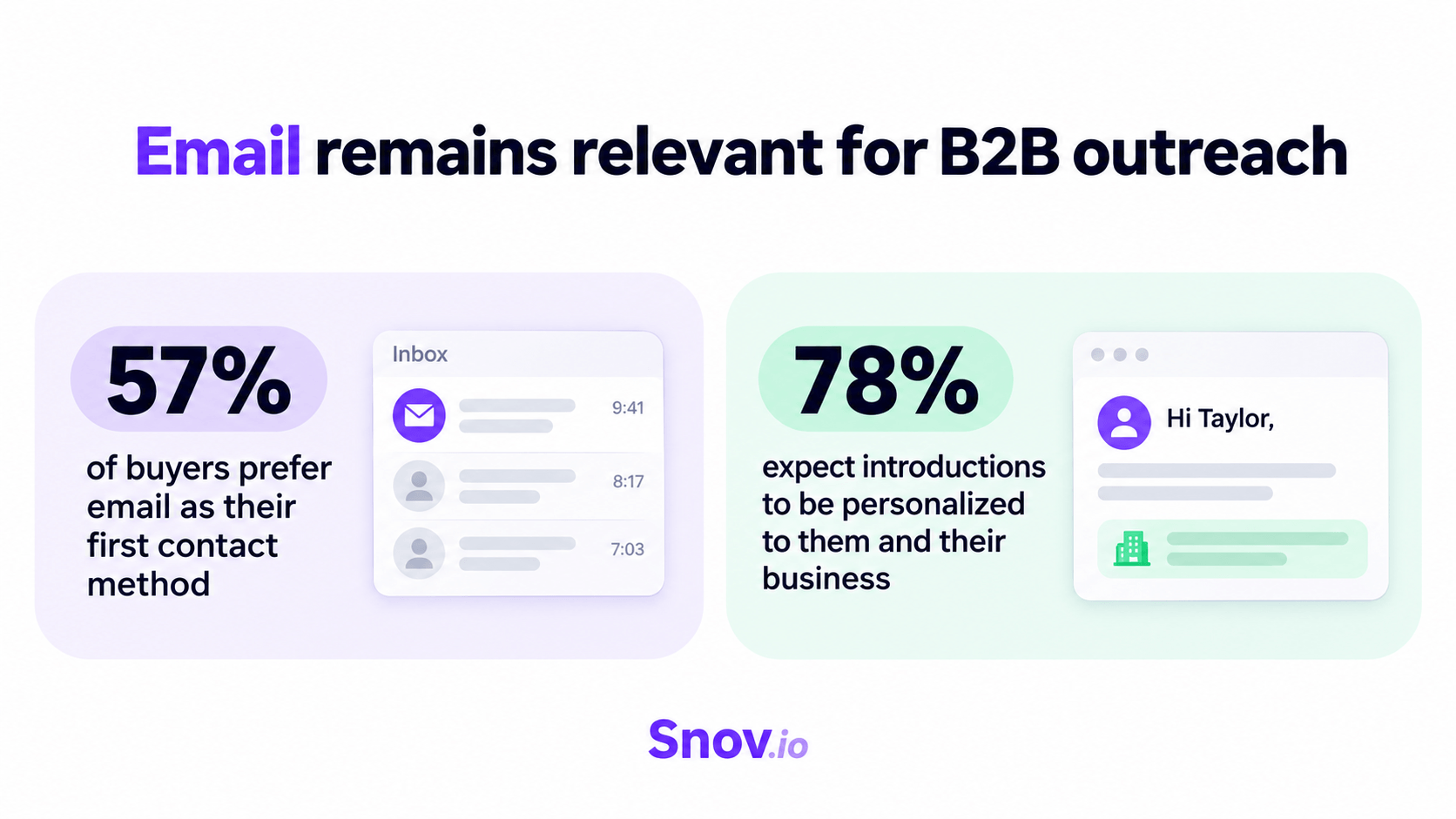
But generic introductions that list recruitment services rarely give employers a compelling reason to respond, let alone improve your email deliverability.
Make every message count by:
- Referencing a specific vacancy or hiring signal: Show you’ve looked at their business.
- Explaining how your specialty fits their need: Connect your expertise to the role they’re trying to fill.
- Sharing relevant experience or results: A brief example beats a long list of services.
- Ending with one clear call to action: Ask for one thing, such as a short call.
Imagine a cybersecurity agency that notices a company hiring several security engineers. A short note that names those roles and mentions similar placements will do far more than a standard pitch.


5. Build multichannel sequences with LinkedIn touches, emails, and/or calls
For agencies exploring how to get clients for a recruitment agency, combining email, LinkedIn, and phone calls creates more opportunities to reach potential clients.
LinkedIn is especially useful here. About 89% of B2B marketers use it for lead generation, and 62% say it generates leads for them, roughly twice as many as the next-highest channel. Spreading outreach across channels also helps you reach prospects faster, often within 6 to 8 touchpoints.
The key is to avoid copying one message across all channels. Approach the matter more strategically by trying this instead:
- Open with an email about your services.
- Next, view the prospect’s LinkedIn profile and send a connection request that references something specific.
- A few days later, call and bring up their hiring needs.
Don’t forget to space the touchpoints out at least 2–3 business days apart, and make sure each one has a clear purpose.
Sales engagement tools can help coordinate outreach and automate follow-ups. For example, Snov.io combines email campaigns with LinkedIn automation.
Here’s how this unfolds in practice. Recruiters find hiring managers via Recruitcha GTM and send them to Snov.io with one click. Then, they build creative email sequences with well-paced follow-ups and LinkedIn touches.
The result? Recruitment agencies using this setup won 2–3 new clients/month, with $50,000+ in placement revenue.
→ Read the full Recruitcha GTM case study.
6. Market your most placeable candidates (MPC)
Sometimes the best opportunity is a role that hasn’t been posted yet.
Marketing a most placeable candidate (MPC) involves approaching companies that could benefit from a particular candidate’s skills, even if they haven’t advertised a vacancy.
For example, an agency specializing in finance recruitment could identify growing companies that might need an experienced financial controller and share an anonymized candidate profile.
A good MPC profile covers:
- Candidate’s experience
- Key skills
- Qualifications
- Standout achievements
Always get the candidate’s consent before sharing anything, and keep identifying details out of the profile unless they’ve approved them.
7. Reactivate past clients and placed candidates
Past clients and candidates you’ve placed can be a valuable source of new business. Since you’ve already established a relationship, reconnecting with them is often easier than reaching out to completely new prospects.
Consider contacting:
- Former clients: Ask about upcoming vacancies and changing hiring needs.
- Previously placed candidates: They may have moved into management positions or become hiring decision-makers.
- Past hiring managers: They may have joined new companies and need recruitment support.
- Long-term clients: Check in after successful placements to identify additional hiring opportunities.
For example, a software engineer you placed two years ago may now lead a development team and influence hiring decisions at another company.
Your past clients are still gold. Too many recruiters chase new leads while ignoring the network they already built. Some of the fastest six-figure wins come from reactivating past relationships.
Co-Founder of Ora Marketing

8. Ask for referrals and build partnerships
Referrals often open doors that cold outreach can’t. A client who trusts you will vouch for you, and the moment to ask is right after a successful placement, when they’re happiest with the result.
You can also build partnerships with:
- HR consultants and fractional HR managers
- Payroll providers and PEOs
- Business consultants and accounting firms
- Venture capital firms and startup accelerators
- Industry associations and professional communities
A startup-focused recruitment agency, for instance, could partner with a VC firm and receive an introduction whenever a portfolio company starts planning its next hires.
Also, the best partnerships create value on both sides. Look for people who reach employers you can’t easily access, and offer something useful in return.
9. Publish niche content and market reports
Good content earns trust before a prospect ever replies. When you publish niche insights, employers see that you understand their industry and the hiring problems they face.
Focus on the following formats:
- Salary guides: Share compensation benchmarks for specific roles and locations
- Hiring market reports: Cover talent availability, skills shortages, and recruitment trends
- Industry insights: Discuss hiring challenges in niche sectors
- Case studies: Show how your agency helped clients fill difficult positions
- LinkedIn posts: Share practical hiring advice and market observations
Add relevant calls to action (e.g., to discuss a hiring challenge) to turn content engagement into potential client inquiries.


Best lead generation tools for recruitment agencies
Figuring out how to get clients for a recruitment agency starts with identifying companies with hiring needs, finding the right decision-makers, and reaching them directly. The right tools can make this process much easier:
- Best for prospecting and outreach → Snov.io, Sales Navigator, Lusha
- Best for hiring signals → TheirStack, PredictLeads
- Best for recruitment CRM/ATS → Bullhorn, Recruit CRM
As promised, here are a few useful ones in each category to help you find potential clients, get in touch with them, and keep your outreach organized.
Snov.io
Best for: Finding potential clients and automating outreach
G2 rating: 4.5/5
Pricing: Free plan; paid plans from $39/month
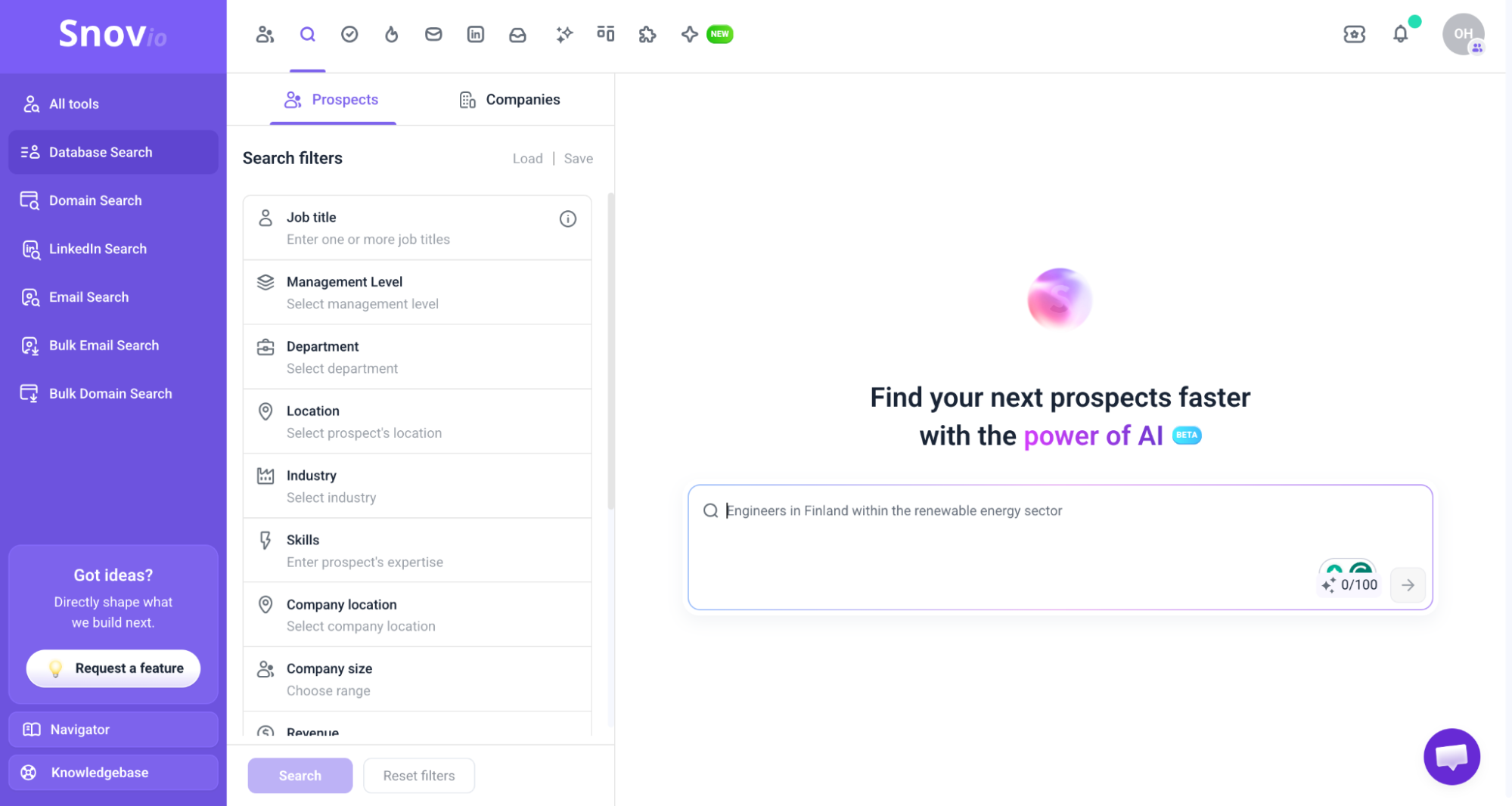
Snov.io is a lead generation and outreach automation platform that helps recruitment agencies find potential clients, discover their contact details, and automate email and LinkedIn campaigns.
Key features:
- Email Finder
- Database Search
- LinkedIn Email Finder
- Email Verifier
- Automated Email Drip Campaigns
- LinkedIn Automation
- CRM
Limitations: LinkedIn Automation costs extra and works on a per-profile basis — $69/month per LinkedIn slot when purchased without a plan or $59/month when bundled with a Snov.io Sales Suite plan.
What users say about Snov.io:
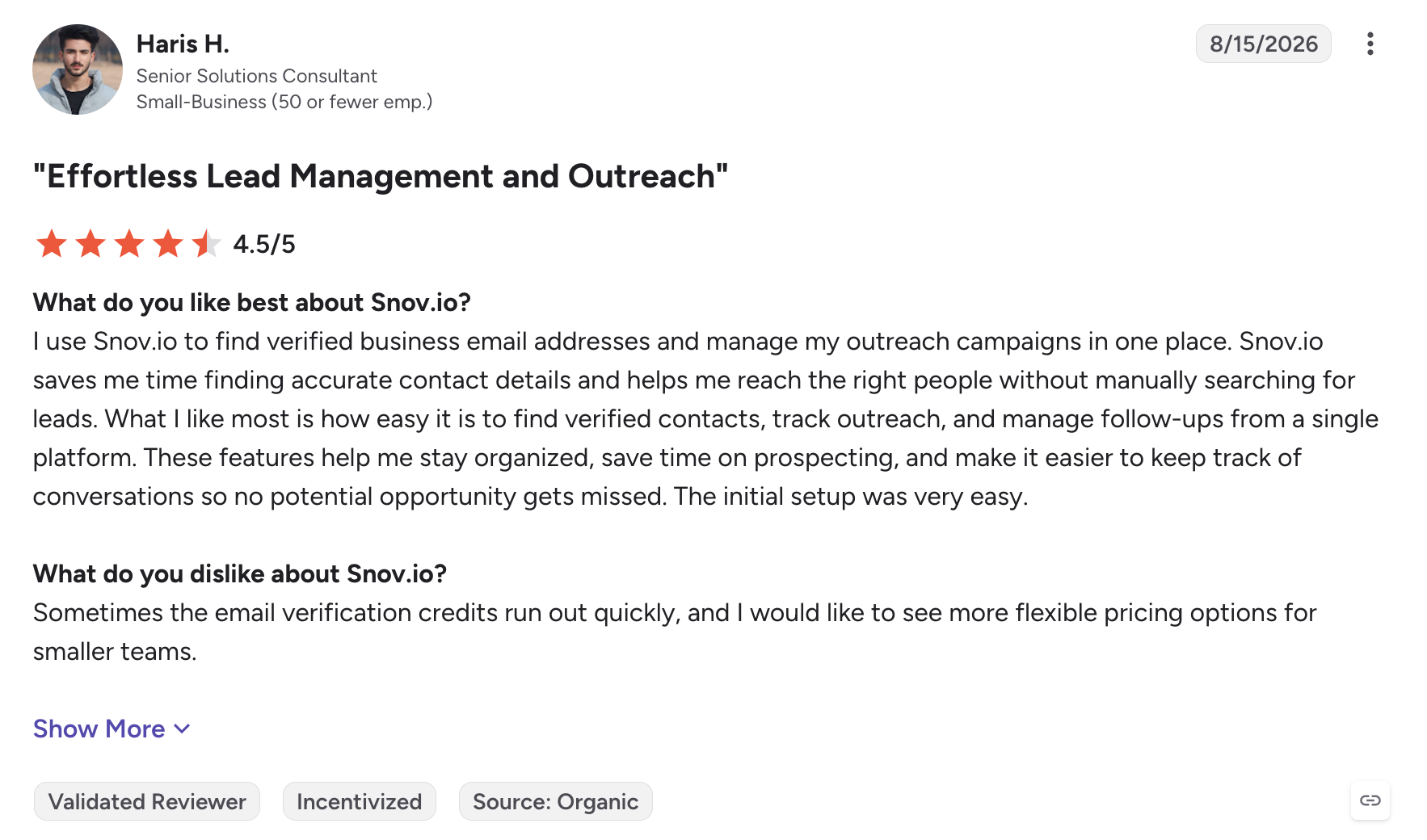
Users appreciate its prospecting and automation features but cite rapid credit consumption for high-volume campaigns as one of the major concerns.
LinkedIn Sales Navigator
Best for: Identifying companies and decision-makers
G2 rating: 4.3/5
Pricing: Free trial available; paid plans from $119.99/month
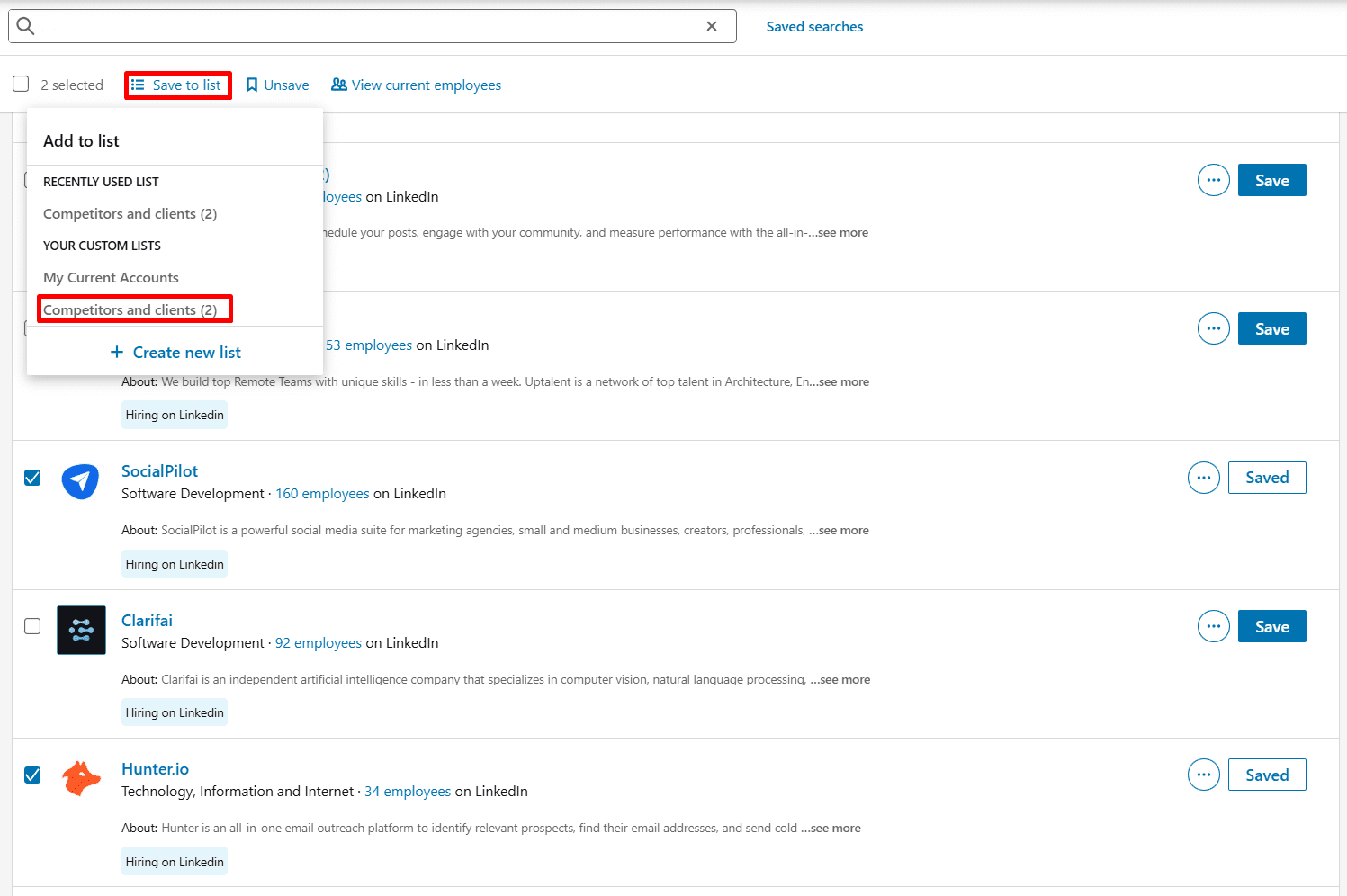
LinkedIn Sales Navigator helps agencies find potential employer clients using advanced search filters, company information, and professional relationship insights.
Key features:
- Advanced search filters
- Lead recommendations
- Saved accounts
- Job change alerts
- InMail messages
Limitations: Doesn’t provide verified email addresses or phone numbers; limited InMail credits.
What users say about LinkedIn Sales Navigator:
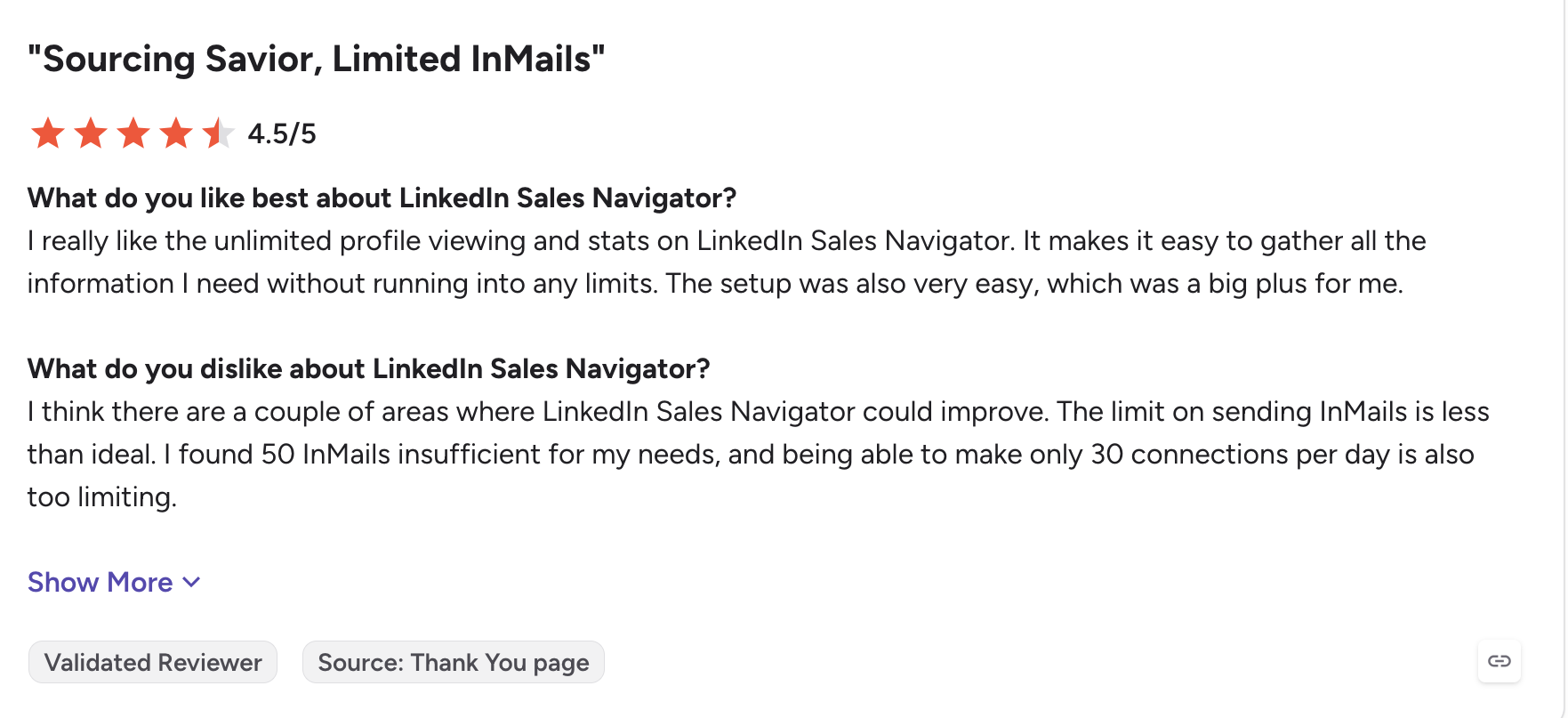
Users like its search filters and prospecting capabilities but criticize its pricing and InMail limitations.


Lusha
Best for: Finding contact details of hiring managers and decision-makers
G2 rating: 4.3/5
Pricing: Free plan; paid plans from $49.90/month
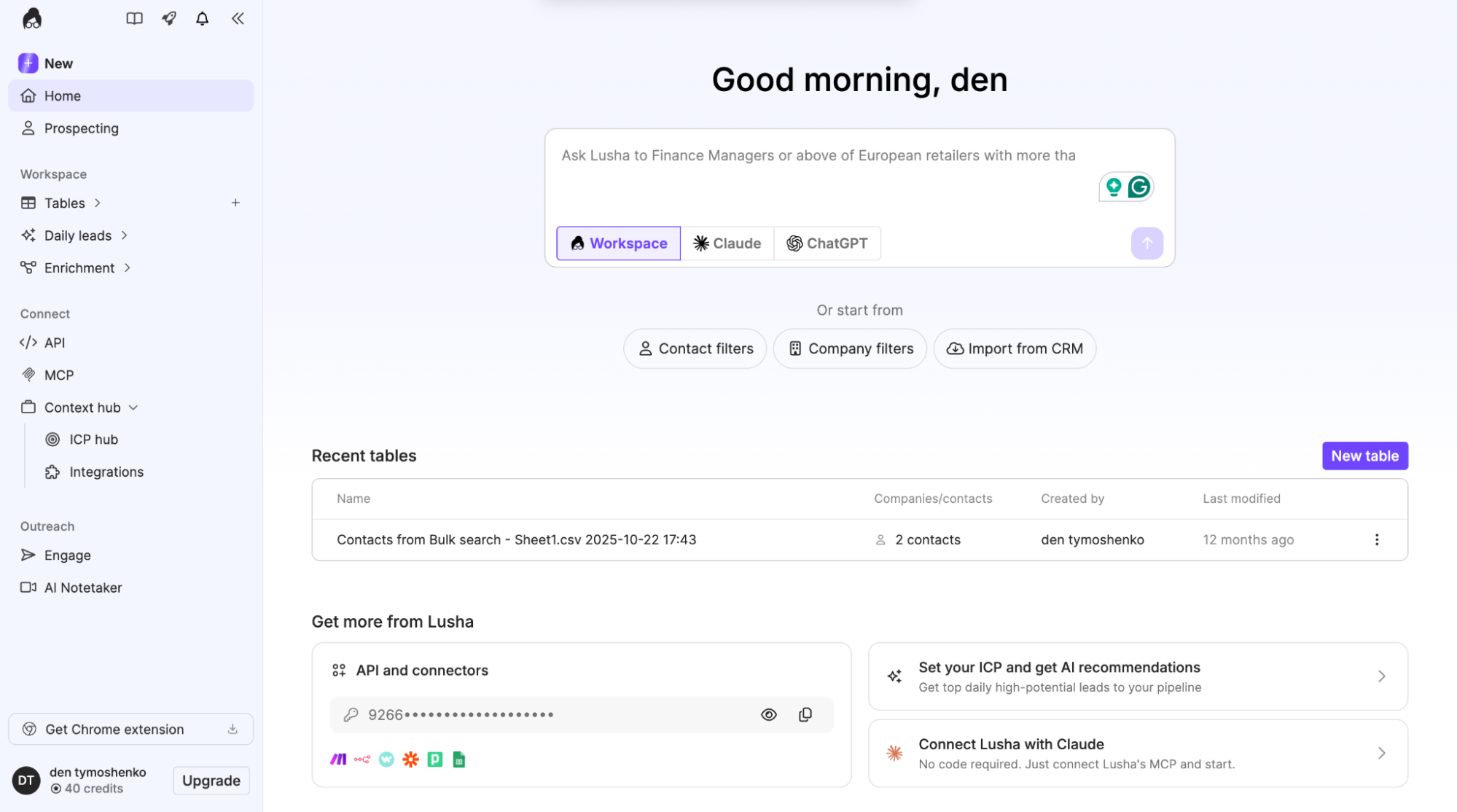
Lusha provides B2B contact and company data, helping recruitment agencies find professional email addresses and direct phone numbers for potential clients.
Key features:
- Contact database
- Company search
- Bulk enrichment
- Buying signals
Limitations: Contact coverage and accuracy vary by market.
What users say about Lusha:
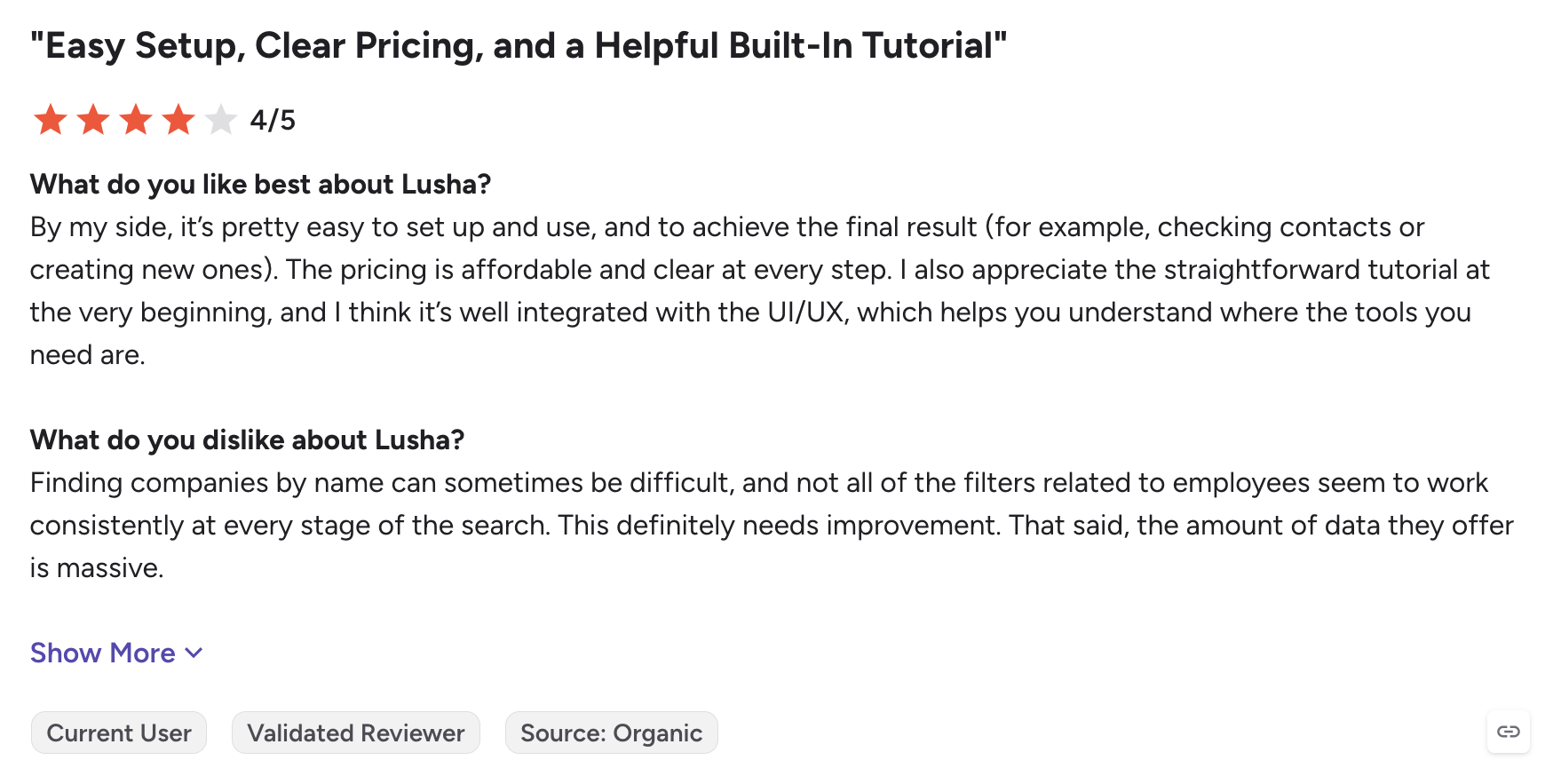
Users appreciate its ease of use and contact discovery but report occasional outdated information.
TheirStack
Best for: Finding companies actively hiring for specific roles
G2 rating: 4.9/5
Pricing: Free plan; one-time purchases of company credits, starting at $109 for 1K credits
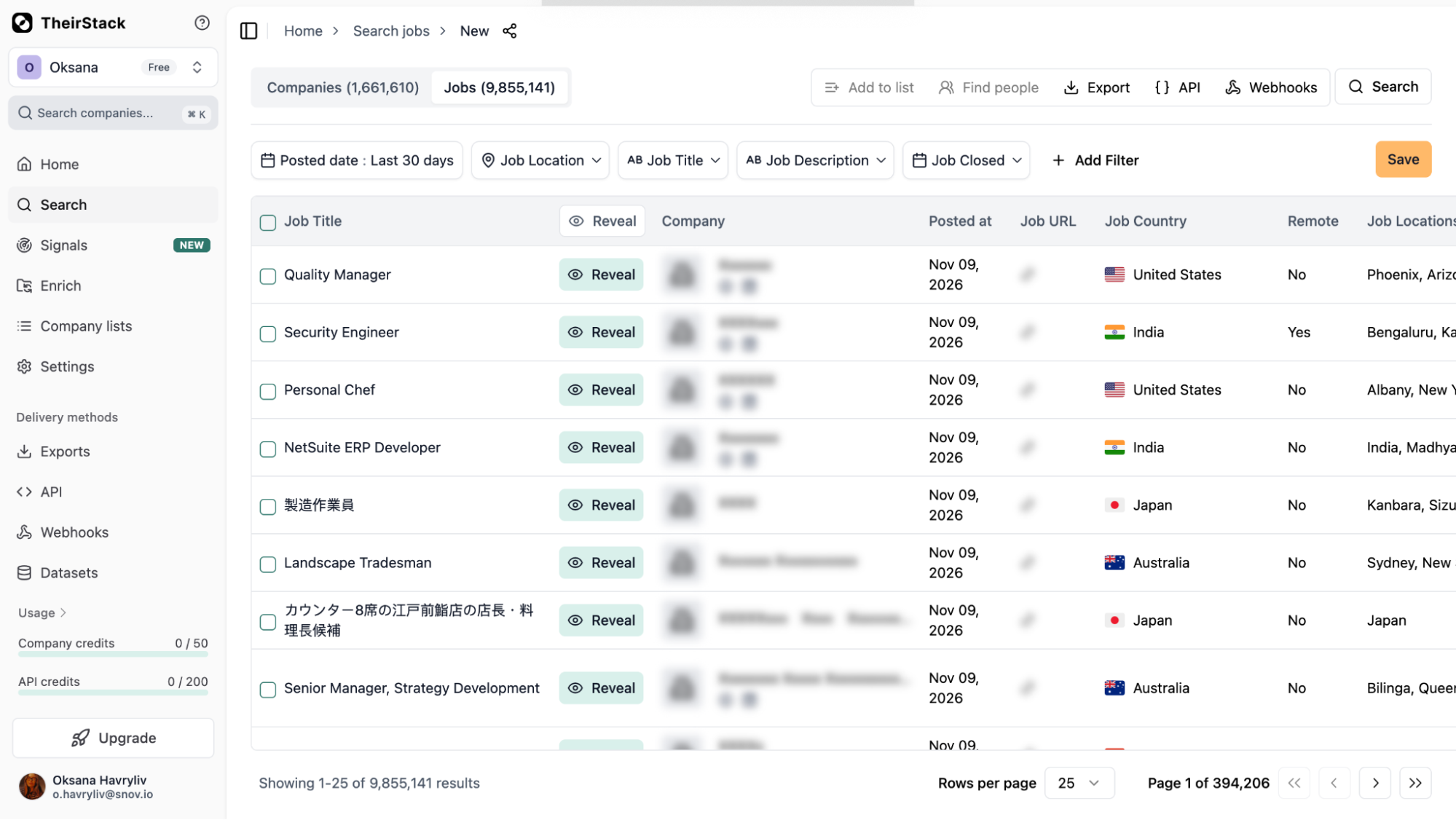
TheirStack tracks job postings across companies and markets, helping recruitment agencies identify businesses with active hiring needs. Users can filter opportunities by job title, location, technology, and company characteristics.
Key features:
- Job posting database
- Hiring alerts
- Company search
- 40+ filters
- Hiring trends
Limitations: Focuses primarily on job and company data rather than direct contact discovery or recruitment CRM functionality.
What users say about TheirStack:
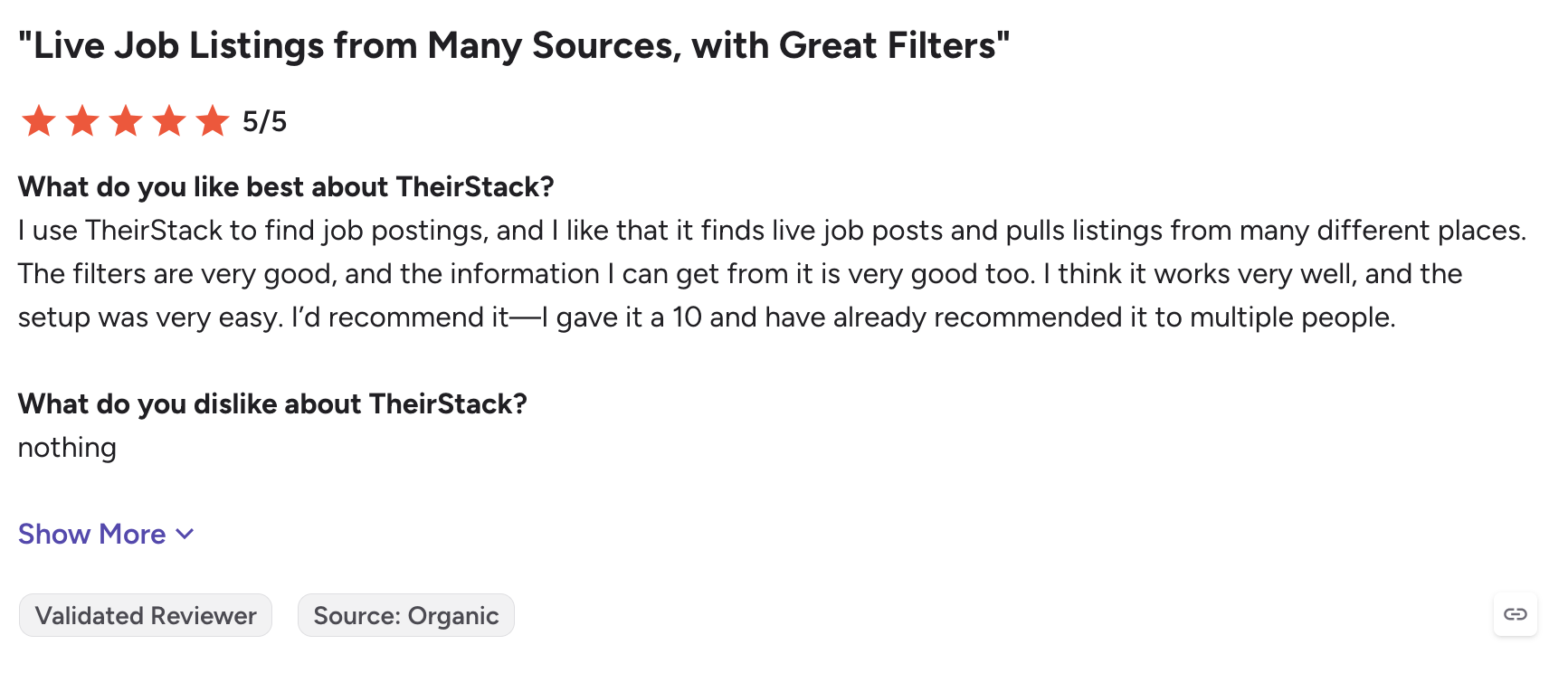
Users generally appreciate its job data coverage, search capabilities, and ease of use.
PredictLeads
Best for: Identifying scaling companies and monitoring hiring activity
G2 rating: 4.9/5
Pricing: Free tier; paid usage starts at $40/month
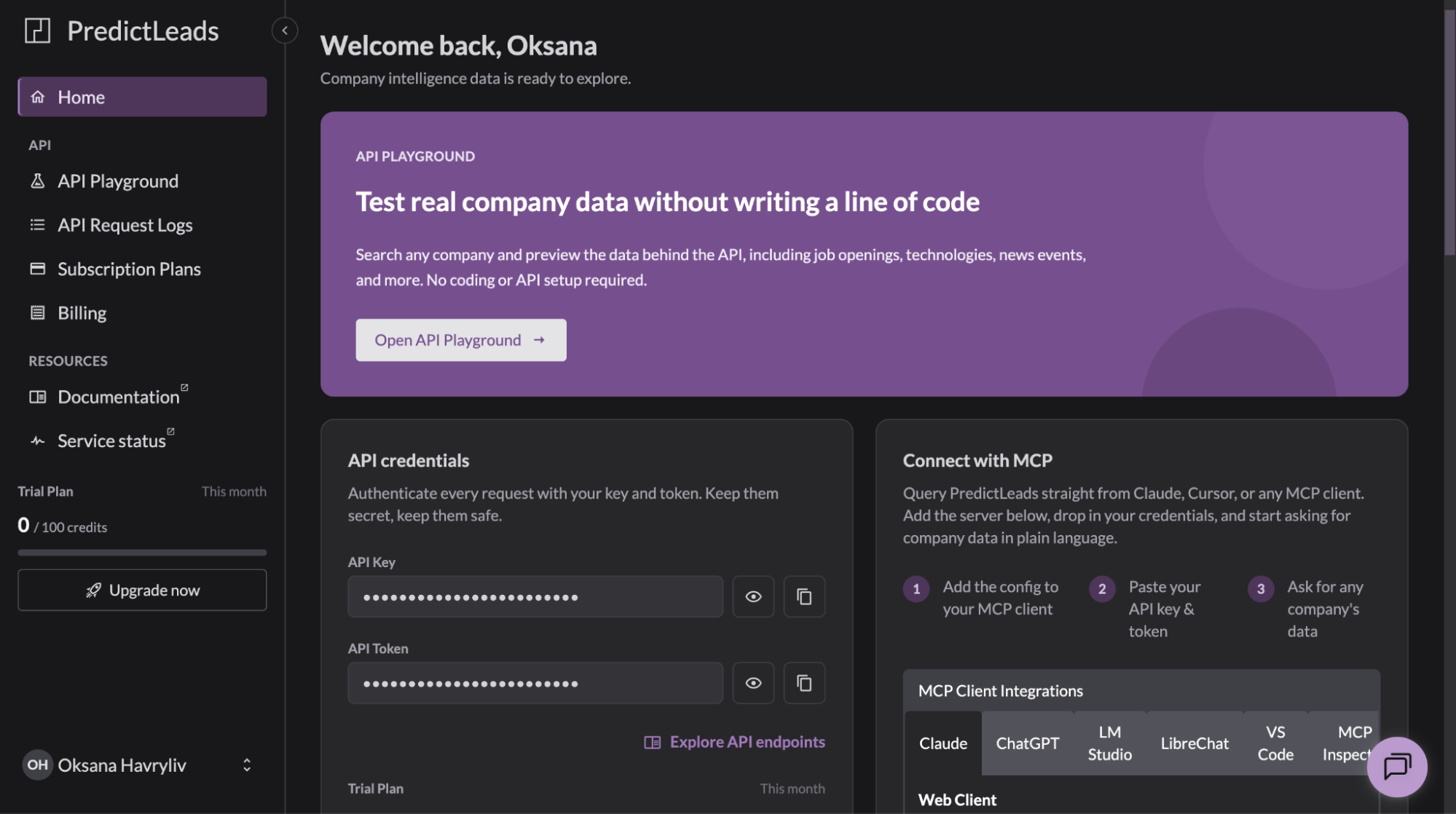
PredictLeads provides company intelligence data, including job openings, funding events, technology adoption, and company developments. Recruitment agencies can use these signals to identify growing businesses and potential clients with hiring needs.
Key features:
- Job opening database
- Hiring trends
- Funding signals
- Company news
Limitations: Primarily a data provider rather than a ready-to-use prospecting platform; API integration may require technical resources.
What users say about PredictLeads:
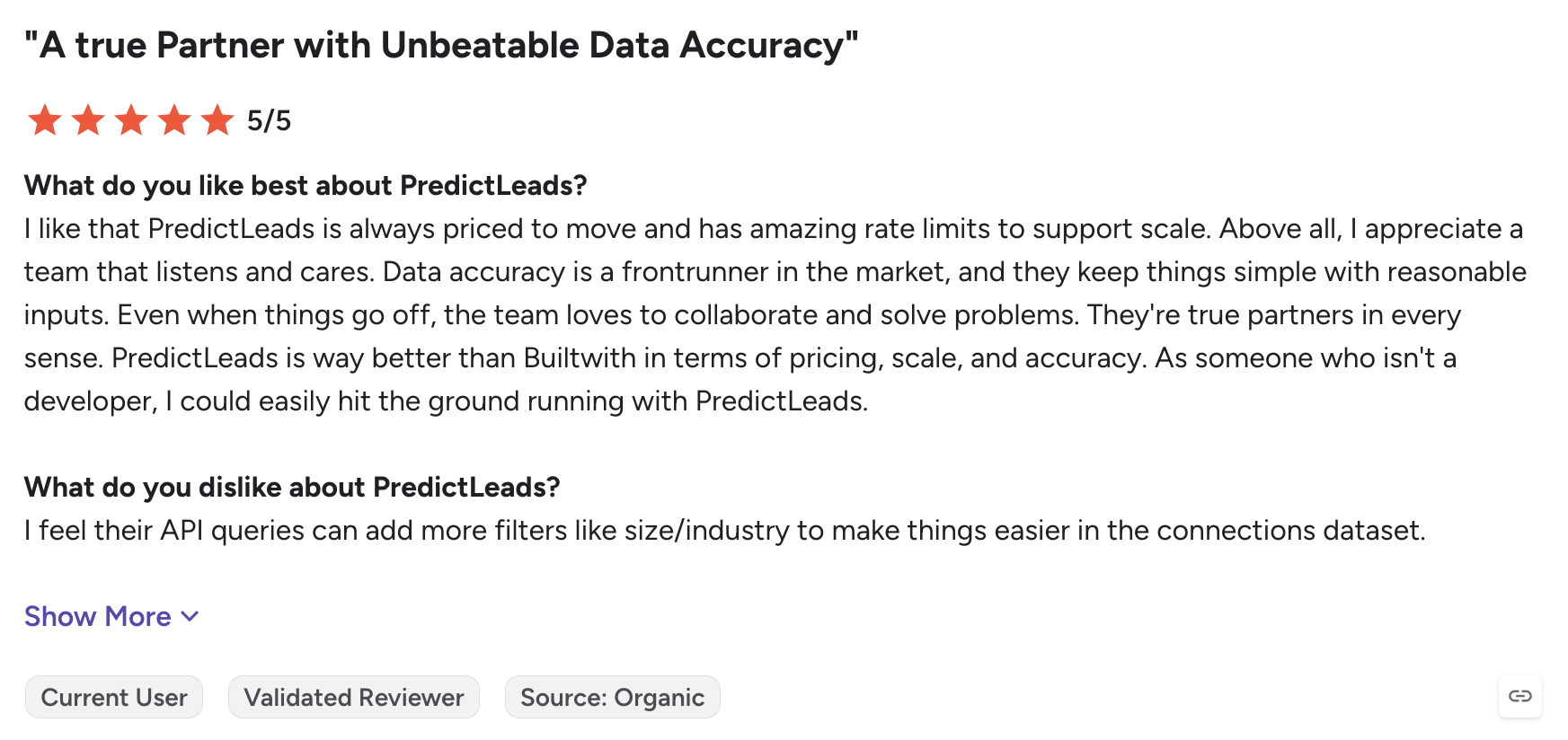
Users appreciate its company intelligence, job tracking, and data coverage.
Bullhorn
Best for: Established recruitment and staffing agencies managing complex operations
G2 rating: 4.2/5
Pricing: From $99/user/month; advanced plans require a custom quote
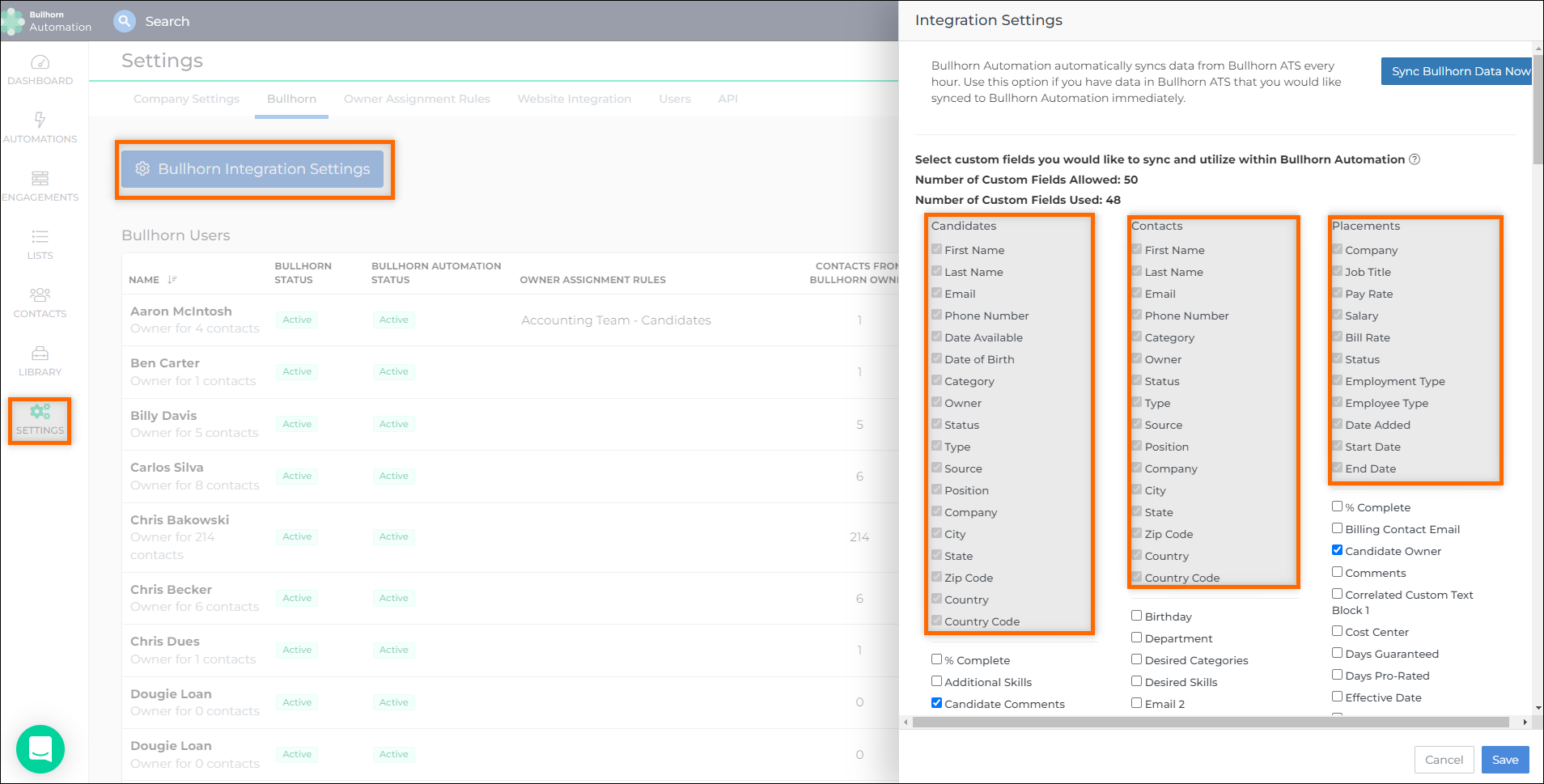
Bullhorn is a recruitment software platform that helps staffing agencies manage client relationships, candidate databases, job orders, and recruitment pipelines in one place.
Key features:
- Recruitment CRM
- ATS
- Resume parsing
- Candidate management
Limitations: Can be expensive for smaller agencies; learning curve and implementation requirements.
What users say about Bullhorn:
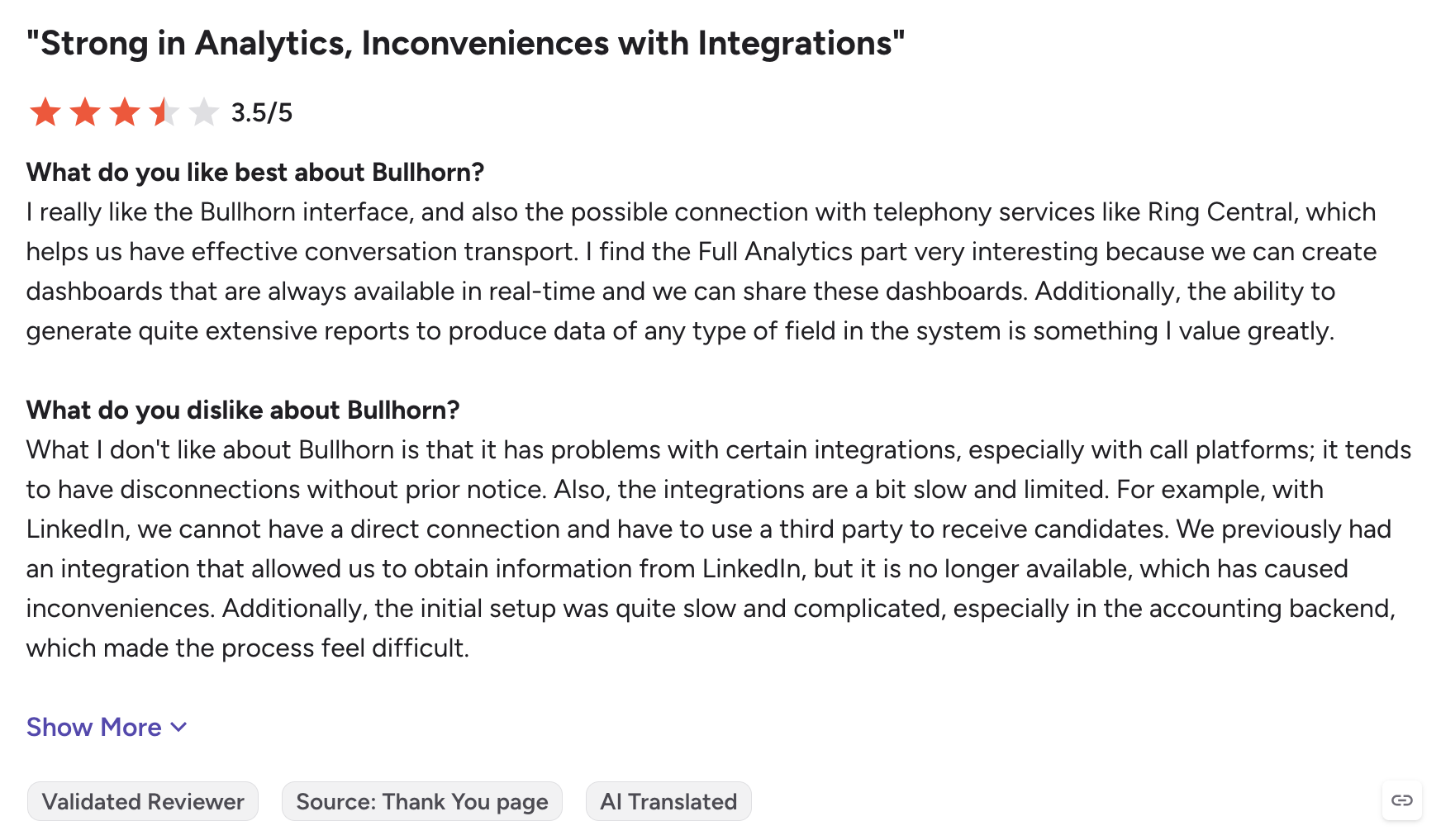
Users appreciate its recruitment features and integrations but mention performance and usability issues.
Recruit CRM
Best for: Small and mid-sized recruitment agencies looking for an all-in-one platform
G2 rating: 4.8/5
Pricing: From $109/user/month; 30-day free trial
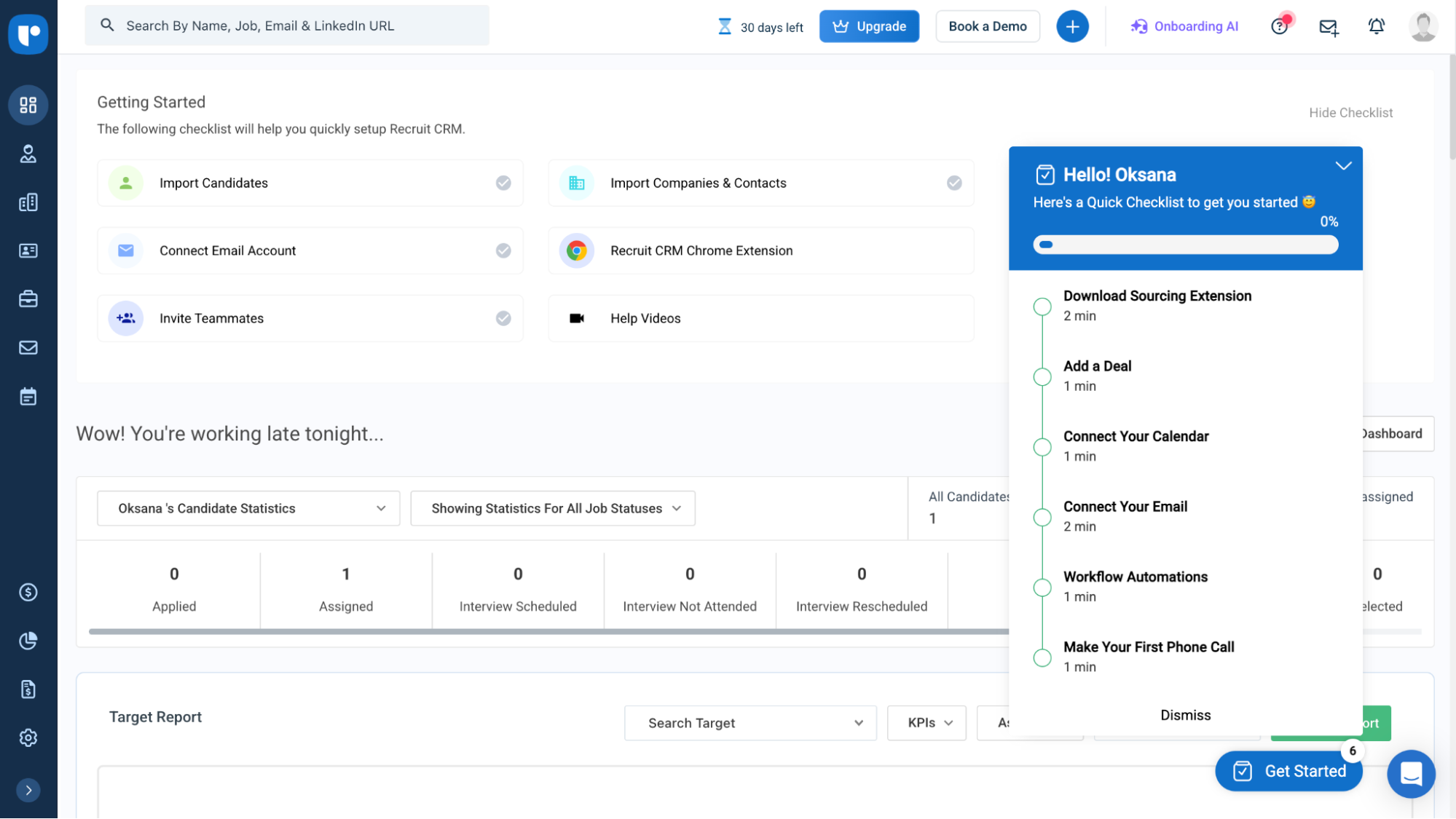
Recruit CRM combines applicant tracking and customer relationship management, helping recruitment agencies manage candidates, clients, job orders, and business development activities.
Key features:
- ATS
- CRM
- Candidate sourcing
- Resume parsing
- AI matching
- Email automation
Limitations: Some advanced features consume additional credits or require higher-tier plans.
What users say about Recruit CRM:
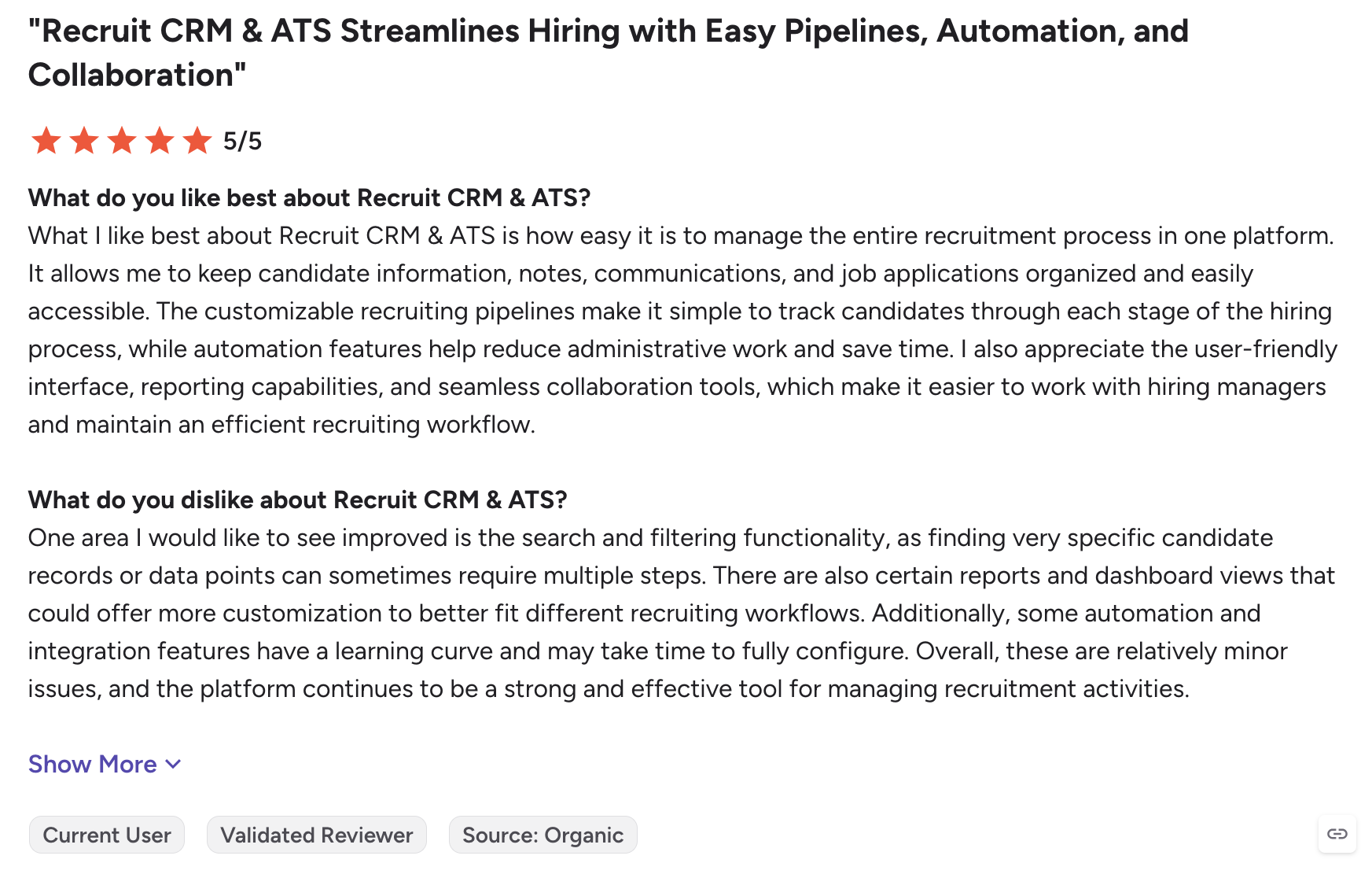
Users praise its ease of use and customer support but mention some limitations in advanced functionality.
In-house vs outsourced lead generation for recruitment agencies
Agencies can generate leads in-house or outsource the work. Both approaches can support business development for recruitment agencies, but the right choice depends on your budget, resources, sales expertise, and growth goals.
Doing it in-house gives you full control over campaigns, messaging, and client relationships. Your team also knows your niche and your services inside and out. But this option requires investment in hiring, training, tools, and campaign management.
Outsourcing lets you expand recruitment agency lead generation without building a dedicated team. It’s useful for smaller agencies or those looking to scale prospecting. But external providers need to understand your target audience and value proposition.
| Factor | In-house | Outsourced |
|---|---|---|
| Control | Full control over messaging, targeting, and campaigns | Less direct control over daily activities |
| Costs | Salaries, training, software, and ongoing management | Agency fees or monthly service costs |
| Expertise | Requires hiring or training people with sales and prospecting skills | Access to an experienced external team |
| Industry knowledge | Strong understanding of your niche, clients, and services | Requires time to learn your target market and offer |
| Scalability | Growth depends on team capacity and resources | Easier to increase prospecting capacity |
| Best for | Agencies with established teams and long-term lead generation plans | Smaller agencies or those needing to scale outreach quickly |
A hybrid model is another option that can potentially work well. Your team keeps ownership of positioning, sales conversations, and client relationships, while an outside provider handles prospect research and appointment setting.
Outsource lead generation only when you know exactly what works. If you can’t tell a provider which hiring managers to target, which hiring signals matter most, and what level of personalization you expect (should it go beyond “Hey, First Name,” and how far beyond), you’re just paying someone else to guess. Prove it in-house first, then scale it out.
Outbound Outreach Expert at Snov.io

How to keep recruitment lead generation compliant
Recruitment agency lead generation means gathering business contacts and reaching out by email. Data protection and email rules apply, and they differ by location.
Here are the main areas to check:
- GDPR and legitimate interest: Under GDPR, legitimate interest can support certain B2B outreach. But it’s not a blanket permission. You need to weigh your interest against the recipient’s rights, and you still have to be transparent about how you use their data.
- CAN-SPAM (US): Commercial emails need accurate sender details, honest subject lines, a valid postal address, and a working opt-out link.
- Opt-out requests: Make unsubscribing easy, and honor requests within the deadline the law sets (10 business days under CAN-SPAM).
- Suppression lists: Keep a record of everyone who has opted out so they don’t get contacted again by mistake.
- Candidate consent: Get permission before sharing a candidate’s profile with an employer, especially if it includes personal or identifying details.
Local electronic marketing and privacy laws can add restrictions beyond GDPR and CAN-SPAM, so check what applies to you. If you’re unsure, speak with a legal or data protection professional.
Key takeaways
The best recruitment leads come from knowing exactly who you serve. Pick industries and markets you understand, and go after companies whose hiring needs match your specialties.
Timing matters just as much as targeting. Track job postings, repeat vacancies, funding rounds, and growth signals to spot companies heading toward a hiring need. Then reach the decision-makers and speak to the roles and challenges they face.
Cold email and LinkedIn are useful, but they shouldn’t be your only sources. Reconnect with former clients and placed candidates, ask happy clients for referrals, partner with complementary service providers, and share useful industry insights that bring employers to you.
And finally, choose tools that simplify prospecting and outreach, such as Snov.io.