This guide covers what to know before making your first call: how to set up your data and process, legal requirements by region, cultural expectations, and a framework for calls that follow email outreach.
How to set up your calling process before you dial
How to use email signals to make warm calls
How to understand legal basics by region
How to adapt your approach to cultural expectations by region
Quick checklist before calling
How to set up your calling process before you dial
Good cold calling comes down to five things: data, infrastructure, conversations, metrics, and a feedback loop. Most people skip straight to dialing and miss the steps that actually make calls work.
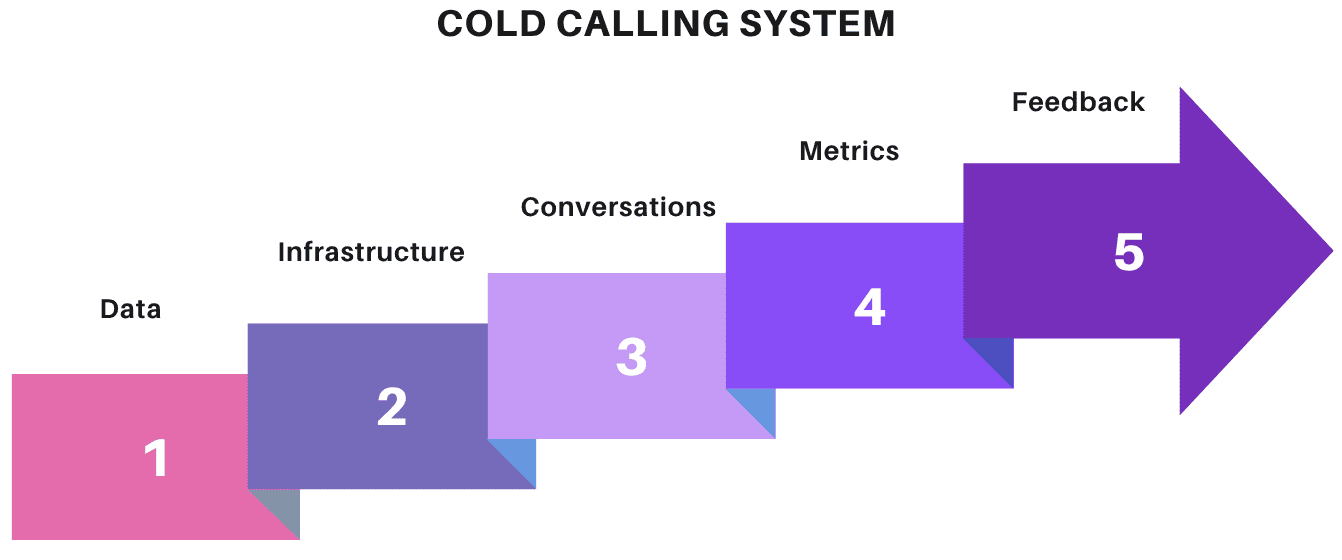 Here is what to set up before your first call.
Step 1. Define who you're calling
Before dialing, define:
- your ICP
- target segments
- decision-makers
- reasons to skip some prospects.
Use a reliable data source for mobile numbers, as office numbers rarely connect you to the right person.

For phone enrichment specifically, Snov.io finds mobile numbers using your prospects' existing data: LinkedIn URL, full name and company domain, or email address. The more complete the profile, the higher the match rate.
Step 2. Set up your calling infrastructure
Good infrastructure includes:
- Your dialer or calling tool
A dialer automates the sequencing of calls so you are not manually dialing one by one. Popular options include Nooks, Orum, and Aircall. Most of them also handle call recording and call dispositions in one place. If you are just starting out, even a basic VoIP tool like Aircall or CloudTalk works well for smaller volumes. - The numbers you call from
You can buy virtual phone numbers through your dialer or through providers like Twilio or Quo (formerly, OpenPhone). Use local numbers where possible: calls from a local area code have a noticeably higher pickup rate than international ones. - Number reputation
If your number gets flagged as spam, most people will not pick up. Check your number reputation before you start using it with tools like Numeracle, TNS Call Guardian, or the free lookup at FCC's robocall tools. If a number is flagged, rotate it and register a new one. Most dialers let you rotate numbers automatically across calls. - CRM setup
Log every call result immediately after the call, not at the end of the day. Connect your dialer to your CRM so call outcomes sync automatically. HubSpot, Pipedrive, and Salesforce all have native integrations with most popular dialers. - Call recording
Most dialers record calls by default. Check the legal requirements for your market before enabling recording as some countries require you to inform the other person that the call is being recorded. Store recordings somewhere your team can access them for review. - Call result and your follow-up workflow
Decide in advance what happens after each call outcome: answered and interested, answered and not interested, no answer, voicemail. Each should trigger a different next step. Most dialers let you label what happened on the call and automatically move the prospect to the right follow-up.

Without the right setup, even a strong list and good calls might not give results.
Step 3. Structure the call
Strong calls need:
- A clear opener: introduce yourself by full name and ask if they have a minute. Don't start with your company pitch.
- A simple reason for the call: one sentence on why you're reaching out to this person specifically. "I noticed you're hiring sales reps, so I thought it might be worth a quick conversation."
- A short script: not something you read word by word, but a structure you know well enough to follow naturally. Two to three sentences about what you do and who you help.
- One discovery question: something open that gets them talking. "How are you currently handling X?" works better than yes/no questions.
- A way to handle objections: "We already have a solution" is the most common one. Have a short, calm response ready. "That's exactly why I called because most teams we work with were using something else before switching."
- A clear next step: don't end the call without one. A specific time for a follow-up call, or confirmation that you'll send an email. If you leave it open, the conversation usually goes nowhere.
The goal of the call isn't to sell but to find out if there's a reason to keep talking.
Step 4. How to measure what's working
Track the full chain: calls made → connects → conversations → meetings booked → show-up rate → opportunities → pipeline created. You can only improve things that you measure.
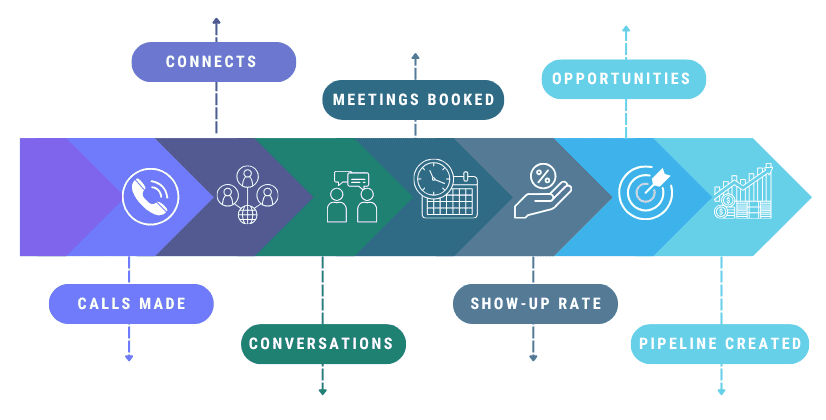
Benchmarks from practice:
- Pickup rate: 12–17% is considered good
- Connect to conversation: 60–74% of those who pick up
- Conversion to meeting: 6–10% of conversations
Step 5. How to improve over time
- Record your calls and review them regularly using a simple scoring checklist. Download PDF: The scoring checklist for call reviews
- Look for patterns in what works in the opener, where conversations drop off, and how objections are handled.
- Use what you find to update your scripts and approach. Without this step, the same mistakes tend to repeat across the whole team.

If calls are not reviewed, the same mistakes repeat because there is no way to see the pattern without listening back.
How to use email signals to make warm calls
Phone Number Enrichment in Snov.io works best when you use it on prospects who already interacted with your outreach: opened an email, clicked a link, or accepted a LinkedIn connection request but didn't reply.
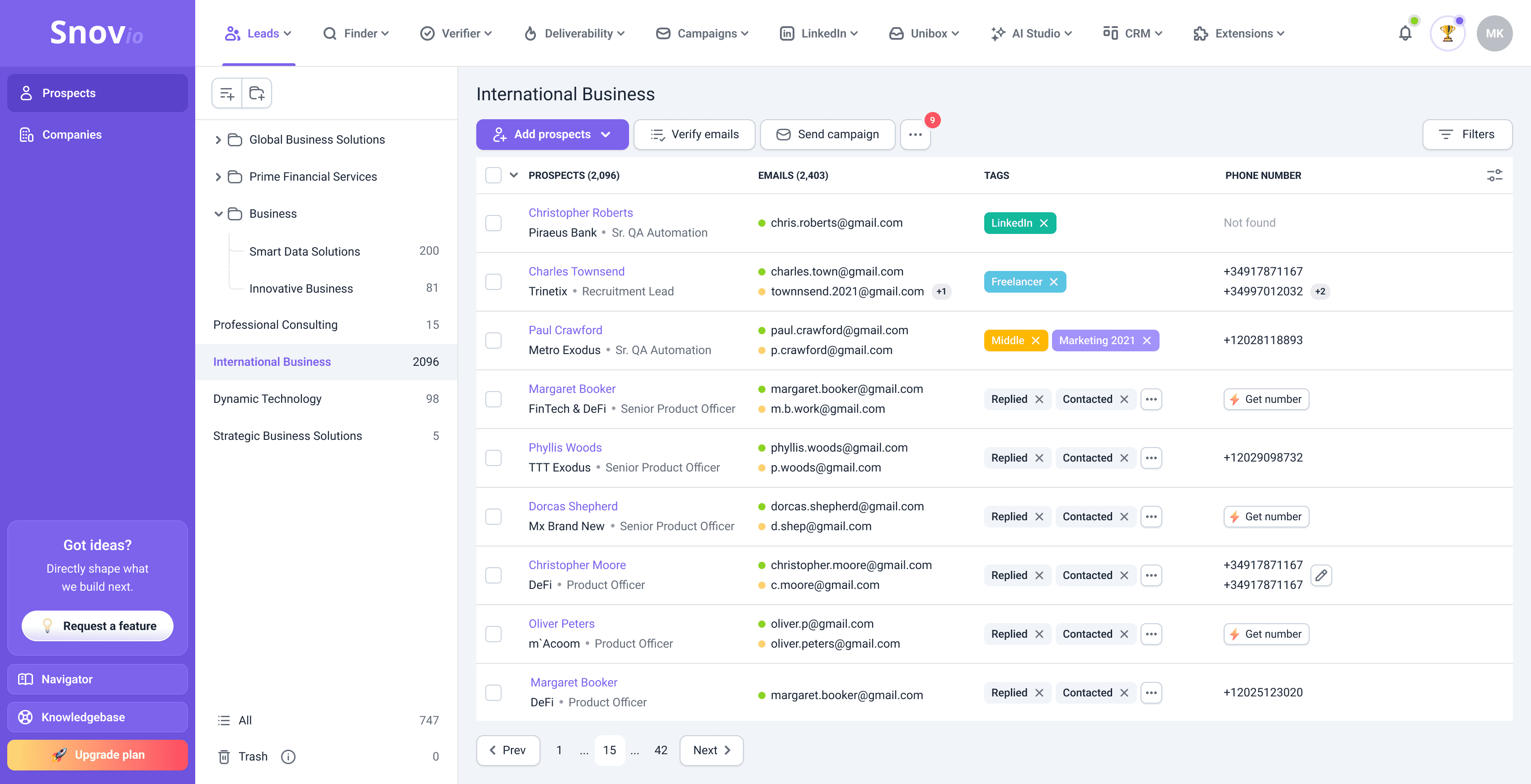
When someone has already opened your email or clicked a link, calling them is a follow-up, not a cold call. They've seen your name before, which makes it easier to get through, and you already have something to reference at the start of the conversation.
Use the phone as a third channel, after email and LinkedIn, not instead of them.
To find warm prospects to enrich, use the Filter option in your campaign's Recipients tab. Filter by email opened, link clicked, or connection accepted with no reply.
How to understand legal basics by region
Rules vary by country and by whether you're calling businesses or consumers. B2B calling has fewer restrictions almost everywhere, but it's not unrestricted.
One thing that changed: AI-generated voices are now treated as "artificial voice" under TCPA in the US, and regulators in multiple markets are tightening rules around automated and AI-powered calls.
AI voice tools are not illegal by default though. The legal risk comes from using them without consent: unsolicited AI cold calling to someone who never agreed to be contacted that way is where the problems start. Regulators in the US, UK, Canada, and the EU are all moving in the same direction on this: automated and AI-powered outreach requires either consent or clear disclosure, depending on the market.

This is not legal advice. For country-specific guidance, consult a local attorney or check trade.gov country guides.
United States
The main law is the TCPA (Telephone Consumer Protection Act). For B2B outreach:
- Live calls to business landlines are generally allowed without prior consent
- Automated dialers and pre-recorded messages to mobile numbers require consent
- AI-generated voices are treated as artificial voice under TCPA — disclosure and consent rules apply
- You must check the National Do Not Call Registry before calling consumer numbers
- Violations: $500–$1,500 per call
The FTC's Telemarketing Sales Rule (TSR) also applies. It requires you to identify yourself, state the purpose of the call, and honor opt-out requests within 10 days.
European Union
GDPR applies to any call where you process personal data. For B2B calls, legitimate interest can apply, but you need to document why you believe the person would have a concrete interest in your offer.
Germany adds its own layer. B2B cold calling is legal only if you can demonstrate "presumed consent" (mutmaßliche Einwilligung): you must be able to argue the contact would reasonably expect your call given their role and your offer.
The EU AI Act adds another requirement: users must be informed when interacting with AI systems. Relevant if you're using AI voice or AI-assisted calling tools.
United Kingdom
The Privacy and Electronic Communications Regulations (PECR) govern marketing calls. You must check the Corporate Telephone Preference Service (CTPS) for business numbers and the TPS for consumer numbers before calling. Automated marketing calls require specific consent.
Brazil
Brazil's LGPD follows similar logic to GDPR. Legitimate interest can apply for B2B outreach, but the law is actively enforced. Document your legal reason before calling.
For other countries and more details: trade.gov country commercial guides.
How to adapt your approach to cultural expectations by region
Once you know the legal basics for your region, it helps to understand what people in that region actually expect from a call:
| Region | What to know before you call |
|---|---|
| United States | Direct and fast. Get to the point in the first 30 seconds. High tolerance for cold calls, low tolerance for wasted time. If you don't have a clear reason for calling, they'll end it quickly. |
| United Kingdom | Start warmer. A brief, polite opener before the pitch goes a long way. Pushing too hard reads as aggressive. Understatement works better than enthusiasm here. |
| Germany | Research before calling. You need a specific, relevant reason to contact this person, not a generic pitch. If you can't explain why your offer is relevant to their exact role, don't call yet. |
| Brazil | Relationship-first. Brazilians are generally open to calls, but tone matters more than script. Be warm, conversational, and unhurried. Jumping straight to the pitch without any human connection rarely works. |
| China | Relationships come before business. Cold calling a stranger with no prior context rarely works. Try to warm the contact through LinkedIn or a referral first. If you do call, keep it brief and focus on building familiarity rather than pitching. Make sure you are reaching the right level of decision-maker before calling. |
| India | People are generally open to calls if the reason is clear and relevant. Decision-making often involves multiple people, so the first call is rarely the last step. Be patient, follow up consistently, and don't expect a quick yes or no. |
| Eastern Europe | Direct and business-focused, similar to Germany but less formal. Cold calling is accepted, especially if you have sent an email first. Keep the opener short and get to the point quickly. Follow-up is expected and usually not seen as pushy. |
The most useful thing about cultural context is that it lowers the chance of a bad start. It does not guarantee a good call. Once the conversation is moving, don’t strictly stick to the framework and pay attention to the person on the other end.
The opener and tone
On a phone call there's no visual, and how you sound matters more than the exact words you use.
The tone matters more than the script. You should sound calm, confident, like someone who knows what they're talking about. Sounding over-excited reads as fake and kills trust. The first five seconds define if you have a conversation or not.
A good script gives you the structure and key points but you still need to sound like yourself, not like you're reading. You need to understand the logic behind the script, keep the core ideas, and adapt the delivery to sound natural.
Here are some phrases you can use at each stage of the call. Adapt them to your own voice and adjust to fit the conversation.
| Stage | Sample phrases |
|---|---|
| Asking for permission | "Hi, this is [full name]. I sent you an email last week about [topic] — I wanted to follow up by phone. Do you have a minute?"
"Hi [name], this is [full name]. I reached out on LinkedIn a few days ago and thought it might be easier to just call. Is now an okay time?" "Hi [name], my name is [full name]. You opened my email about [topic] a couple of times, so I figured it was worth a quick call. Do you have 60 seconds?" "Hi [name], this is [full name] from [company]. I know this is a bit unexpected — I sent you a note last week and wanted to follow up directly. Do you have a minute?" "Hi [name], this is [full name]. We connected on LinkedIn recently and I wanted to put a voice to the name. Is now a good time for a quick call?" *Using your full name sounds more credible than just a first name. Asking for a specific amount of time makes it easier for people to say yes. |
| Stating your reason | "I reached out because I noticed [something specific about their company] in my research — and I thought it was worth a conversation."
"When you opened my email about [topic], I took that as a sign it might be relevant. I wanted to follow up and hear your thoughts directly." "I sent you a note about [specific challenge] last week. I work with [type of company] on exactly that, and I wanted to see if the timing made sense for you." "I saw that [their company] recently [raised funding / launched a new product / expanded to a new market]. That is usually when companies start thinking about [relevant problem] — which is why I reached out." "One of your competitors, [company name], came to us with a similar situation six months ago. I thought it was worth a call to see if any of that is relevant for you." *If you do not have a specific reason, keep working on your research. |
| Getting to a next step | "Would 10 minutes this week make sense to see if there is a fit?"
"I am not looking to sell you anything on this call. Could we set up 15 minutes to see if what we do is even relevant for you?" "If what I described sounds at all relevant, would it be worth a short call this week to go deeper?" "I know your time is limited. Would a 10-minute call on Thursday work? If it is not relevant, we part ways and no hard feelings." "Is there a better time this week where I could show you one specific thing we did for a company like yours?" *Keep it small and specific. |
| If they say no | "No problem. Is there a better time to check back in, or would email work better for you?"
"I understand. Would it be okay if I sent you a short email with a bit more context, just so you have it?" "Fair enough. Is it the timing, or is this just not something that is on your radar right now?" "No worries at all. If things change on your end, feel free to reach out. I will drop you a note in a few months." "That is completely fine. Before I let you go, is there someone else on your team this might be more relevant for?" *A friendly response now is better than pushing, and it leaves room to follow up later. |
| If they ask where you got their number | "We work with data providers that specialize in B2B contact data. Your profile matched what we look for, so I decided to reach out directly."
"We use a few tools to find contacts at companies that fit our target profile. Your name came up and I thought it was worth a call." "To be honest, we enriched our prospect list with a phone enrichment tool. You matched our criteria and I wanted to reach out before sending another email." "We purchase contact data from verified B2B providers. I reached out because [specific reason related to their company], not just because I had your number." "We build our lists from public and licensed data sources. I reached out specifically because of [something relevant about their role or company], not randomly." *If they want to be removed: "I will flag your number right now and make sure we do not contact you again." Then move to your next question. Keep your tone calm and treat it as a normal part of the conversation. |
Timing and follow-up
Best days: Tuesday, Wednesday, Thursday. Calling on a Monday morning or Friday afternoon is not wrong, but do not be surprised if the results are weaker.
Best times: Late morning (10–11am) and late afternoon (4–5pm) in the prospect's timezone
Sequence: Call at least once per day over a 5-day window, ideally from different numbers. Refresh the list every 3 months
Max total attempts: 3–5 per prospect. Most conversations happen by attempt 3, and after that, results drop.
Most dialers automate this for you: you upload the list and the tool schedules the attempts.
Quick checklist before calling
Before you dial, check each box:
If you answered NO to any of these, the call can wait.
What not to do
- Don't call numbers on DNC lists
- Don't use automated dialers or AI voice on mobile numbers without consent
- Don't over-exceed on attempts: 3–5 total, then move on
- Don't pitch before getting permission to take a minute
- Don't call on Mondays or Fridays if you can avoid it
- Don't be over-excited: calm and confident outperforms enthusiasm every time
- Don't send a follow-up email immediately after a missed call, wait at least a day
For more on how Phone number Enrichment works in Snov.io, see:


Sorry about that 😢
How can we improve it?