
TL;DR
I’ve analyzed the 15 best AI BDR tools that cover various parts of the initial sales cycle. In this table, you can find my top-5 AI BDR solutions:
* Pricing may change. Always check the product website for current pricing information.
Read further to learn about other solutions that might fit your use case.

Sales prospecting has become too complex and too data-heavy to rely on manual work alone. AI BDR tools aim to solve this problem by automating the entire process, from contact discovery through outreach and qualification.
In this guide, you’ll learn how AI BDRs work, which use cases they cover best, and how to choose the right AI BDR tools based on your team’s goals without falling into the trap of over-automation.
Outline:
- What is an AI BDR, and how does it work?
- Top use cases of AI BDRs in modern sales
- Best BDR tools by use case
- Automated outbound campaigns
- AI-powered lead discovery, scoring, and enrichment
- AI-driven personalization
- Intent detection, buying signal analysis, and lead qualification
- Performance optimization and outbound insights
- How to implement AI BDRs into your sales workflow
- Pros and cons of equipping human BDRs with AI tools
- Can AI replace BDRs entirely?
What is an AI BDR, and how does it work?
An AI BDR (Business Development Representative) tool is software designed to automate the most time-consuming parts of outbound sales. This includes finding email address, deciding who to contact first, drafting cold outreach, and running an early-stage qualification.
AI business development representatives typically sit at the intersection of several systems:
- lead databases
- enrichment tools
- CRMs
- email tools
- LinkedIn automation tools.
The role of AI here boils down to:
- data analysis
- message generation
- triggered actions.
For example, instead of manually researching accounts and writing every first-touch email, sales teams configure rules (ICP, personas, regions, buying triggers), with AI executing actions within those boundaries.
‘I’ve been running AI BDR tools for months, and they are honestly a lifesaver when you are juggling everything solo.
Setup was dead simple: fed it our ICPs and 500-1000 validated contacts per segment. Done: the app spit out 3 message variants per audience in minutes! I only needed to tweak the tone once or twice. Then, I launched test campaigns on 200 contacts each.
The results speak for themselves: open rates 60%+, replies 3-7% (2,5% positive overall).
So, AI business development representatives won’t replace you closing deals, but handle the grind perfectly.
My foolproof recipe is Snov.io’s AI ICP Generator and Email Builder, Warmup, and Multichannel Outreach Tool in one place – no tool-switching nonsense.’
Dmytro Krasiuk
Outbound Outreach Expert at Snov.io
AI BDR vs AI SDR tools: What’s the difference?
Both types of software overlap significantly, so companies sometimes opt for one solution over the other. Still, if I were to get technical, I’d summarize their differences like this: “AI BDRs handle the top of the funnel, while SDRs are more focused on moving leads through the middle”.
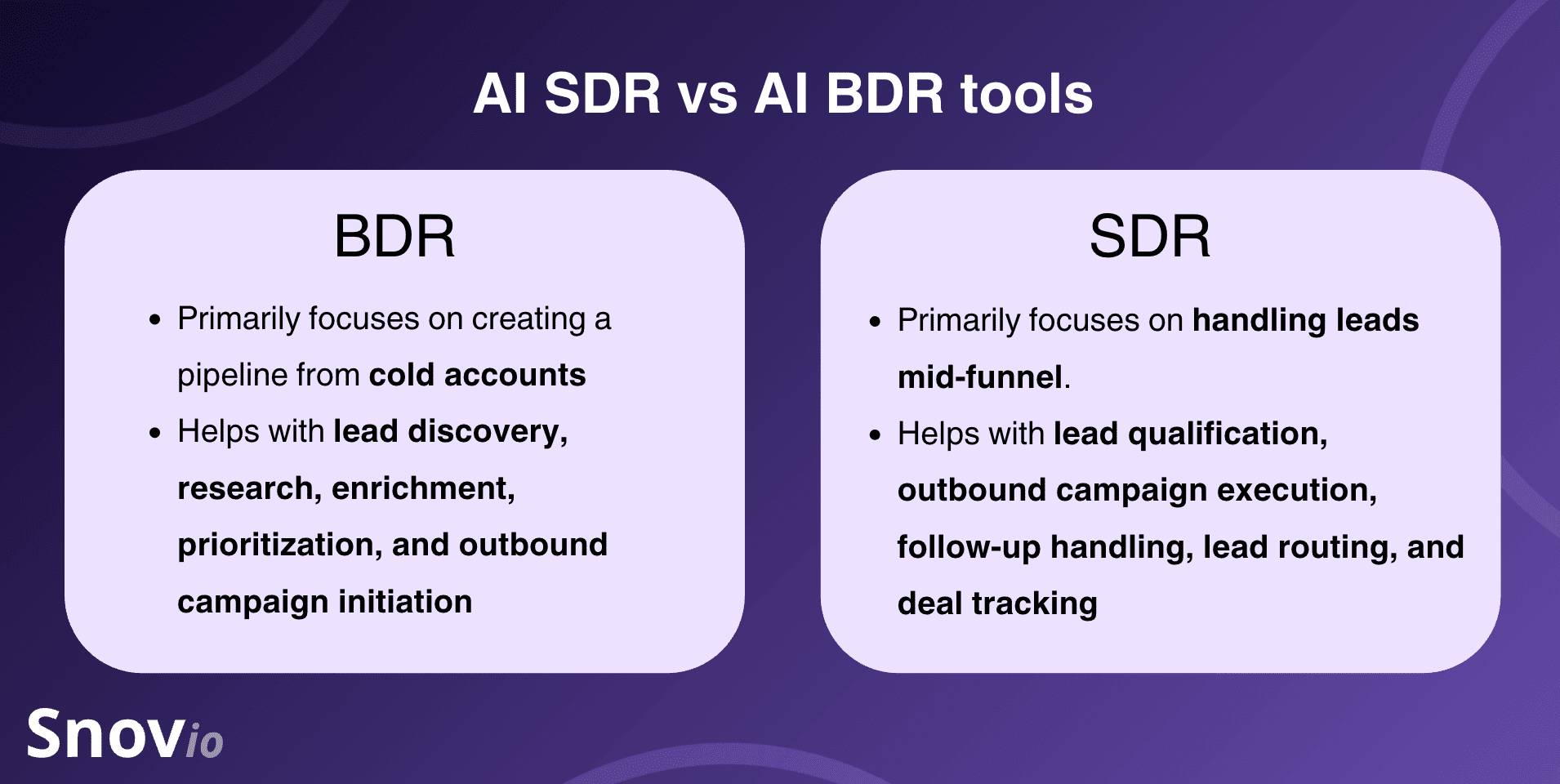
The distinction is largely about scope: AI BDRs concentrate on scaling prospecting and first-touch outreach, while AI SDRs extend automation into qualification and lead progression.
Top use cases of AI BDRs in 2026
Below, I have compiled the most common use cases for AI BDR tools today.
-
Automated outbound campaigns
AI BDRs help build and run multi-step outbound sequences across email and LinkedIn, adjusting follow-ups based on prospect behavior.
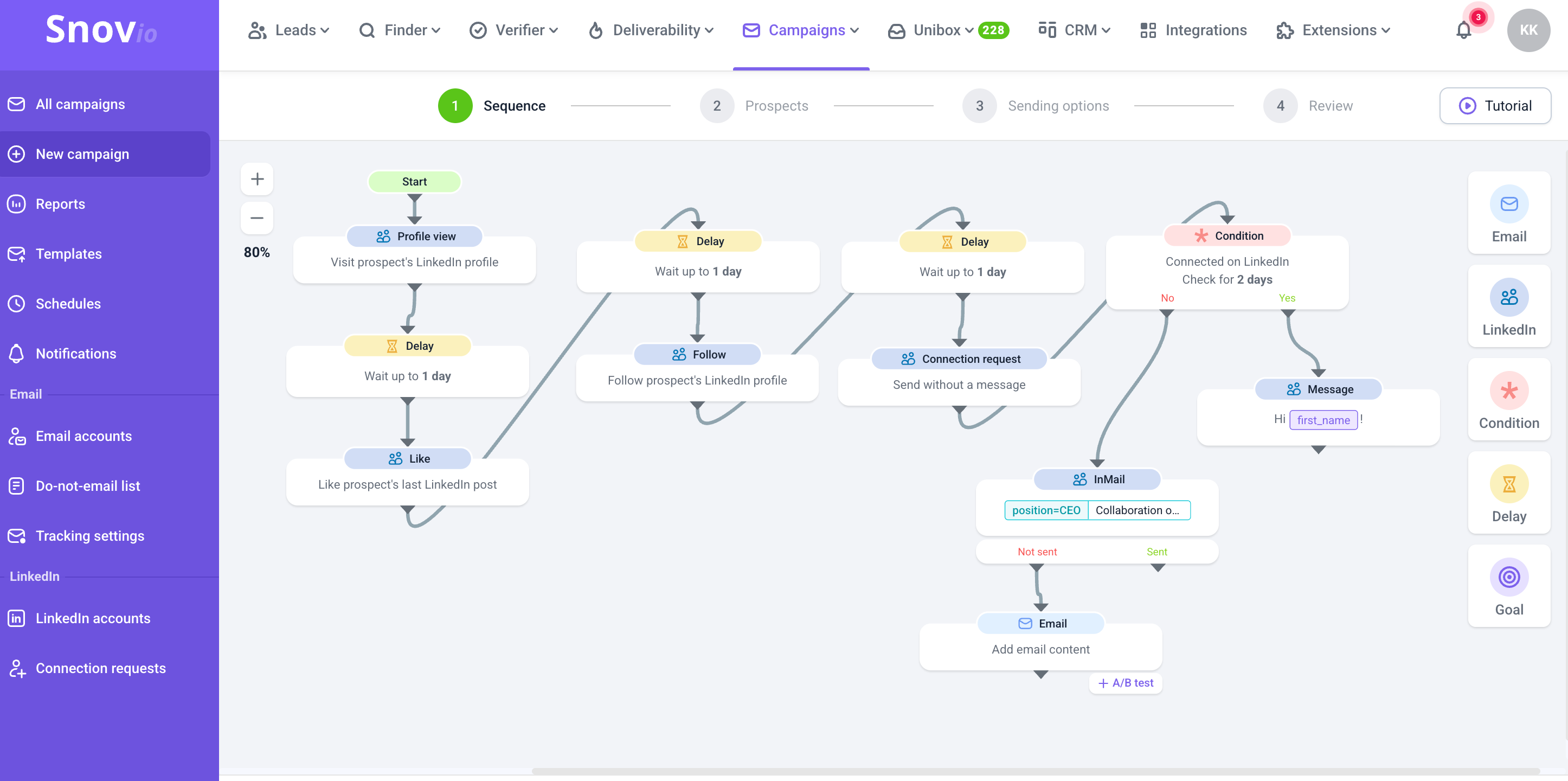
For example, if a lead replies to the initial message, the system triggers one follow-up; if they don’t but engage with the content or visit a key page, it sends another.
This keeps campaigns moving without manual intervention while still allowing BDRs to step in when a conversation becomes meaningful.
-
AI-powered lead discovery, scoring, and segmentation
Instead of static lists, AI BDRs can continuously update your lead database based on fresh firmographic data, buyer signals, or historical engagement patterns.
Leads are scored based on ICP fit and likelihood to convert, then segmented into practical groups: high-intent accounts, nurture-ready prospects, or low-priority leads. This way, outreach aligns with real buying potential rather than assumptions.
-
Intent detection
AI BDR tools monitor intent signals from prospects. Such include website behavior, engagement with company content on social media, job changes, funding announcements, or technology adoption.
When these signals indicate buying readiness, leads are prioritized and handed off to sales reps, with early qualification handled automatically. As a result, sales reps can further enter conversations with context.
-
AI-driven personalization
Personalization no longer means crafting every message by hand. AI business development representatives generate tailored messages based on unique lead information such as their role, industry, recent activity, or company context.
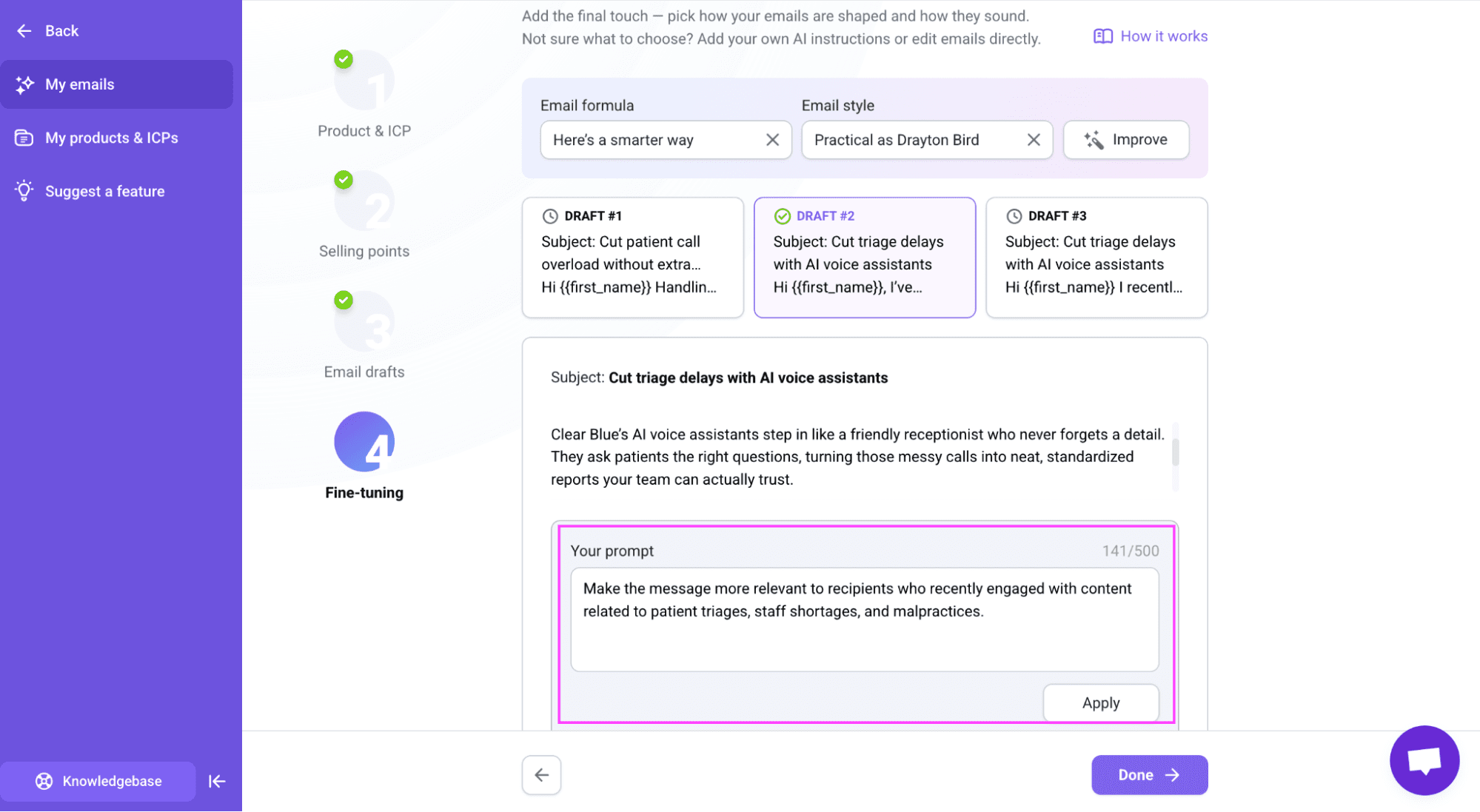
This allows sales teams to consistently personalize thousands of messages at scale using factual data instead of basic name or company inserts.
-
Performance optimization
AI business development representatives are also essential for data analysis. Software analyzes which segments respond better, which messages convert quicker, and where deals stall. Over time, this data informs better ICP definitions, more effective messaging, and optimized outbound strategies.
💡Wondering how to properly use data from your past outreach campaigns to improve your strategy? Watch this video to discover exactly what to do:
Keep in mind that to uncover which actions actually bring results, AI BDR software must oversee as many steps of your outbound cycle as possible. Thus, seamless integration of the tech stack is crucial for accurate insights.
15 Best BDR tools for 2026 by use case
Surfing the net for the perfect tool for your team can take days. To help, I created an overview of trending AI solutions for BDRs. Pick your use case and see which tool best covers it for you.
Tools for automated outbound outreach
These top solutions will help you handle initial interactions with prospects.
-
Snov.io
Best for: Small to mid-sized businesses or agencies that require an end-to-end solution for prospecting, personalization, and qualification.
G2 rating: 4.5/5
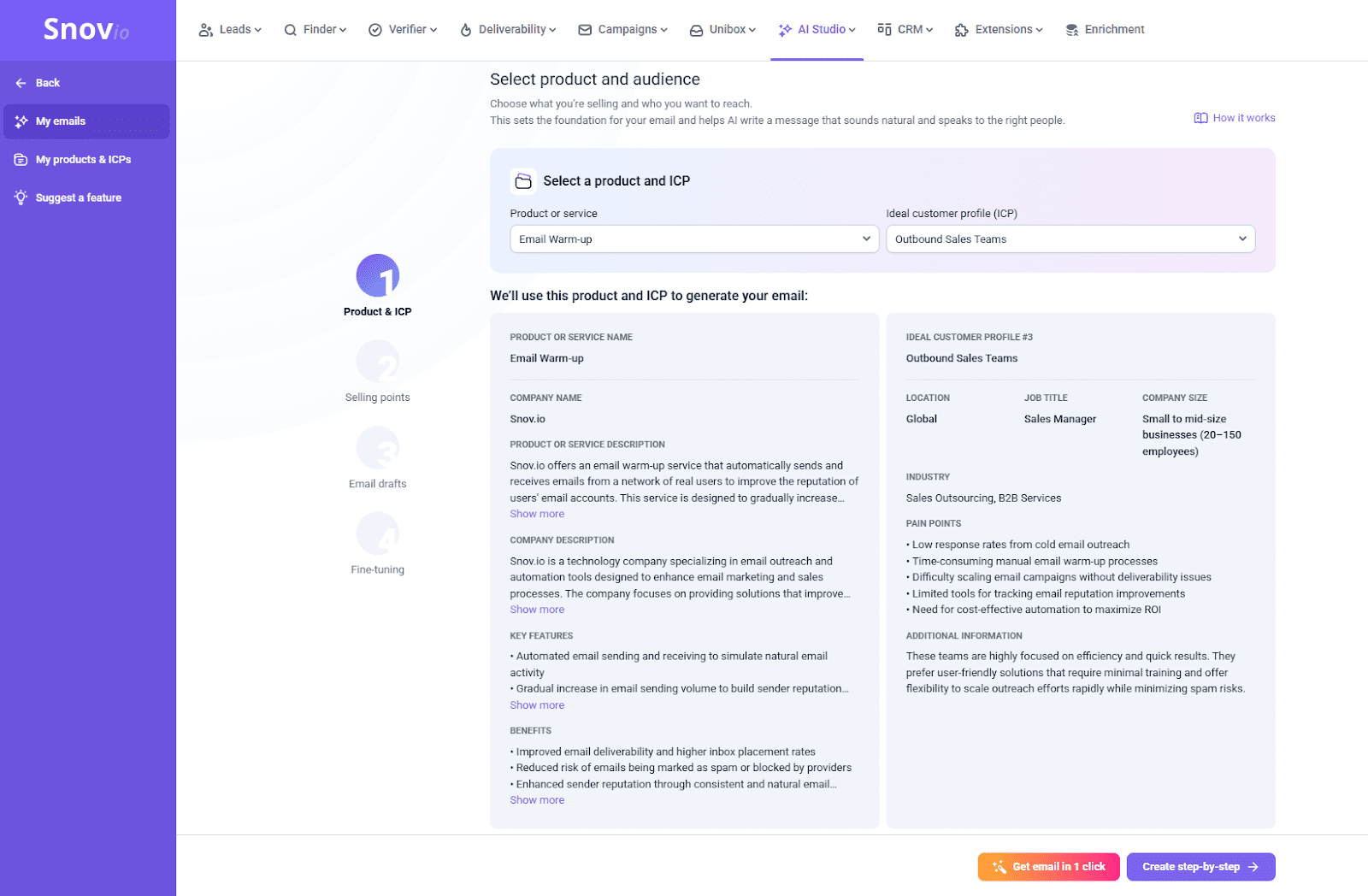
Snov.io is one of the best AI business development representative tools on the market, combining powerful lead generation with outreach capabilities. Its AI capabilities help teams build high-quality lead lists, analyze prospect interest levels, create ideal customer profiles, plus personalize outreach across email and LinkedIn.
Snov.io’s key AI features:
- AI Database Search. Define your target prospect using demographic or firmographic criteria, so the tool returns a list of contacts that closely match those criteria.
- AI Ideal Customer Profile Generator: Build an ICP based on your business context or objectives. The tool highlights prospects with the highest conversion potential, enabling more precise campaign targeting.
- AI ICP-Based Email Builder: Generate personalized, human-like emails for individual prospects. Provide prompts to the tool to generate multiple draft options with relevant value propositions. Choose the tone and style that best align with your brand or outreach goals.
- Sentiment Analysis: Automatically evaluate prospect responses to determine their level of interest. By analyzing replies, the tool helps you prioritize follow-ups, focus on high-intent leads, and respond faster to opportunities with the highest conversion likelihood.
- AI Outreach Helper: Plan and optimize your outreach by asking the helper for tailored advice.
- AI Knowledgebase: Get step-by-step instructions for troubleshooting issues, enjoy easy onboarding while getting the most out of Snov.io’s sales tools.
Pricing: starts from $39/month.
✅Pros:
- All-in-one functionality at an affordable price
- AI features are available on a Starter plan
- A database of 50+ million company contacts
- Native integration with Clay for deeper enrichment
- Intuitive and easy-to-use AI email builder
- 5-star human customer support that is responsive 24/7
- Free built-in CRM
❌Cons:
- No phone number data
What users say about Snov.io:
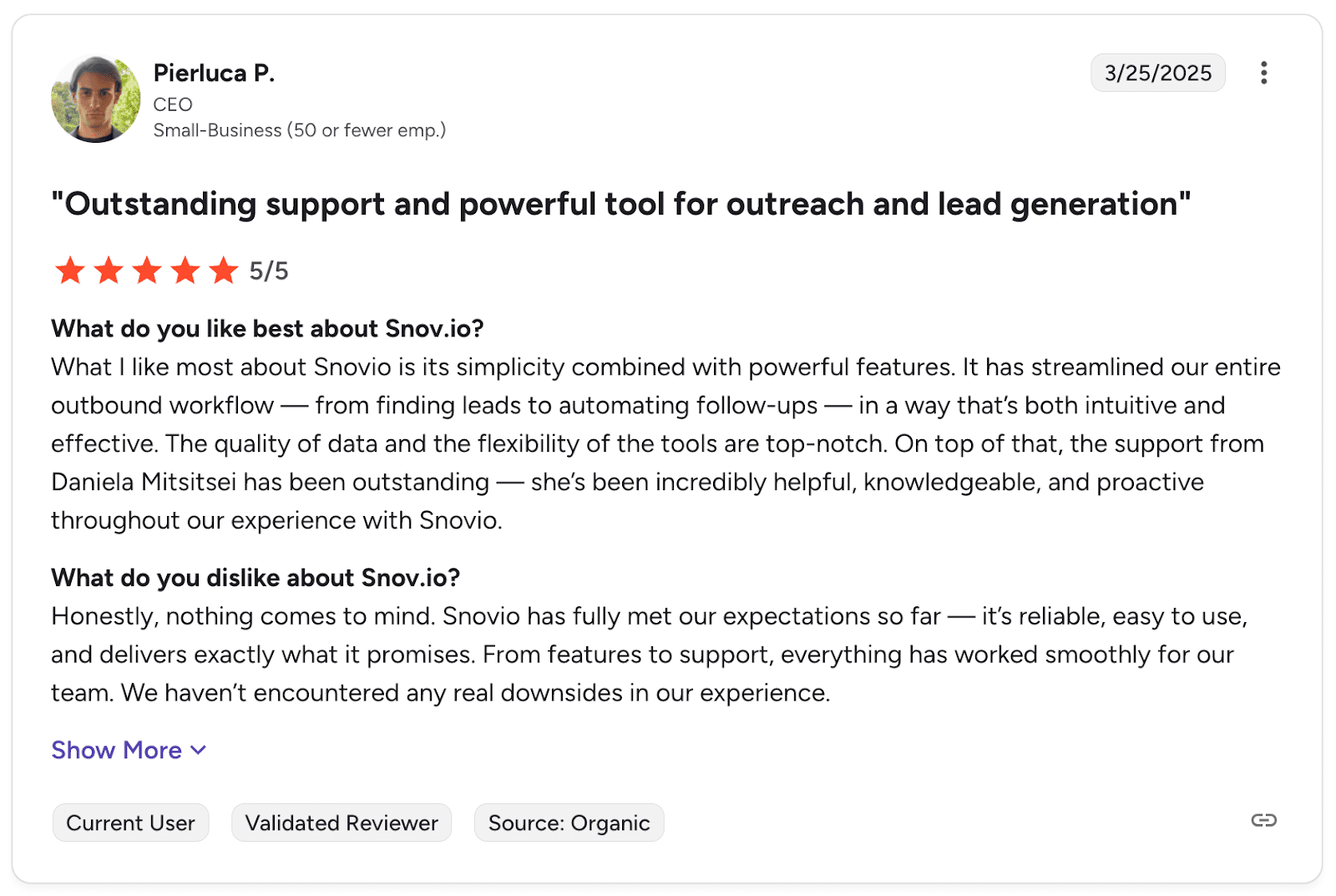
People love Snov.io for being a powerful platform that helps them streamline their outbound workflow from A to Z. Plus, users value Snov.io’s support team, calling them ‘outstanding.’
My opinion about Snov.io:
Snov.io is one of the most versatile yet easy-to-use AI BDR tools on the market. From the moment of registration, you can access all AI-enhanced prospecting and outreach features to start building lists, launching campaigns, and analyzing your prospects’ responses, all backed by an absolutely free sales CRM functionality.
If you have any questions, you’ll be able to find answers immediately thanks to the AI-enabled search in the knowledge base and 24/7 customer support.
The best part – you don’t need to worry about email providers or LinkedIn algorithms blocking your AI sales automation. Snov.io safeguards your account by adhering to recommended daily outreach limits, mimicking human behavior, operating in the cloud, and implementing additional security measures.
Plus, given its robust feature set, the platform’s price is surprisingly low, making it a great option for solopreneurs, start-ups, or SMBs.
-
Instantly.ai
Best for: Individuals or small teams that want to launch cold email campaigns quickly with minimal setup.
G2 rating: 4.8/5
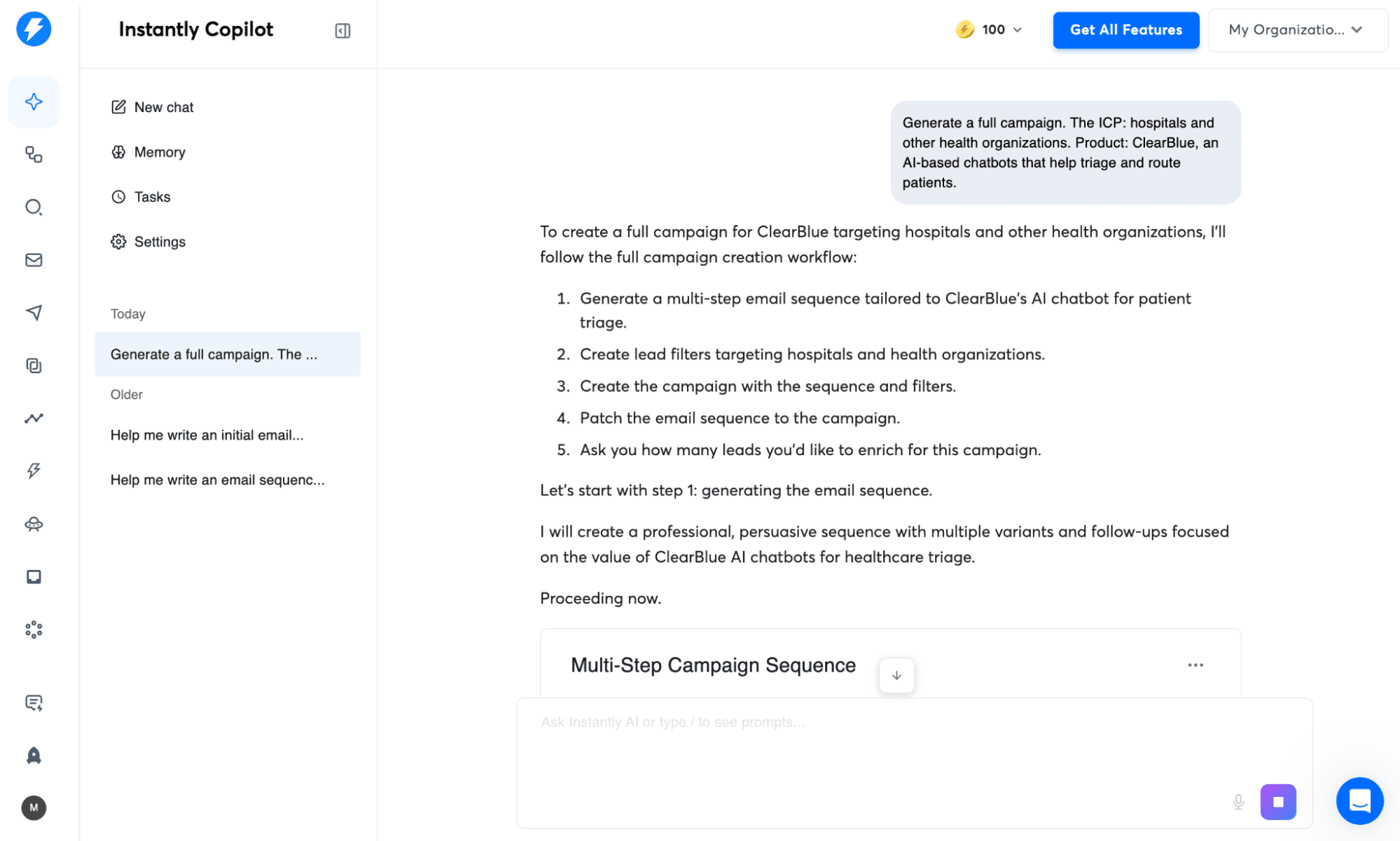
Instantly.ai focuses on simplifying outbound email automation. Its AI features are designed to reduce setup time rather than deeply optimizing targeting or messaging.
Instantly’s key AI features:
- AI ICP generator: Suggests a list of prospects for each campaign, already filtered according to the criteria provided by a user.
- AI Email generator: Produces basic cold email drafts based on short prompts.
- AI campaign suggestions: Recommends simple sequences and follow-up structures based on common outbound patterns.
Pricing: a free plan with 100 credits; paid subscriptions start at $37/month.
✅Pros:
- Very fast setup plus easy onboarding
- AI features are available in all plans
- Clean, beginner-friendly UI
- Strong deliverability focus for cold email
❌Cons:
- No native lead database or enrichment
- AI personalization is a bit generic
- No built-in LinkedIn automation
- Limited analytics beyond basic campaign metrics
What users say about Instantly:
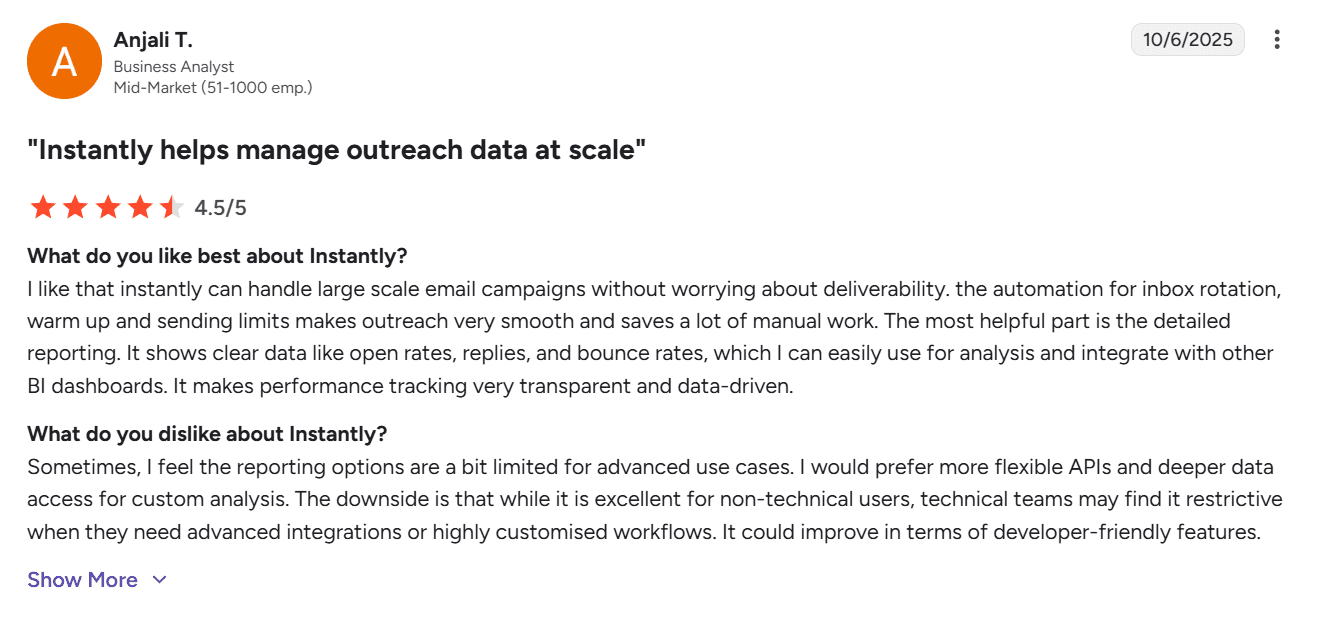
People appreciate this tool for its smooth outreach capabilities as well as reporting functionality, though they highlight that the latter is a bit limited at times.
My opinion about Instantly.ai:
Instantly.ai is very easy to set up and start using. I signed up and could connect my inboxes to start sending cold emails right away – without much training. Its deliverability tools are also a big plus, as they help keep my accounts from being flagged by email providers.
At the same time, I have to admit that the tool’s AI capabilities are fairly basic. Personalization is most often surface-level. While it can help with lead generation, I’d still rely on external tools for lead sourcing, enrichment, and more precise targeting.
Overall, Instantly might work if you aren’t comfortable with setting up a campaign, but for experienced BDRs, the platform lacks depth.
-
SmartReach AI
Best for: Small to mid-sized sales teams running multichannel outbound with email, LinkedIn, and calls.
G2 rating: 4.7/5
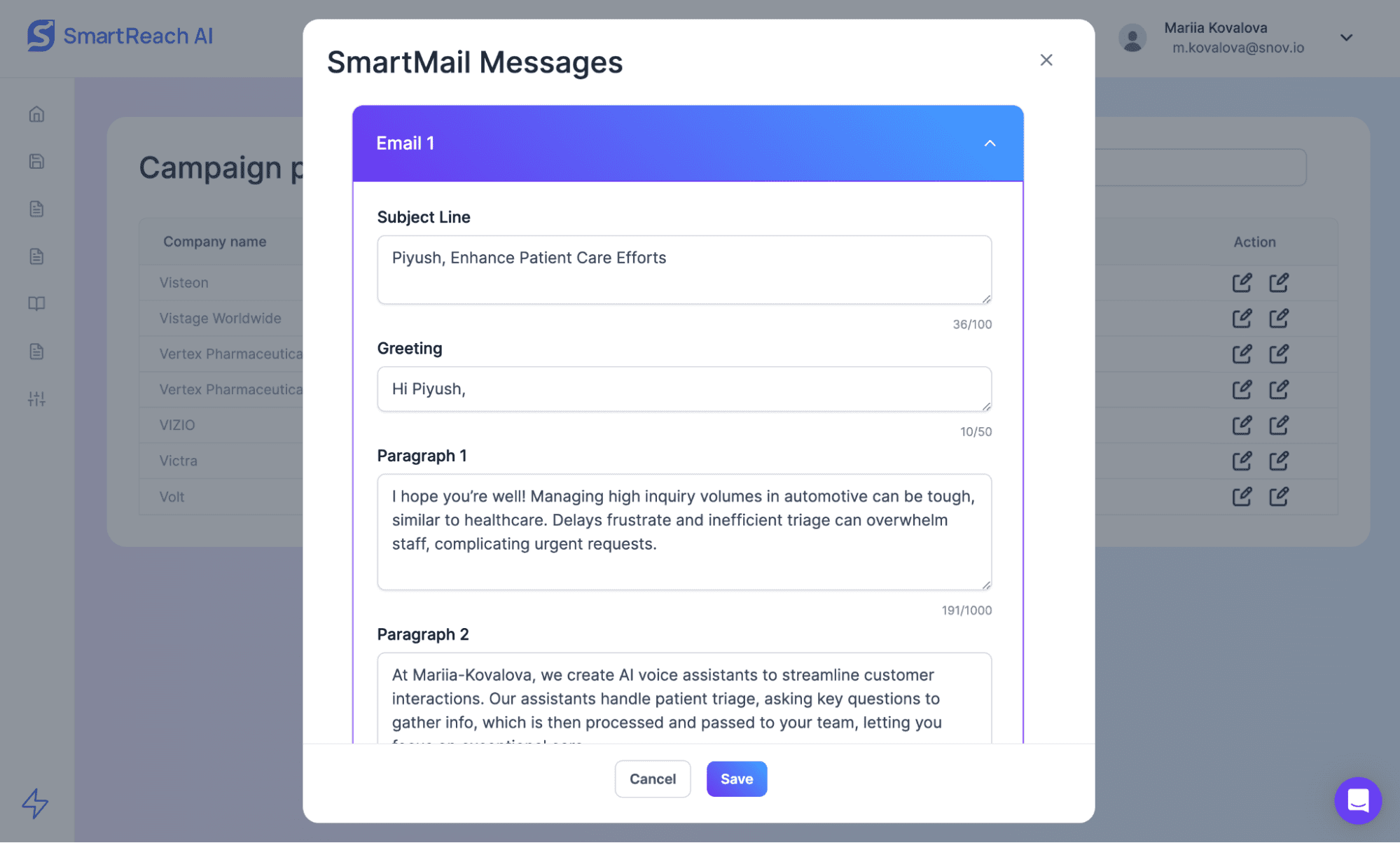
SmartReach AI combines AI-assisted outreach campaign generation with light prospecting via multiple channels. It helps users enrich their prospect base, generate personalized messages, plus build sequences quickly.
SmartReach AI’s key features:
- Smart Agent: Answers prospect-related questions, helping with the search.
- AI email generator: Creates message drafts for different steps in a sequence.
- AI subject line and Ice Breaker creator: Generates best-fitting subject or opening lines, as well as ice breakers, based on relevant information about the recipients.
- AI follow-up optimization: Suggests timing adjustments based on response behavior.
Pricing: a free plan with 50 tokens; paid tiers begin from $29/month.
✅Pros:
- Supports multichannel sequences
- Intuitive, doesn’t have much of a learning curve
- Built-in warm-up and deliverability tools
- Good team collaboration features
❌Cons:
- Very restricted lead database
- LinkedIn automation features are locked behind higher-priced tiers
- AI-generated copy requires a lot of human refinement
- Reporting is basic for larger teams
What users say about SmartReach AI:
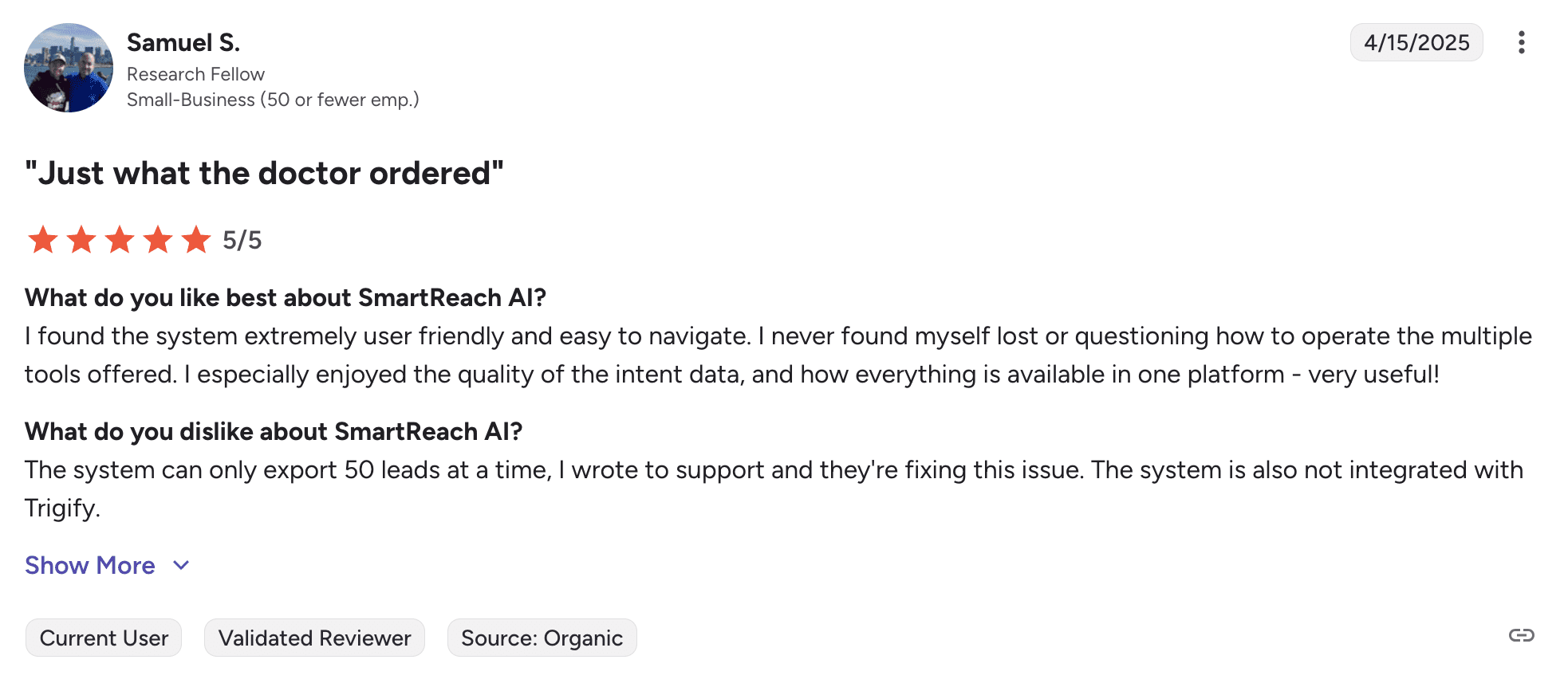
Overall, people like this tool for easy navigation. The quality of generated data also receives high acclaim. Among cons, users name certain integration limitations.
 My opinion about SmartReach AI:
SmartReach AI is a handy, lightweight app for multichannel sequencing. It’s super easy to set up – just register for free and start configuring your outreach. The platform’s clean, intuitive interface makes campaign building seamless even for inexperienced users. Plus, its built-in security features protect user accounts.
Unfortunately, messages generated by SmartReach AI didn’t strike me as particularly well-written. The platform produces content identical to what ChatGPT generates, which requires significant refinement. I also wasn’t impressed by the platform’s reporting capabilities. Personally, I need more details on my campaign’s success to optimize future outreach efforts.
Although SmartReach AI is a decent tool for multichannel outreach, in my opinion, there are more sophisticated solutions on the market at a similar price.
Key takeaways: Which is the best AI BDR tool for outbound campaign automation?
Among the three tools I’ve analyzed, Snov.io excels as the best solution because it provides more opportunities to automate sales prospecting. Its features are advanced enough to serve as a single tool for SMBs and agencies that don’t want to juggle a large software stack. Plus, it has robust integration capabilities, so even if you need to add other solutions, they will work perfectly with Snov.io.
Lead discovery, scoring, and enrichment tools
Looking for solutions that help you find quality leads? Need the tools to enrich quality data? The following software can automate these processes perfectly well.
-
Apollo.io
Best for: Sales teams that want a large contact database with advanced smart filtering capabilities.
G2 rating: 4.7/5
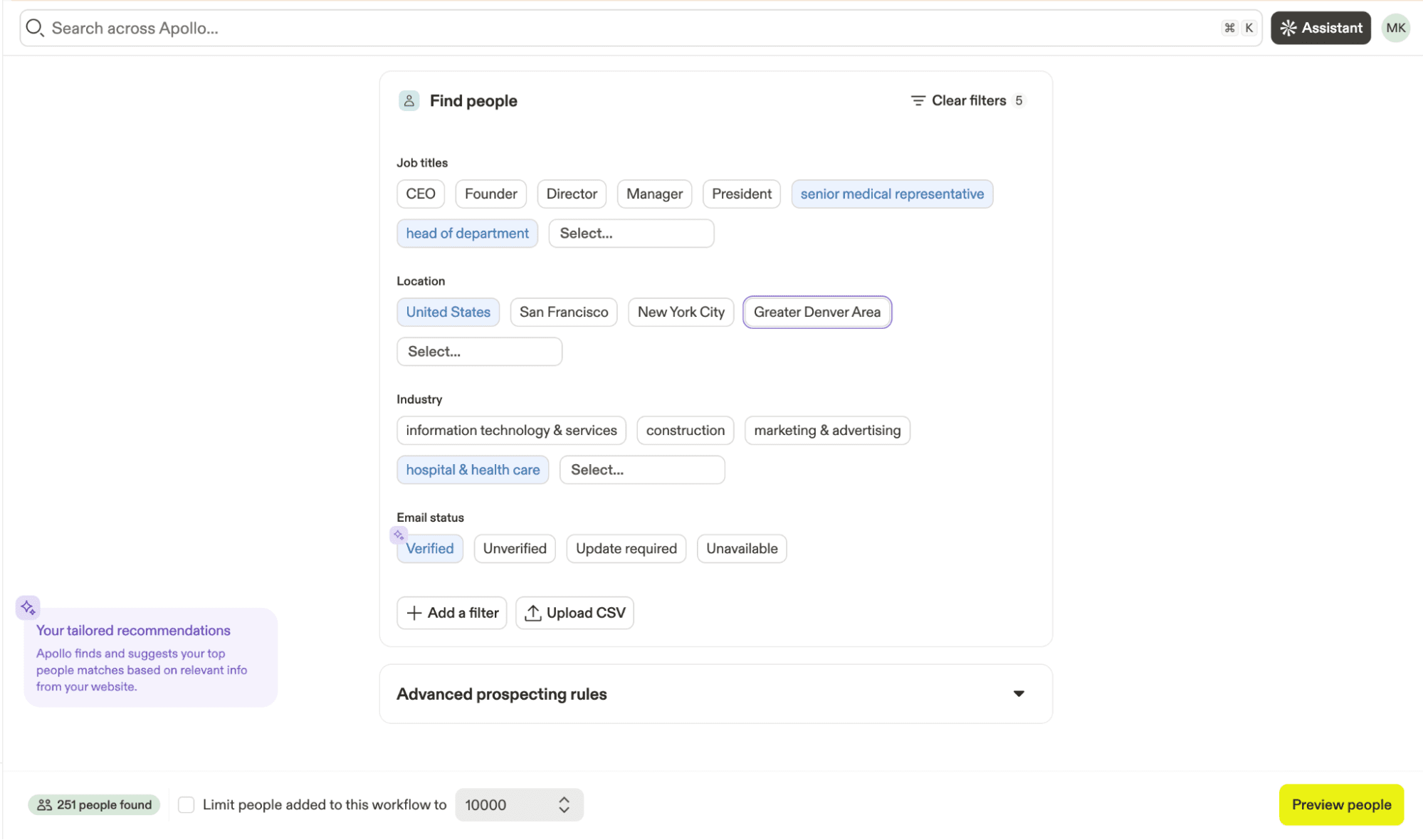
Apollo combines lead discovery and data enrichment into a single platform. Its AI helps with filtering, lead scoring, as well as basic personalization. However, data freshness can vary by region or industry.
Apollo’s key AI features:
- AI search filters: Help refine large datasets by automatically filtering them to very specific segments.
- Lead scoring: Ranks prospects’ fit to the users’ ICPs based on firmographic data and engagement signals.
- AI email writer: Generates outreach messages tied to contact attributes.
Pricing: free plan available; paid subscriptions start from $59/month.
✅Pros:
- A large global contact database
- Strong AI-enhanced filtering and segmentation options
- Combines prospecting with outbound outreach
❌Cons:
- Data accuracy can be inconsistent in niche markets
- AI-generated copy needs extensive manual refinement
- The interface can feel rather overwhelming for new users
- Support quality varies
What users say about Apollo:
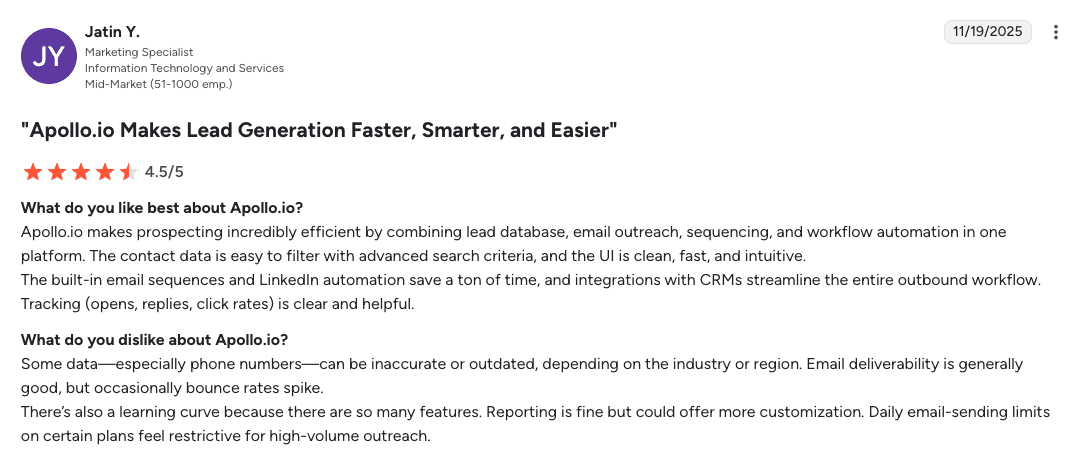
Users commonly praise Apollo.io for its large contact database as well as powerful filtering options. Yet, people claim the learning curve of this tool can be really steep due to many features.
My opinion about Apollo.io:
My experience with Apollo was ruined by installation hurdles. I had trouble with registration, being unable to sign up after several tries. Also, onboarding felt a bit convoluted, taking me time to make sense of the interface. Once I got through these issues, however, I appreciated the tool’s AI filtering, which makes prospecting significantly easier.
That said, many reviewers point out inconsistencies in data accuracy and freshness, particularly in niche industries or outside core regions. I can conclude that Apollo.io performs well at scale, but teams focused on data precision might need additional tools.
-
Cognism
Best for: Enterprise teams focused on GDPR-compliant prospecting, especially in EMEA.
G2 rating: 4.5/5
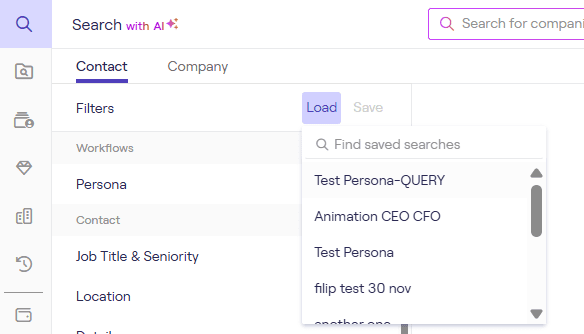
Cognism positions itself as a compliance-first data platform. It employs AI primarily for data verification and intent scoring, providing users with data-rich, highly targeted prospect lists.
Cognism’s key AI features:
- Cortex AI Search (beta feature): Suggests prospects that fit users’ ICP based on a unique combination of database info and real-time signals.
- AI-driven data enrichment: Automatically enhances your lead records with up-to-date details.
- Governed AI insights: Combine predictive analytics with business-defined rules to surface high-value leads.
- AI-enhanced persona creation: Uses artificial intelligence to build detailed buyer personas, grouping leads into segments.
Pricing: custom, not publicly available.
✅Pros:
- Strong GDPR and compliance standards
- High-quality EMEA data
- Reliable phone number coverage
❌Cons:
- The pricing is unclear
- AI features are mostly data-focused, not suitable for deep process automation across BDR workflows
- Minimal personalization tools
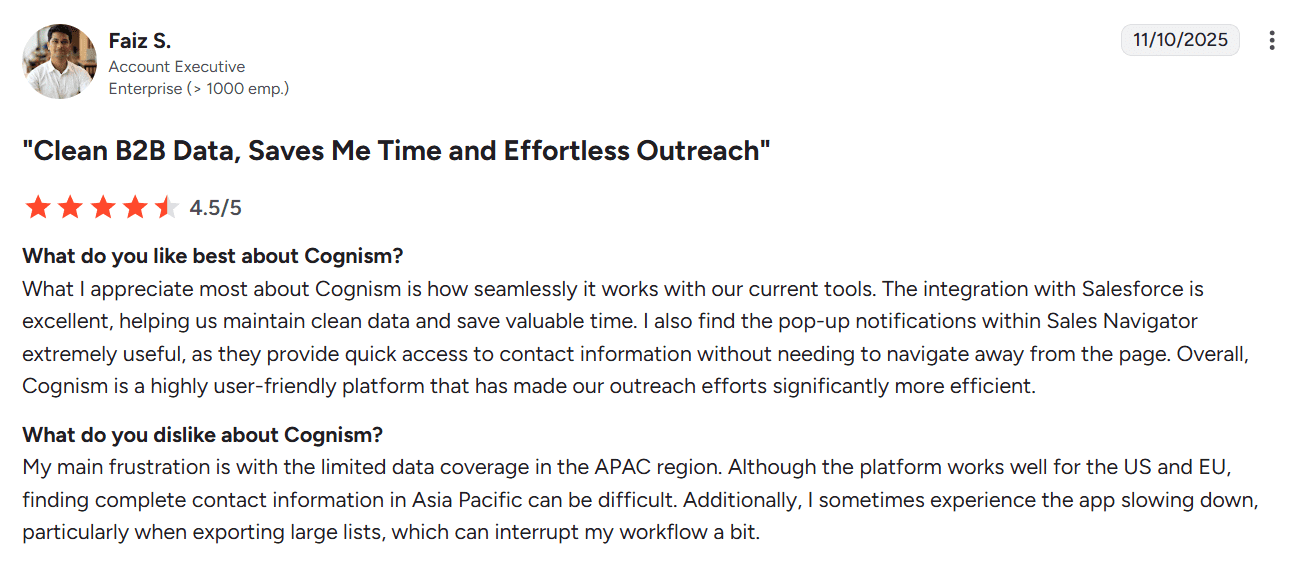
What users say about Cognism:
People appreciate the platform’s user-friendly interface as well as excellent integration capabilities. On the other hand, users are sometimes frustrated with the limited data coverage the tool provides.
My opinion about Cognism:
Cognism stands out for its strong compliance standards as well as reliable data quality in EMEA markets. This is a huge plus for those operating in the EU, as confidence in GDPR alignment is paramount. The abundance of phone-verified contacts is also an advantage – not many tools can boast such a fresh and large database of phones in this region.
On the downside, we have unclear pricing and limited flexibility. And talking about AI – its functionality is mostly centered on data validation and intent signals rather than outreach or personalization. All in all, Cognism is a strong data provider, yes, but not a full AI-driven BDR solution. Plus, it might not be suitable for smaller teams due to integration complexities and high pricing.
-
Clay
Best for: Advanced users who want to build custom enrichment and scoring workflows.
G2 rating: 4.7/5
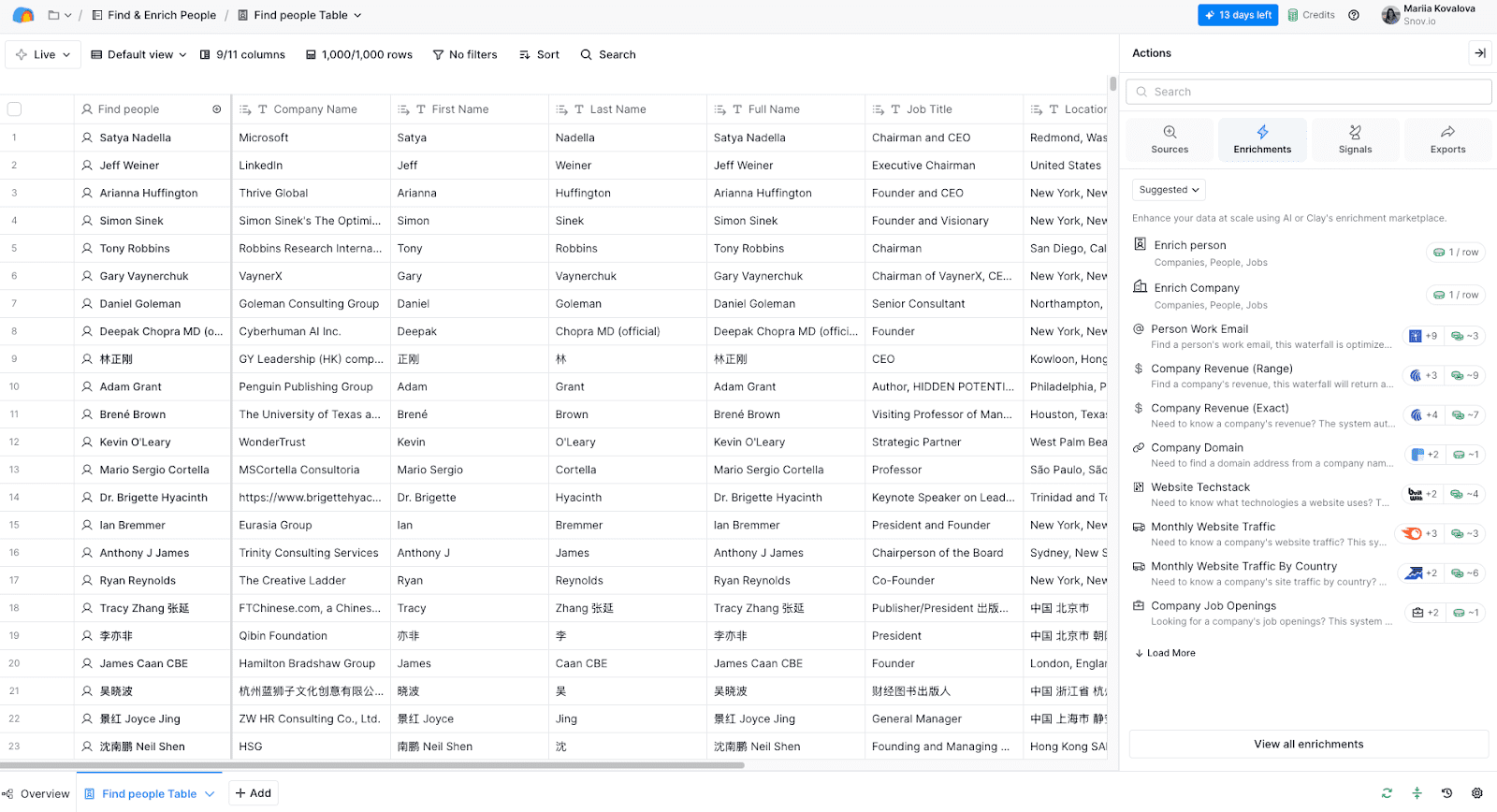
Clay is a flexible enrichment and automation platform. Its AI shines in combining multiple data sources and applying custom logic to equip users with in-depth lead data.
Clay’s key AI features:
- Lead research: Pulls lead data from websites, PDFs, search results, and other online sources.
- AI data enrichment: Enriches data from dozens of sources, providing BDRs with accurate firmographics, technographics, job data, etc.
- AI scoring: Labels and scores leads using custom rules and prompts.
- Clayagent: This AI Research Assistant answers natural-language queries, finds insights, identifies new leads, and automates complex research tasks.
Pricing: free plan available; paid plans start from $149/month.
✅Pros:
- In-depth enrichment coming from multiple sources
- Highly customizable workflows
- Strong AI prompt-based scoring
❌Cons:
- Steep learning curve
- No native B2B outreach AI capabilities
- Can become expensive at scale
- Requires a technical mindset
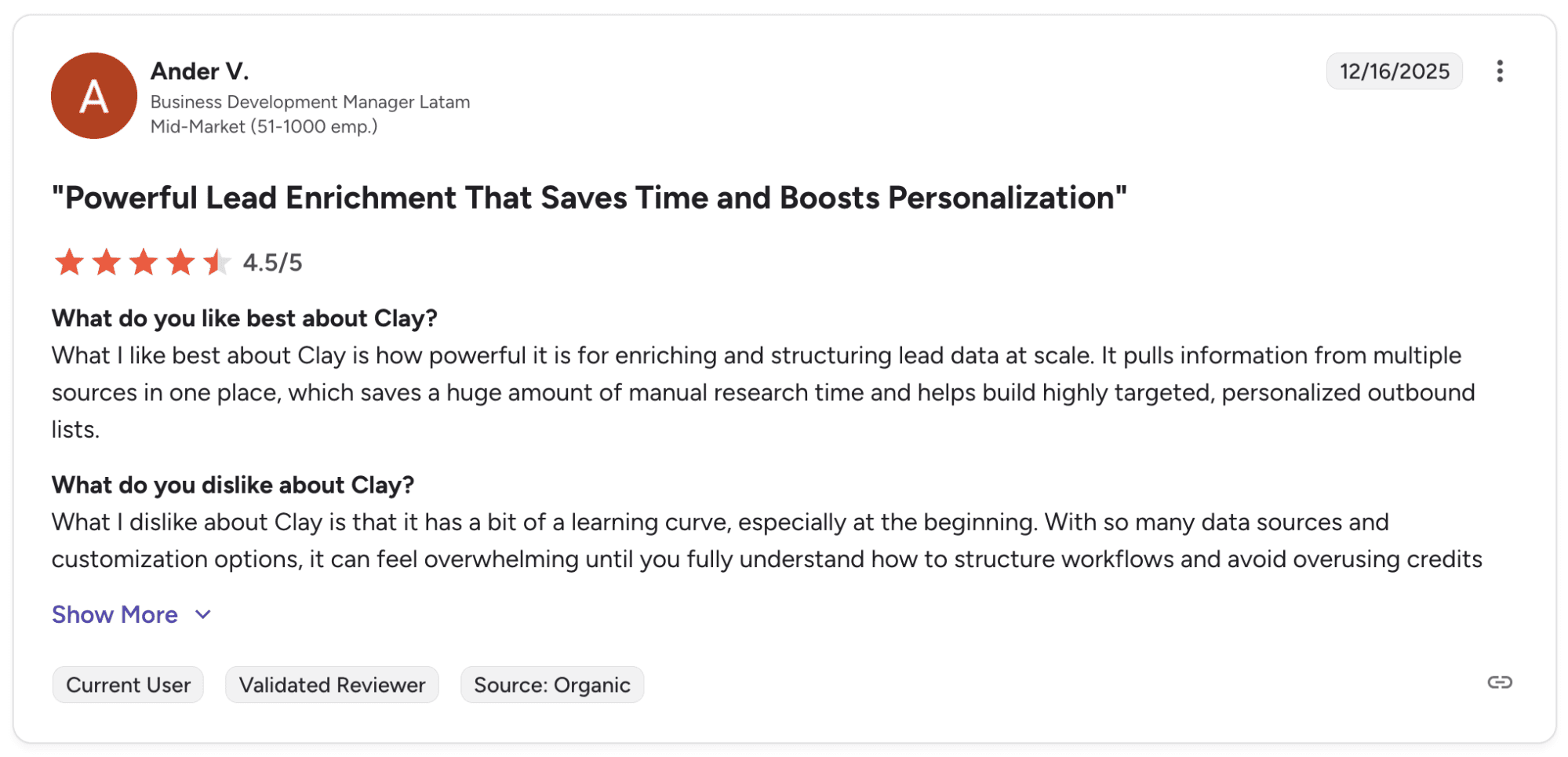
What users say about Clay:
People like its enrichment capabilities, but highlight a bit steep learning curve.
My opinion about Clay:
Clay is a powerful tool, but complex. It combines multiple data sources, applies AI-driven enrichment, and builds highly customized scoring workflows, which are invaluable. For advanced teams, this flexibility is a major advantage.
At the same time, many users mention a steep learning curve. Clay does not include native outreach, which means it must be paired with other tools to function as a full outbound stack. It is best suited for data-centric teams rather than plug-and-play BDRs.
|
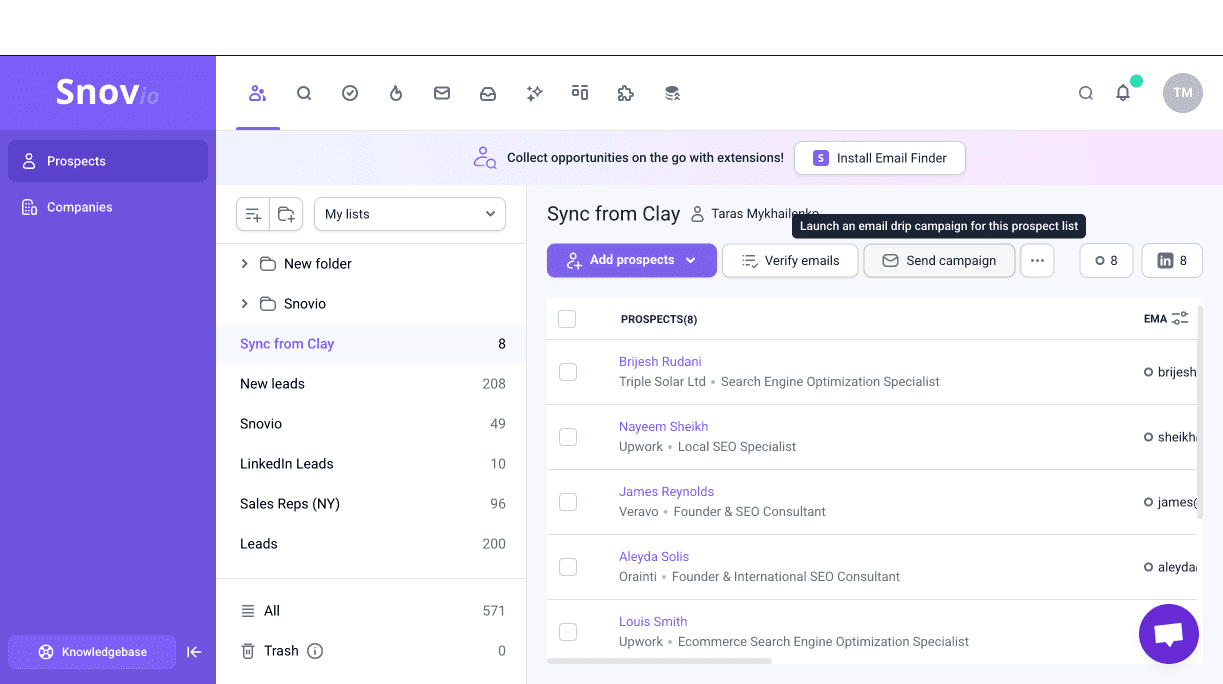
💡Pro-tip: Now, you can get the best of two worlds. Benefit from Clay’s deep enrichment and Snov.io’s advanced outreach automation capabilities with Clay + Snov.io integration. Find prospects, enrich them with Clay, and run a targeted campaign – all in one seamless workflow. |
Key takeaways: Which is the best AI BDR tool for lead discovery, scoring, and enrichment?
For me, Clay stands out as the most powerful solution on the market, especially in terms of data enrichment. Its source variety and workflow automation capabilities may satisfy users from any type of organization or niche.
Even though it’s not a stand-alone AI sales automation solution, it’s worth adding to your tech stack to get exclusive details about your leads.
Personalization tools
These AI BDR tools will help you boost engagement by offering strong personalization features.
-
Regie.ai
Best for: Large marketing and sales teams producing high volumes of outbound messages.
G2 rating: 4.4
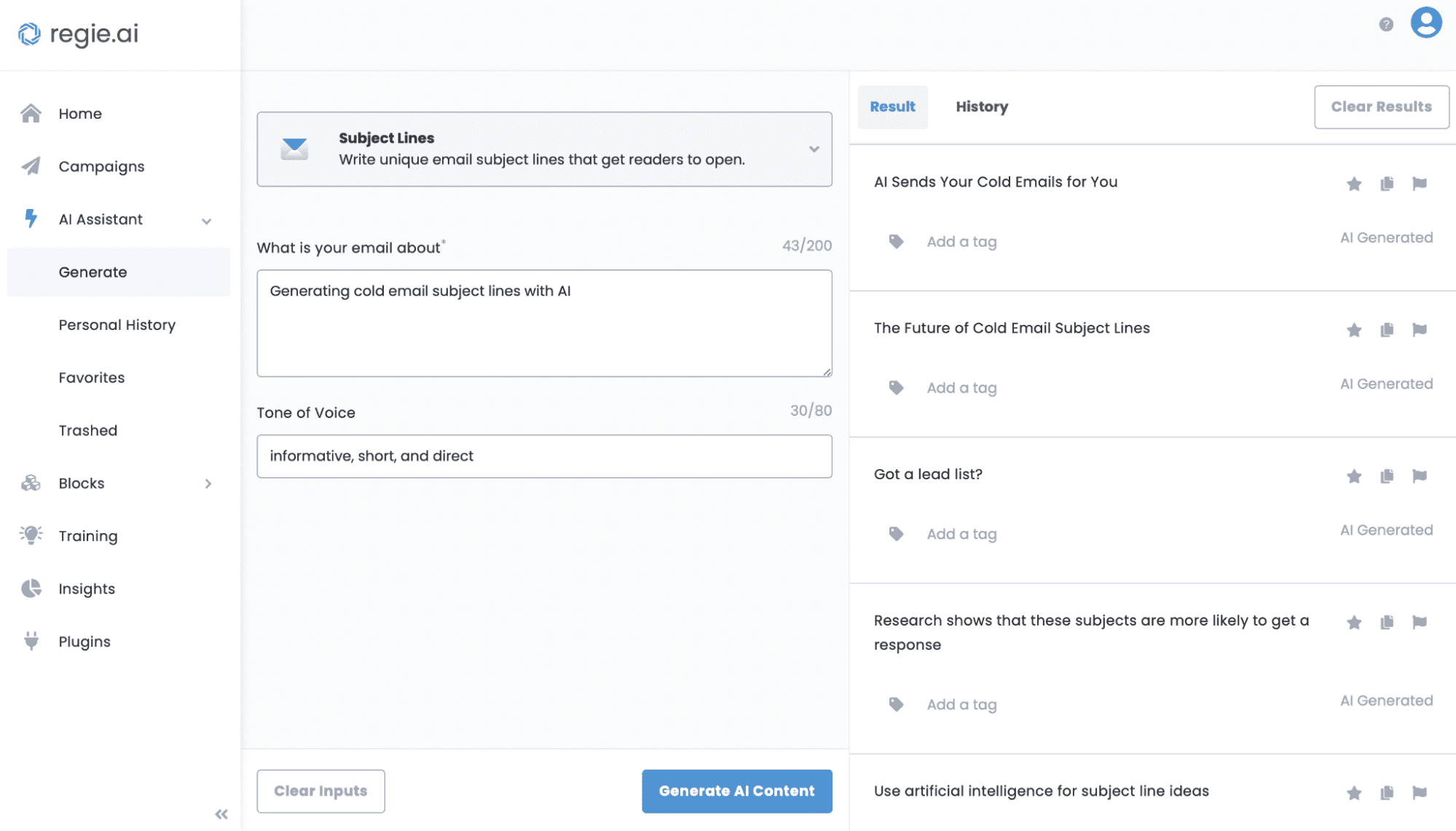
Regie focuses on AI-generated messaging aligned with personas and funnel stages. It helps BDRs create all kinds of branded content, keeping the tone consistent and engaging.
Regie’s key AI features:
- Persona-based message generation: Writes emails based on ICP and buying stage.
- AI campaign frameworks: Suggests messaging angles for different segments.
- Multi-channel engagement: Supports coordinated outreach across email, social, and messaging channels.
Pricing: starting at $35K/year; free options are provided, but with an annual contract
✅Pros:
- Strong copy quality for bulk campaigns
- Consistent brand voice control
- Abundant team collaboration features
- Robust analytics
❌Cons:
- No lead database or enrichment capabilities
- Limited real-time personalization
- Pricing is too high for smaller teams
What users say about Regie.ai:
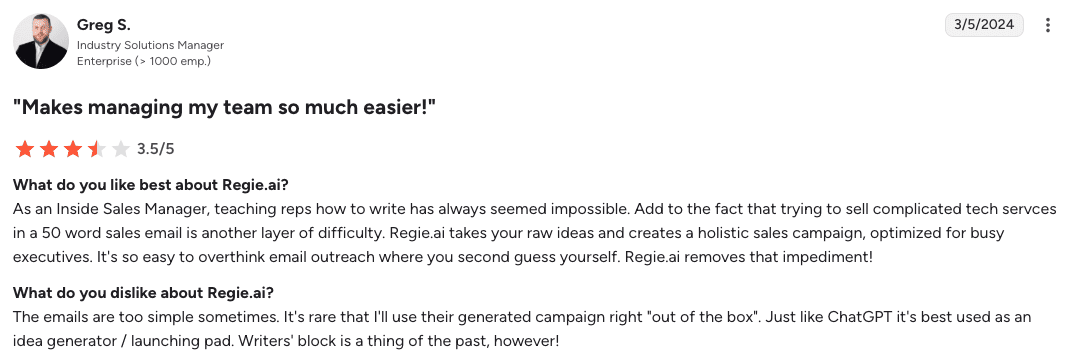
Overall, people like this tool for its help with creating sales campaigns, though they state that the email copies it generates can be too simple at times.
My opinion about Reggie.ai:
The platform is well-regarded for producing consistent, structured outbound copy at scale. It helps align messaging with personas, funnel stages, and campaign goals, especially for larger teams.
However, Reggie.ai lacks native prospecting, enrichment, and execution capabilities, and personalization depends heavily on the quality of inputs. So, my opinion is that this platform works best as a content layer within a broader outbound toolset.
-
Lavender
Best for: Sales reps who want real-time AI coaching while writing emails.
G2 rating: 4.8/5
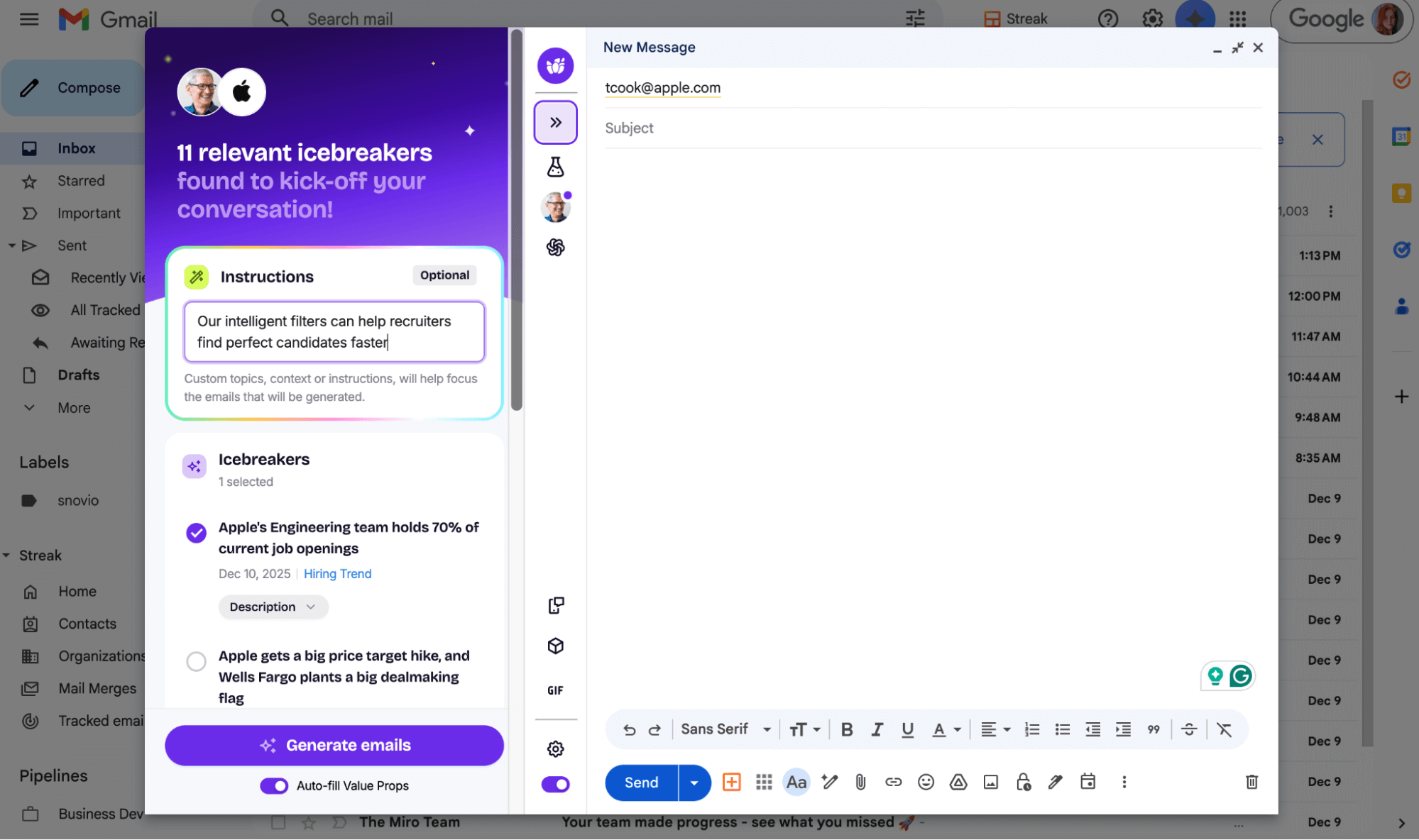
Lavender acts as an AI writing assistant embedded into email workflows, focusing on clarity, tone, and reply likelihood.
Lavender’s key AI features:
- AI Email Builder. Generates email copy based on information about prospects scraped off the internet and the user’s prompt.
- Email coaching. Suggests edits to improve emails’ readability. Offers ways to enhance recipients’ engagement.
- Personalization scoring. Evaluates how tailored a message feels.
Pricing: plans start around $29/month.
✅Pros:
- Excellent writing guidance
- Easy to adopt for individual reps
- Works inside Gmail and other tools
❌Cons:
- No bulk B2B outreach AI capabilities
- No prospecting, campaign-building, or CRM capabilities
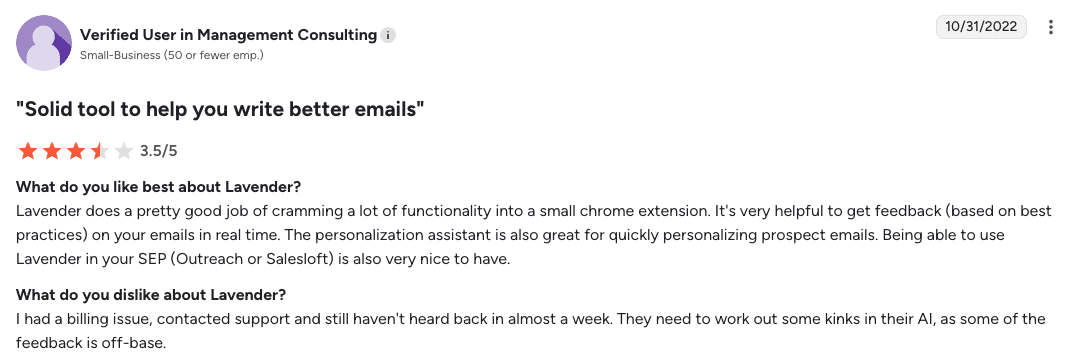
What users say about Lavender:
Reviewers state that Lavender is very helpful for providing feedback on your emails in real time. Personalization assistance is also effective. On the other hand, users point out occasional inaccuracies in AI suggestions.
My opinion about Lavender:
Lavender is a one-of-a-kind real-time email coaching tool. Its practical suggestions around clarity, tone, and personalization are very on point, making this tool essential for BDRs who are unsure about the quality of their outreach. It’s also very secure, and the customer support is responsive during business hours.
That said, Lavender does not have bulk B2B outreach AI functionality, lead discovery, or campaign management. It excels at improving email quality, but I would use it to complement AI-driven outbound platforms.
-
AiSDR
Best for: Teams experimenting with fully autonomous B2B outreach AI workflows as a possibility to replace human BDRs.
G2 rating: 4.7/5
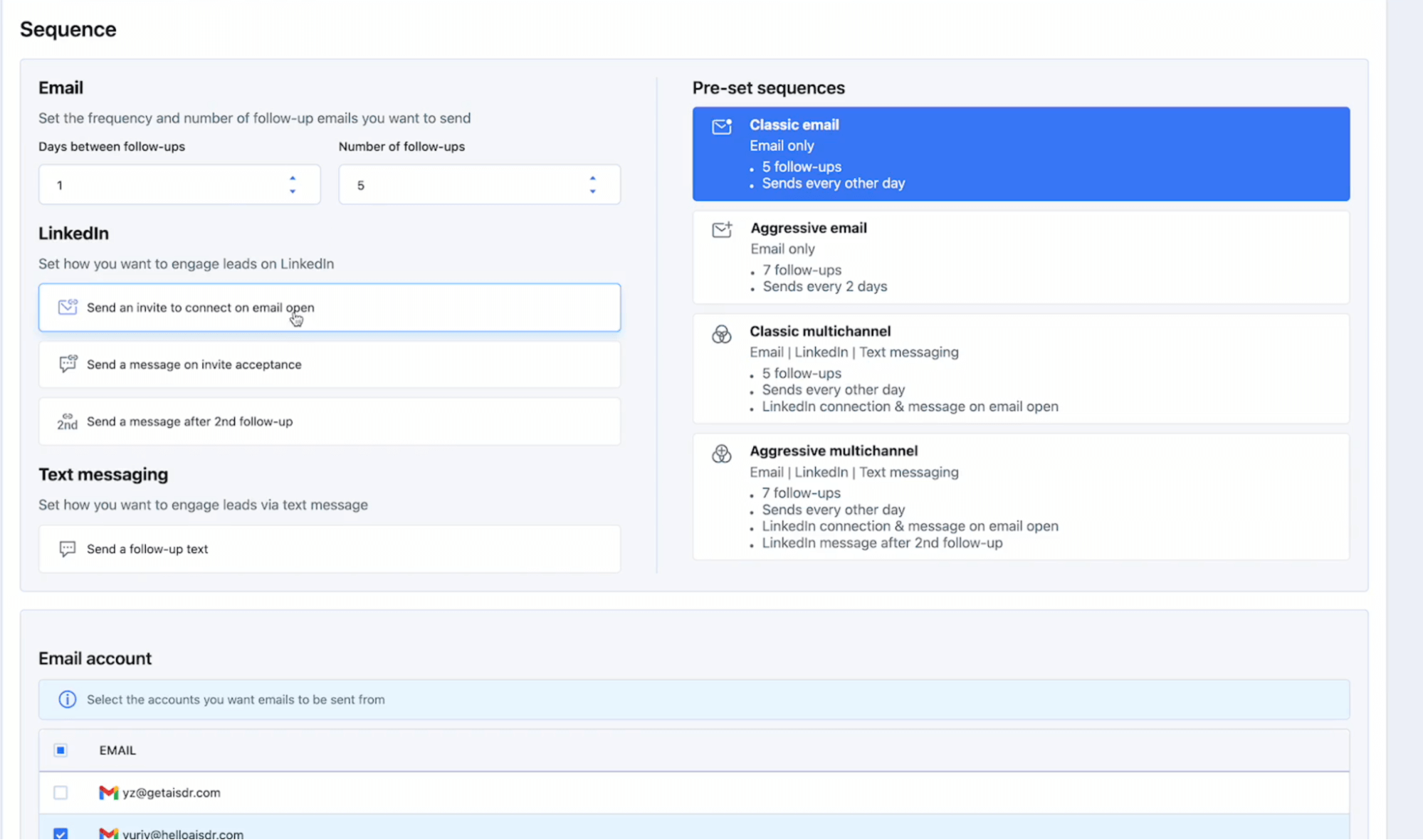
AiSDR is a solution that helps to automate sales workflows end-to-end with highly complex autonomous AI agents.
AiSDR’s key features:
- B2B outreach AI Agent: Generates and sends messages on behalf of a business development representative.
- Persona Builder: Creates detailed sales personas and generates highly relevant messages.
- Personalization Engine: Adjusts messaging based on the initial prospect data, as well as consequent conversations.
Pricing: from $900/month billed quarterly; no free trial is available.
✅Pros:
- Supports multichannel outreach
- Manages your email infrastructure
- Continuous learning models
❌Cons:
- Limited transparency into AI decisions
- Personalization quality varies
- It is costly for smaller teams
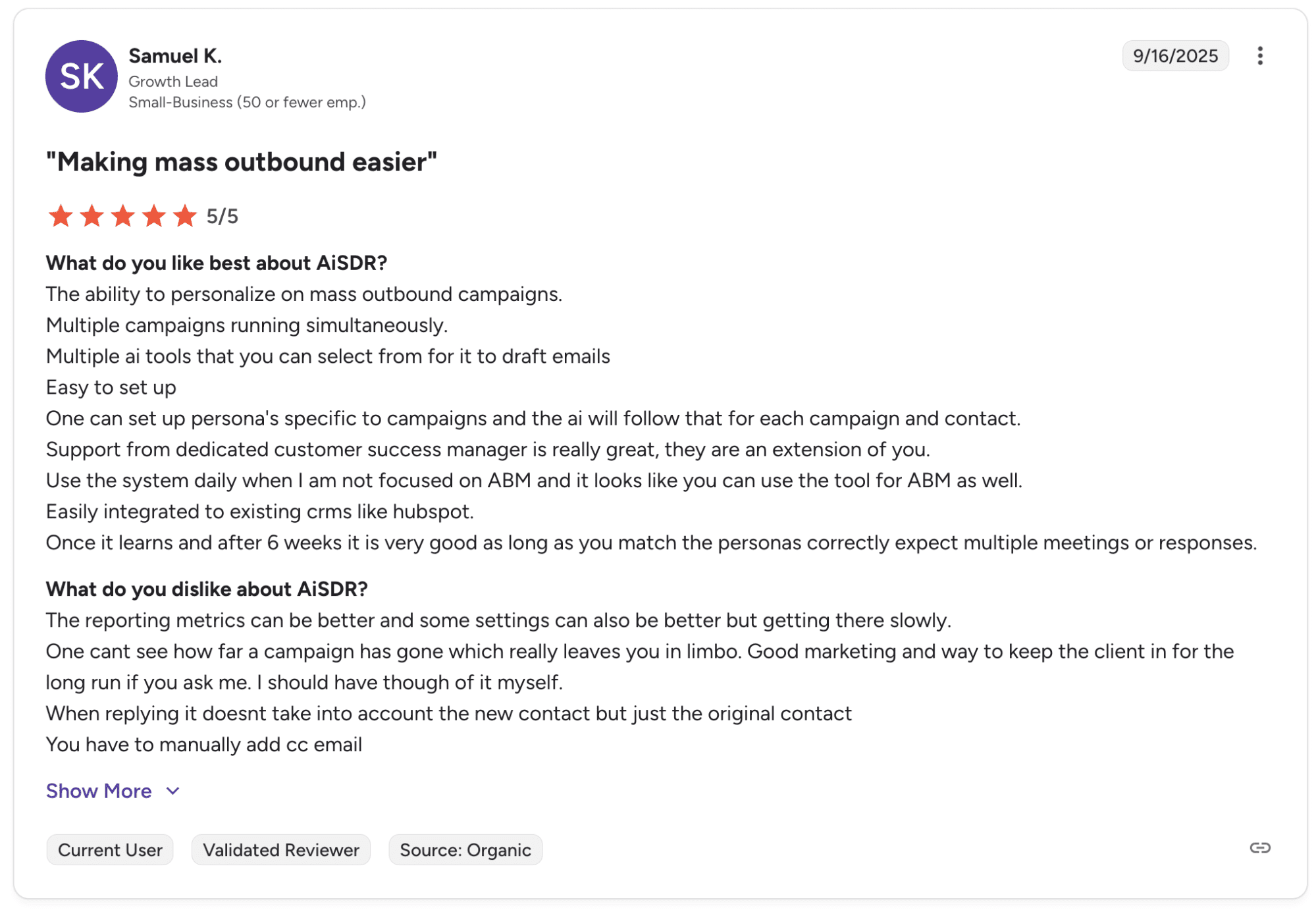
What users say about AiSDR:
People love this tool for its ability to personalize mass outbound campaigns. Among the key drawbacks, users highlight campaign analytics limitations.
My opinion about AiSDR:
What attracts BDR teams to this tool is the idea of AI handling repetitive outreach and initial engagement without any manual input. What may hinder smaller teams from using it is a rather expensive pricing policy.
Many of those who tried the solution report ambivalent results with personalization quality and lead relevance. Messaging often requires monitoring and adjustment, and the tool works best in controlled or narrow use cases. AiSDR shows potential, but most teams still treat it as an assistive layer rather than a fully reliable agent.
Key takeaways: Which is the best AI BDR tool for outreach personalization?
Among the options I analyzed, I like Lavender the most. Its price-to-value ratio is perfect for teams with limited budgets or solopreneurs. It can’t replace human BDR professionals, but it can indeed provide them with invaluable insights to perfect their outreach campaigns.
Yes, it’s not suitable for bulk outreach, but this limitation safeguards businesses from over-automation, which can be a win in the long run.

Tools for intent detection, buying signal analysis, and lead qualification
Missing deals because you don’t notice interested leads fast enough? 11x, Artisan, or BDR.ai can discern which prospects need immediate attention – from just one conversation.
-
11x
Best for: Startups exploring AI-generated sales conversations.
G2 rating: 4.4/5
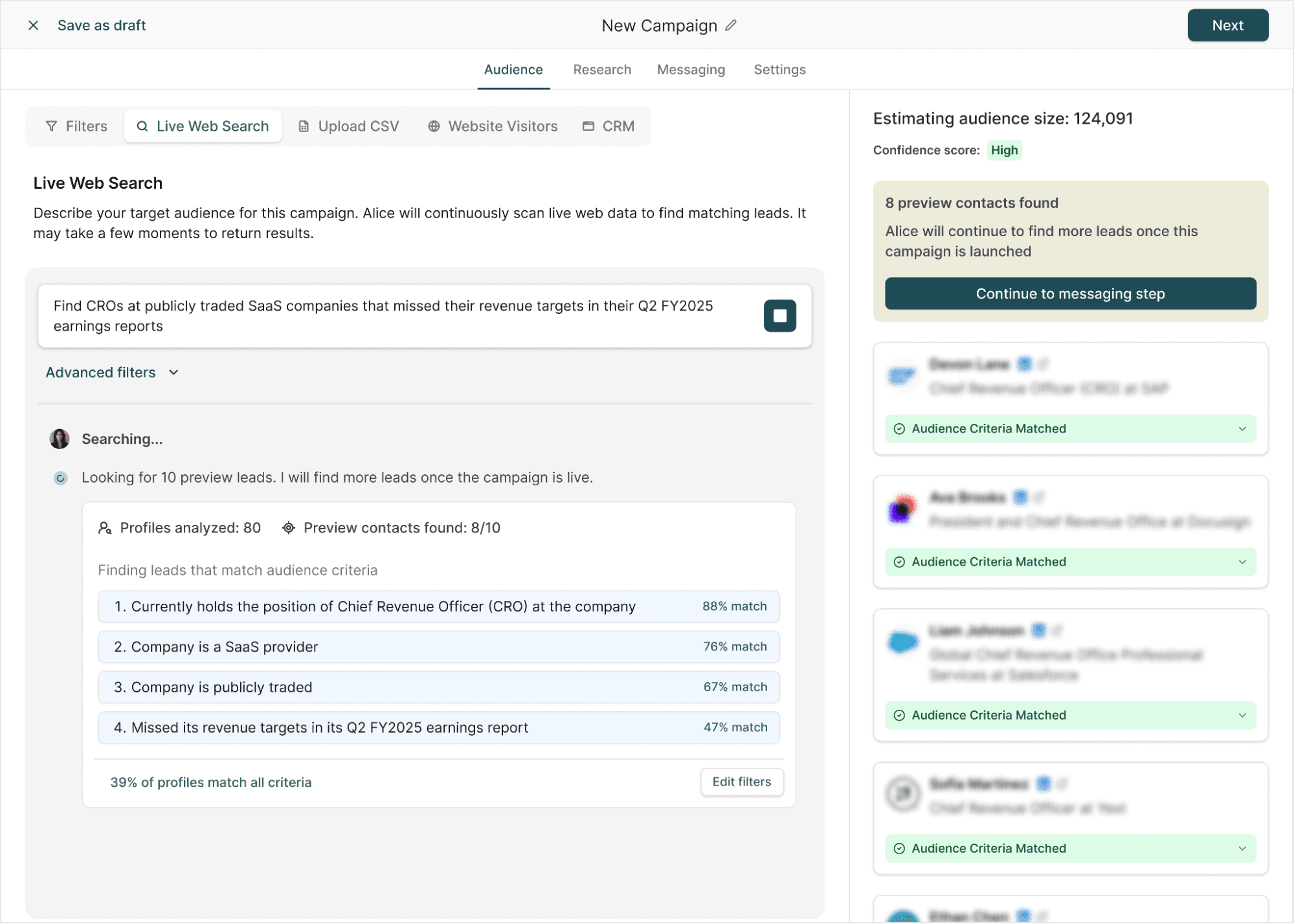
11x focuses on conversational AI that engages leads automatically and qualifies them through dialogue. This tool acts as a first frontier between the prospects and the sales teams, sorting out irrelevant leads so that reps don’t waste time on them.
11x’s key AI features:
- Sales Agent: Conducts conversations via email or chat.
- Intent recognition: Detects readiness based on responses.
- Multi-channel engagement: Supports outreach across multiple channels — email, social platforms, and phone calls.
Pricing: not publicly available.
✅Pros:
- Human-like conversational approach
- Reduces initial qualification workload
❌Cons:
- Limited control over messaging
- Not suitable for regulated industries (like finance, healthcare, or law)
- Early-stage product maturity (some features still need development)
What users say about 11x:
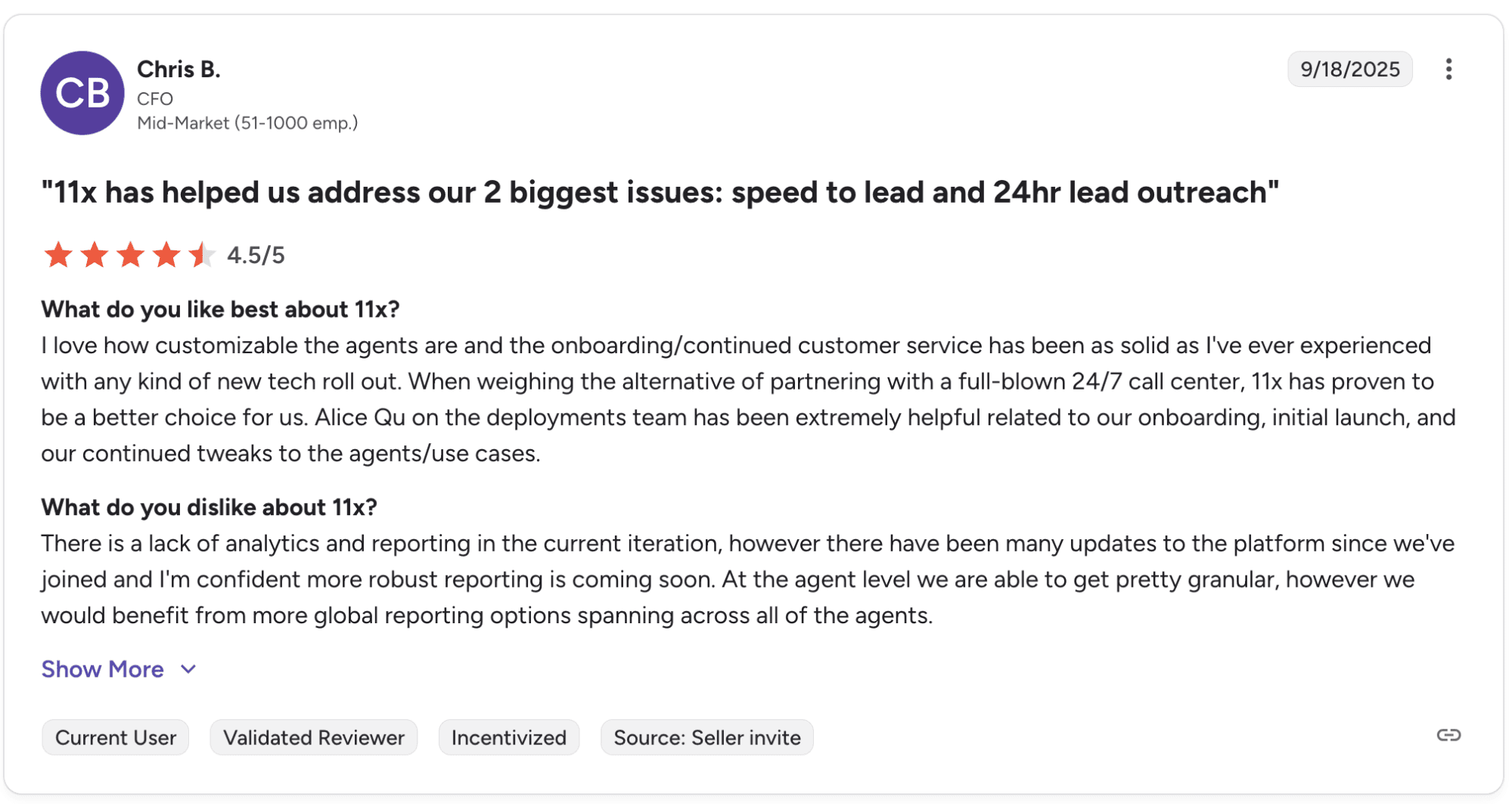
Overall, people value limited customization options for AI agents and 24/7 customer support. Among downsides, users mention limited reporting capabilities.
My opinion about 11x:
11x is an innovative but still maturing conversational AI sales automation platform. It helps with engagement automation as well as the detection of basic buying signals through dialogue. It’s not complicated to get started with, and it offers good onboarding and support.
However, you may face limited control over messaging and occasional inaccuracies in interpreting intent. I think that, despite its ambitious promise, this solution is better suited to BDRs that want to test new functionality rather than teams focused on mission-critical outbound workflows.
-
Artisan
Best for: Teams requiring AI-led outbound orchestration and autonomous prospect engagement.
G2 rating: 3.7/5
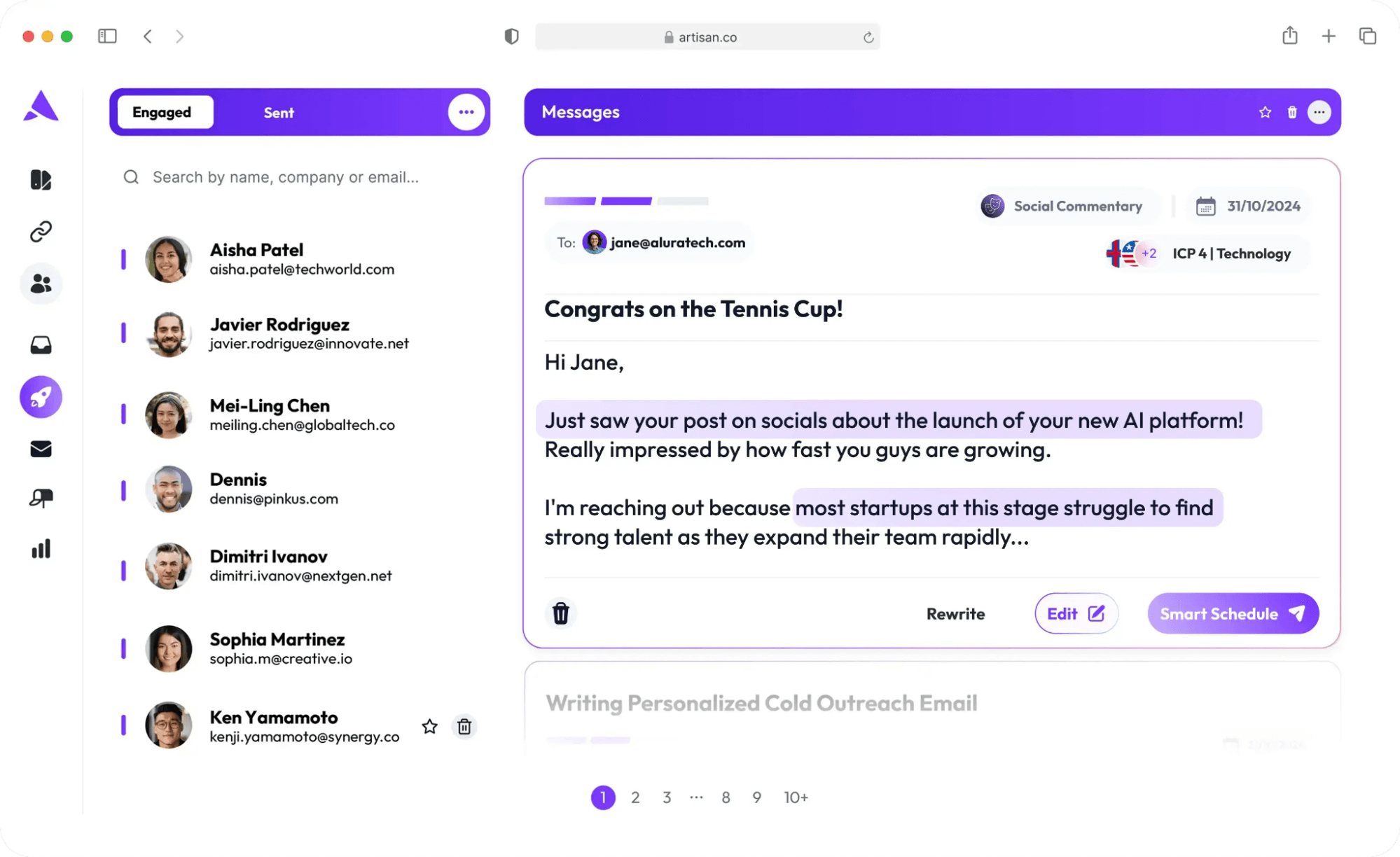
Artisan positions itself as an AI-powered “digital worker” designed to handle prospect research, outreach, and qualification with limited human input. Its AI focuses on automating early-stage BDR tasks rather than managing complex campaigns.
Artisan’s key AI features:
- Prospect research: Automatically gathers and summarizes company and contact-level data from multiple sources.
- Qualification Engine: Scores and routes leads based on inferred intent and response patterns.
- Autonomous Outreach Agent: Sends cold messages and follows up according to predefined rules.
Pricing: custom, not publicly available.
✅Pros:
- Reduces manual prospect research
- Automates early qualification steps
❌Cons:
- Limited transparency into AI decision-making
- Personalization can feel generic
- Less control compared to human-led or hybrid workflows
What users say about Artisan:
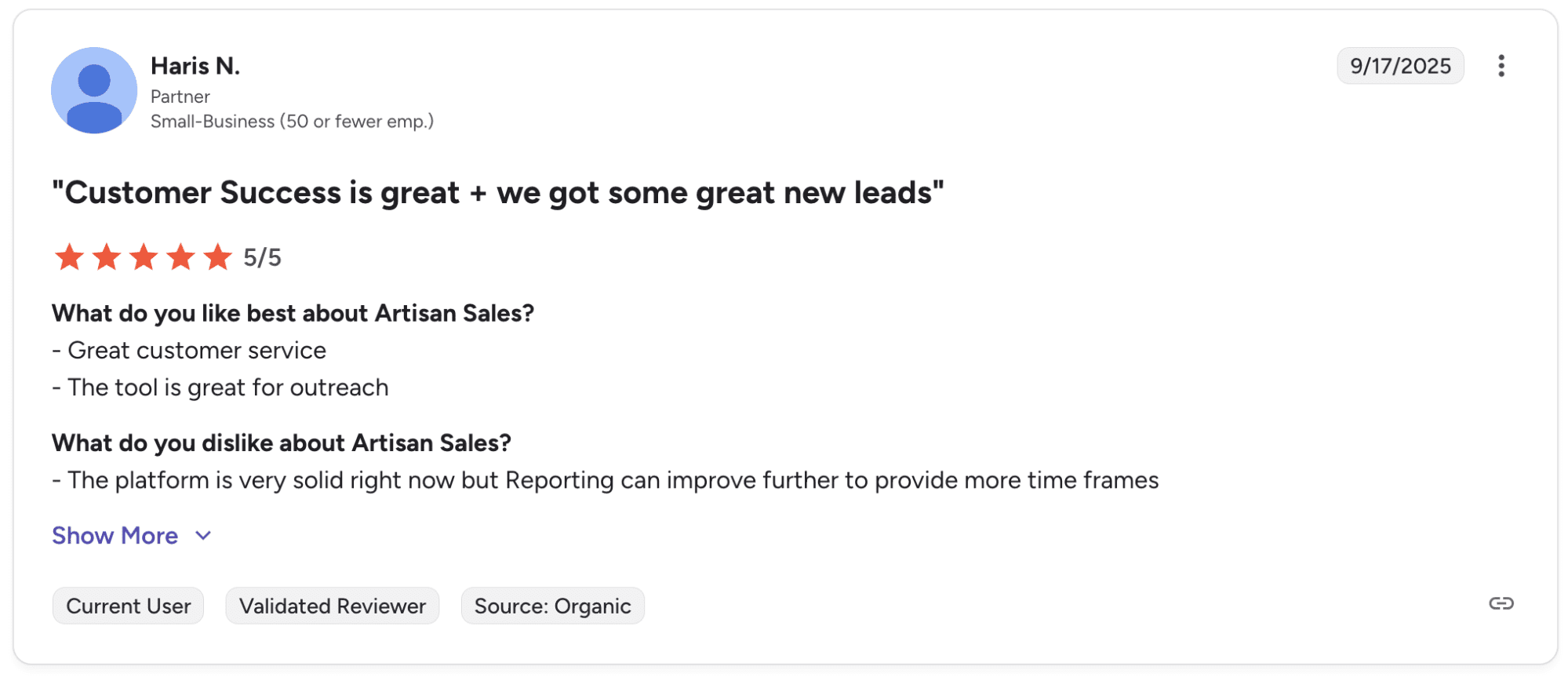
Users appreciate this tool for outreach automation, but state reporting could be improved.
My opinion about Artisan:
I’d describe Artisan as an ambitious attempt to automate large parts of the outbound motion. Some users appreciate the reduction in manual prospect research and the idea of an AI “worker” handling early-stage engagement. At the same time, the AI lacks transparency and can produce generic outreach that still needs human correction.
Overall, I think that Artisan works best as an experimental tool for teams willing to trade control for automation speed. It is less suitable for companies that require precise ICP targeting, nuanced personalization, or full visibility into why leads are qualified or deprioritized.
-
BDR.ai
Best for: Companies piloting fully automated BDR workflows with minimal human involvement.
G2 rating: N/A
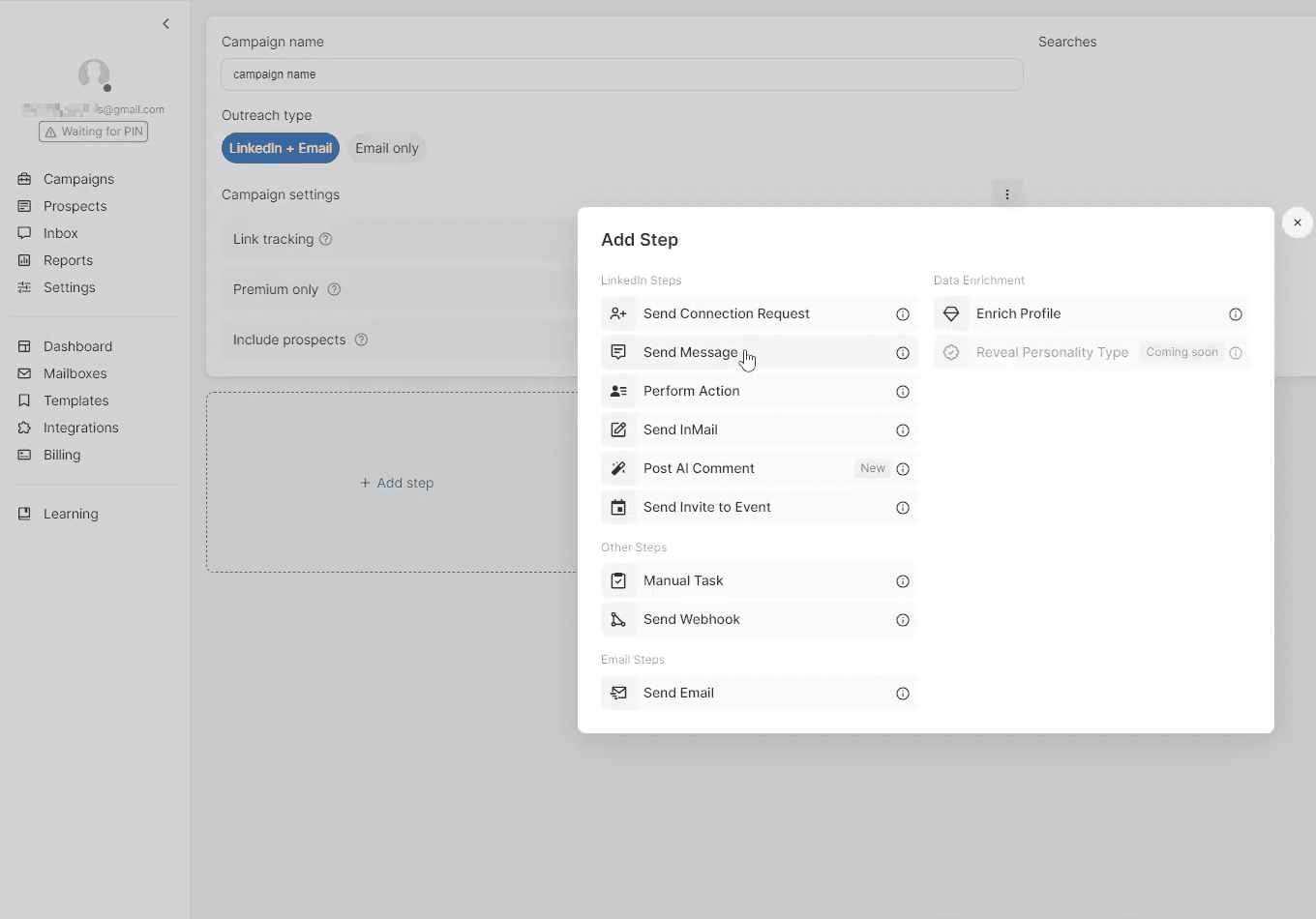
BDR.ai focuses on replacing manual BDR work with AI-driven engagement and qualification. Its approach emphasizes automation efficiency over fine-grained personalization.
BDR.ai’s key features:
- Automated lead engagement: Initiates and manages conversations with prospects.
- Qualification scoring: Assigns readiness scores based on reply content and interaction patterns.
Pricing: custom, not publicly available.
✅Pros:
- Reduces BDR workload significantly
- Handles large lead volumes
- Simple, automation-first setup
❌Cons:
- Messaging can feel mechanical
- Limited customization options
- Little insight into why leads are scored a certain way
- Not ideal for complex or high-touch sales cycles
What users say about BDR.ai:
I couldn’t find any reviews of this service on G2, but I did find some on other platforms. Overall, users appreciate this tool for its excellent customer service as well as its ability to handle volume and reduce repetitive sales tasks.
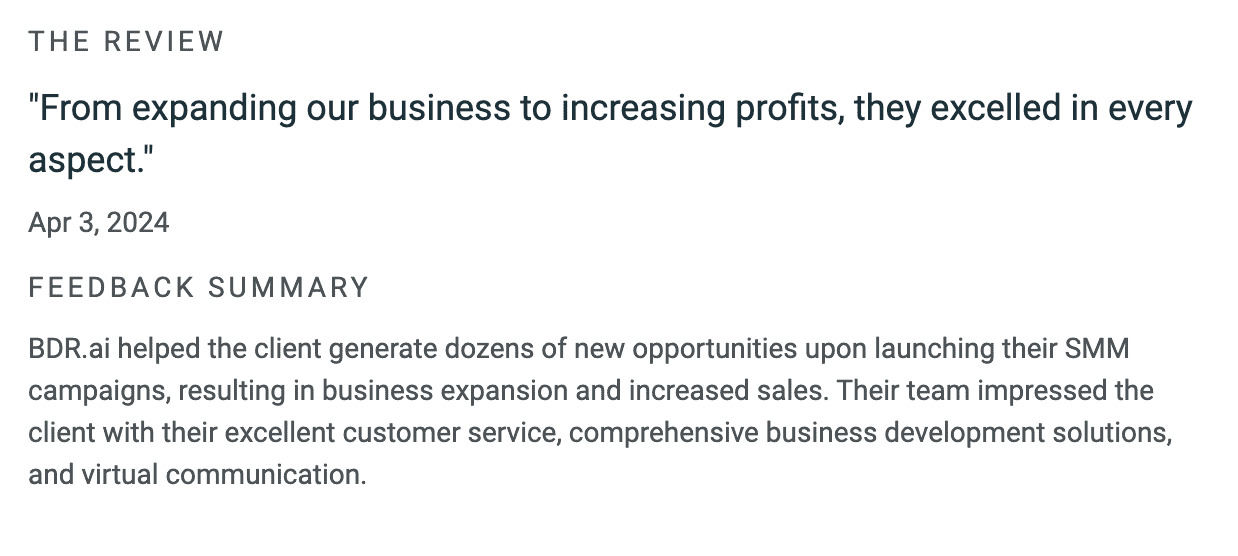
My opinion about BDR.ai:
BDR.ai can save time in high-volume outbound scenarios, especially when basic qualification is enough. However, sometimes the quality and personalization of generated messages are inconsistent, often requiring manual oversight to avoid robotic or irrelevant outreach. Also, its UI seems quite outdated.
Another thing is, there isn’t a wide pool of opinions about BDR.ai online, so you have to try and find out for yourself pretty much everything. In my opinion, BDR.ai is not the best choice when it comes to AI sales automation. Not because it lacks functionality, but because of inconsistent quality and an unclear pricing policy.
Key takeaways: Which is the best AI BDR tool for intent detection, buying signal analysis, and lead qualification?
After reviewing the most talked-about AI BDR tools focused on intent detection, I was a bit on the fence between 11x and Artisan, to be honest. However, I found Artisan to be easier to get started with. Additionally, it appears this platform offers greater control over how data is used for outreach, which is always a plus in my book.
Tools for performance optimization and outbound insights
Trying to understand which parts of your outbound outreach still need polishing? The following tools will help to record your efforts, analyze performance, and suggest improvements.
-
Outreach.io
Best for: Enterprise sales teams managing complex outbound workflows and large pipelines.
G2 rating: 4.3/5
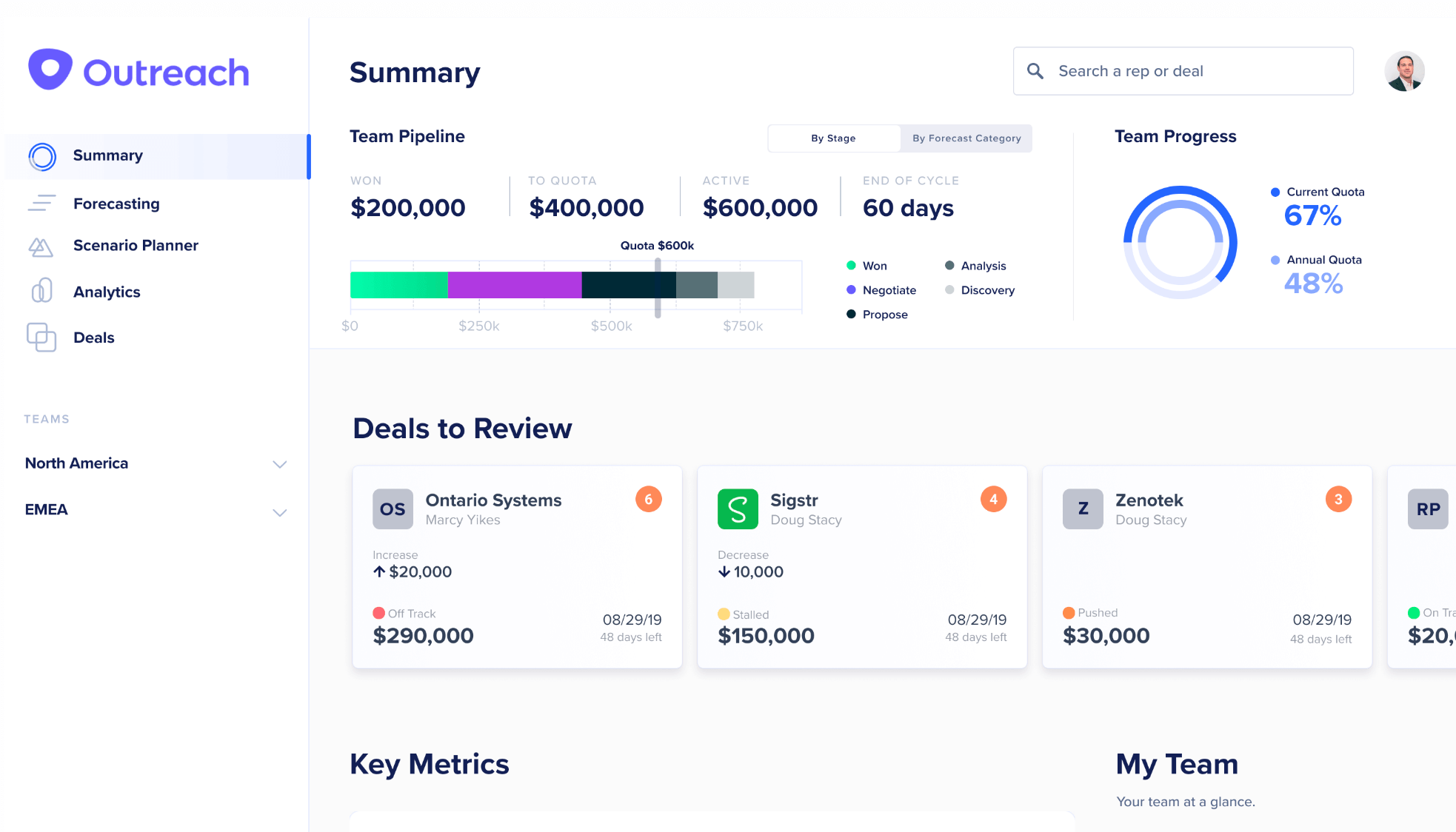
Outreach.io is an AI-powered sales execution and engagement platform that helps to improve prioritization and forecasting.
Outreach.io’s key AI features:
- Deal scoring: Ranks opportunities based on activity, engagement, and historical patterns.
- Task prioritization: Suggests next-best actions for reps.
- Forecast intelligence: Identifies deal risks and pipeline gaps.
Pricing: custom quotes.
✅Pros:
- Strong analytics and forecasting capabilities
- Mature enterprise-grade platform
- Deep workflow automation
❌Cons:
- Complex to implement
- No native lead database
- Limited personalization
- Pricing may be too high for SMBs
What users say about Outreach.io:
People love this platform for the insights it provides for sales teams. Among the key downsides, users usually call the costly pricing plans.
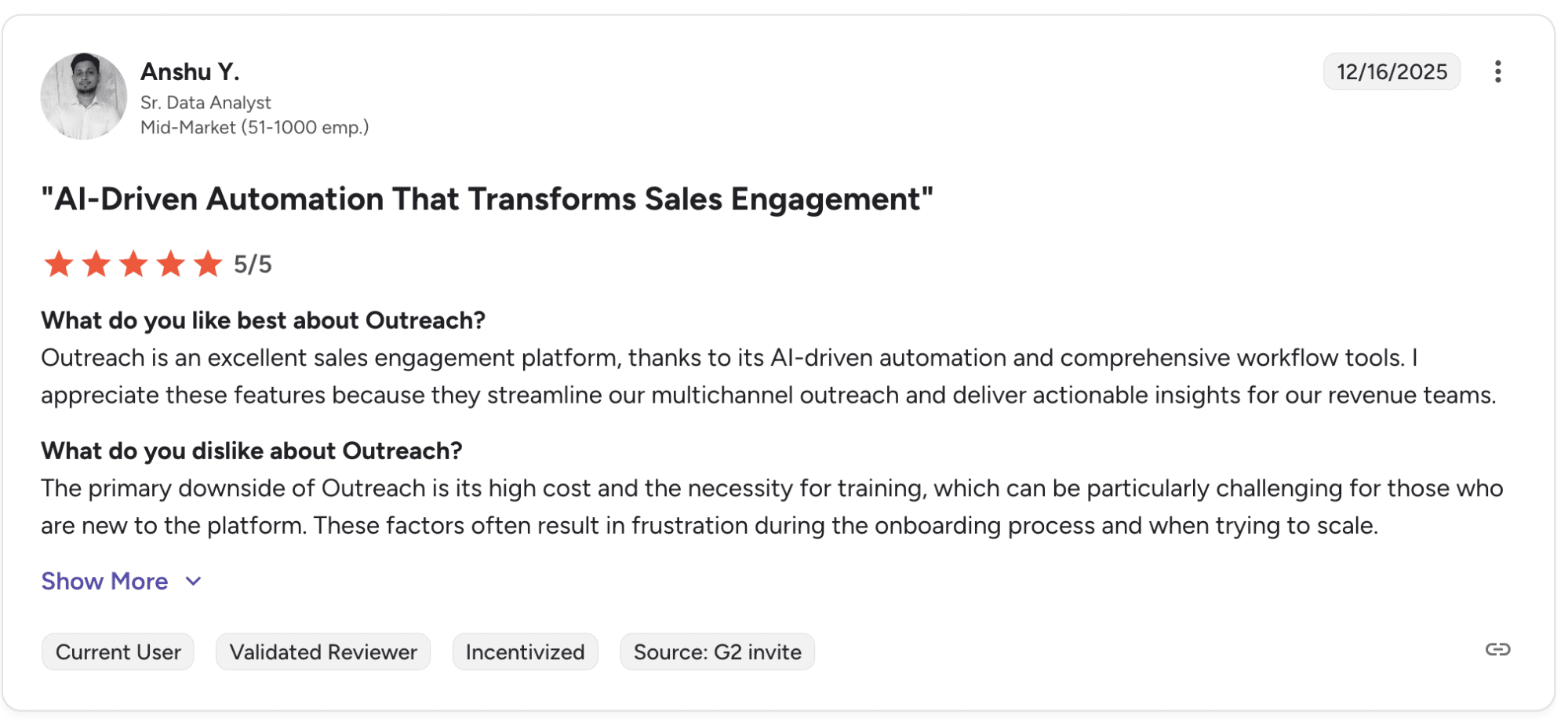
My opinion about Outreach.io:
Outreach.io has everything an enterprise BDR assistant solution should: robustness, deep analytics, and the ability to manage complex sales workflows. It’s great for managers who want to gain visibility into rep performance and pipeline health. The onboarding, security, and customer support also meet enterprise standards.
At the same time, many users mention high costs and reliance on external tools for prospecting and personalization. In my opinion, Outreach.io works great as an enterprise execution and optimization platform. But it is not designed to function as a standalone AI BDR solution, nor is it suitable for small teams.
-
Fireflies.ai
Best for: Sales teams that want AI-powered insights from calls and meetings.
G2 rating: 4.7/5
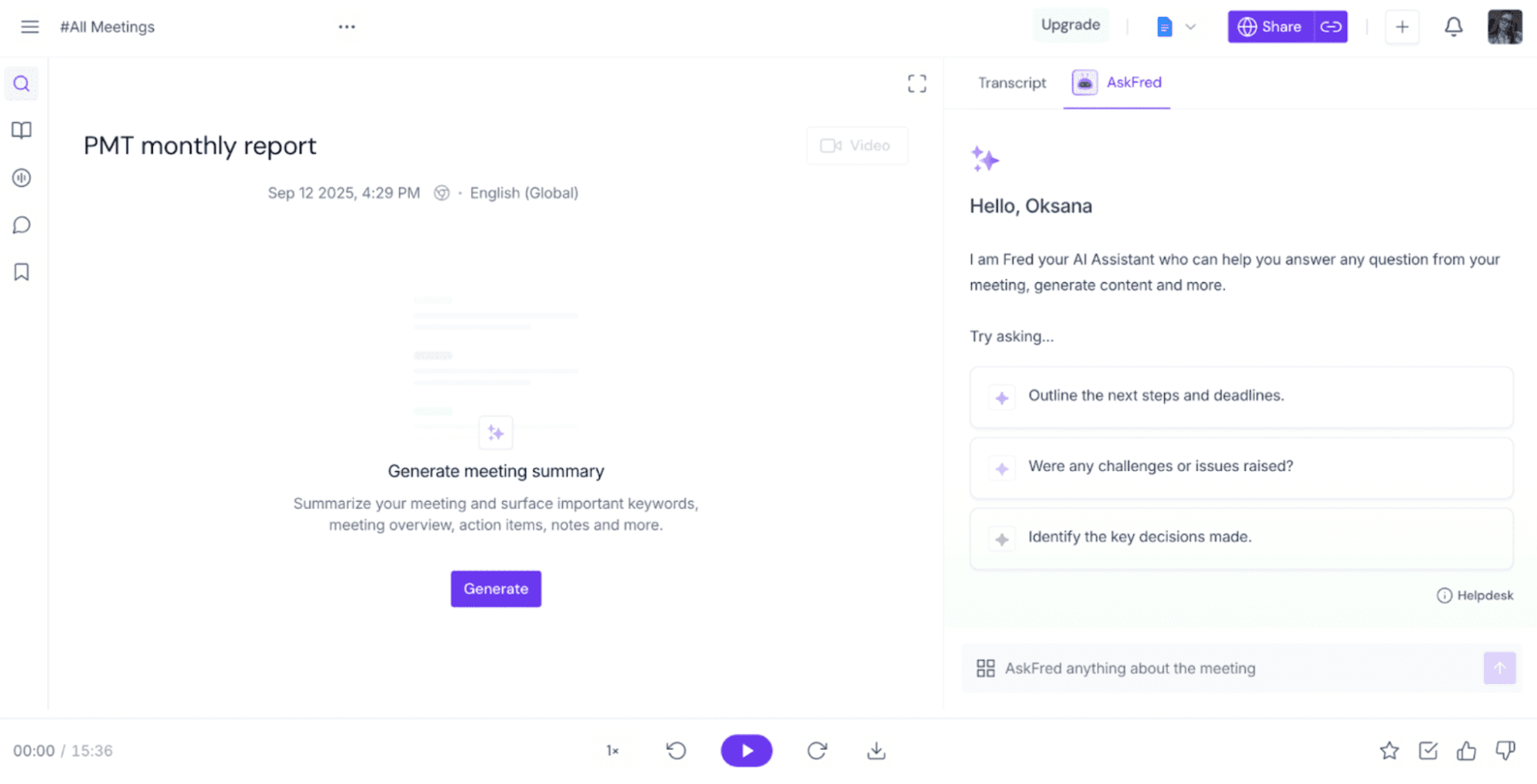
Fireflies.ai is a conversation intelligence tool that records and analyzes business interactions to provide BDRs with helpful insights.
Fireflies’ key AI features:
- Call transcription: Automatically records and transcribes meetings.
- Sentiment and topic detection: Identifies intent, objections, and engagement signals in conversations.
- Conversation summaries. Generates structured call notes and action items.
Pricing: free plan available; paid plans start from $18/month.
✅Pros:
- Accurate transcription and summaries
- Easy to deploy across teams
- Provides useful post-call insights
❌Cons:
- Insight-only tool (no additional features)
- Doesn’t offer much value until an initial conversation
- Pricing for advanced functionality may be too high for SMBs
What users say about Fireflies.ai:
Based on G2 reviews, users frequently mention improved follow-ups, better note-taking, and time saved after meetings when leveraging this tool. As for downsides, users report integration issues, particularly with Zoom.
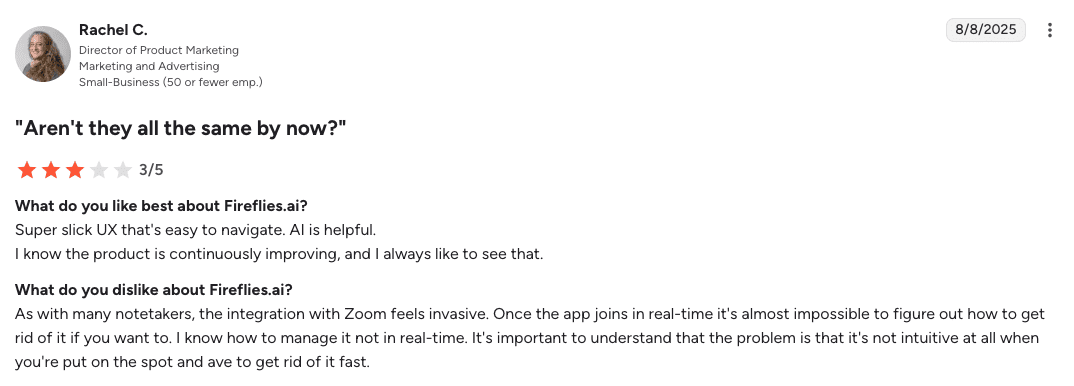
My opinion about Fireflies.ai:
This tool provides accurate results, is very easy to use, and doesn’t cost a fortune to start. In terms of features, it has got everything BDRs need to keep on top of their spoken conversations – not just with prospects or customers, but inside the team. As for data privacy, it meets the EU and US standards.
But of course, it only works as a complementary tool rather than a core outbound or AI business development representative platform. I’d recommend using it to complement your sales stack, not replace it.
-
Clari
Best for: Revenue leaders focused on forecasting accuracy and pipeline visibility.
G2 rating: 4.6/5
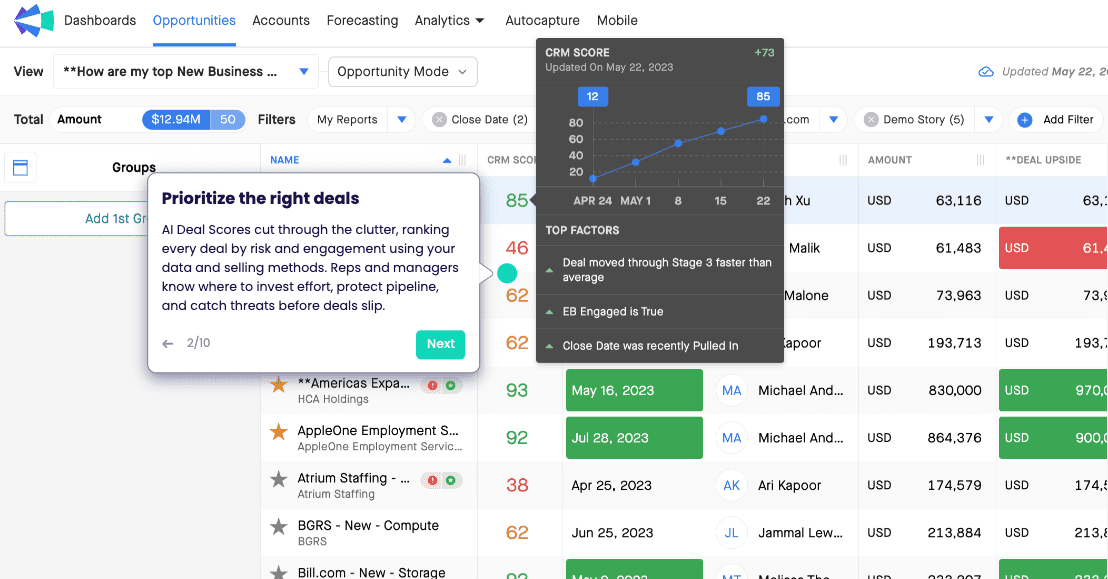
Clari is a revenue operations platform that applies AI to help teams predict outcomes and identify risks across the sales pipeline.
Clari’s key AI features:
- Revenue forecasting: Predicts deal outcomes based on historical and real-time data.
- Risk and slippage detection: Flags deals that are likely to stall or close late.
- Pipeline health analysis. Surfaces gaps and inconsistencies in forecasts.
Pricing: custom, not publicly available.
✅Pros:
- Strong forecasting accuracy
- Clear executive-level insights
- Integrates well with major CRMs
❌Cons:
- Unclear pricing
- No other functionality (e.g., lead generation or B2B outreach AI )
- Limited relevance for SMBs
What users say about Clari:
Users value Clary for its effective AI input to forecasting, but state the statistics gaps among its core limitations.
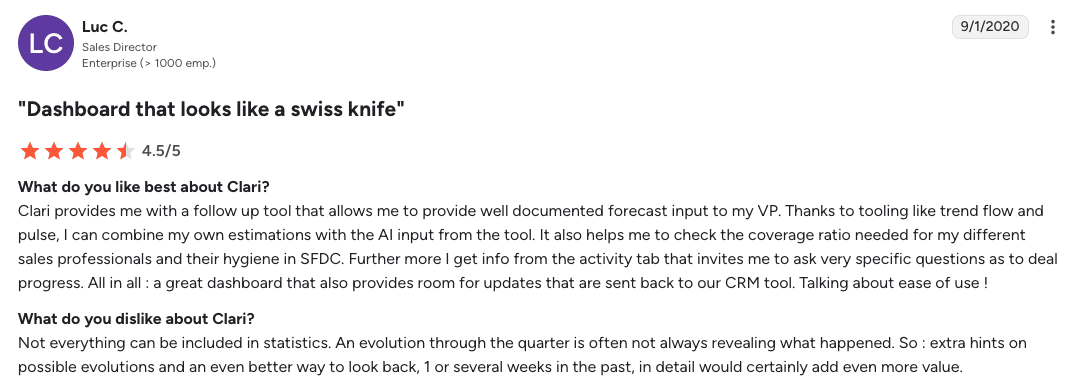
My opinion about Clari:
Clari is a solid revenue intelligence and forecasting platform for large sales organizations. Based on my research, its predictions are valuable; it unlocks better visibility into company workflows and surfaces deal risks early. All of this, of course, contributes to the organization’s success. Moreover, its customer support and security are also of the highest quality.
On the other hand, I wouldn’t recommend this platform for small teams. Its pricing is obviously enterprise-grade, making the solution too costly for SMBs or startups. Clari is also complex to implement, plus once you go with the platform, you’d need to build your entire AI sales automation tech stack in this ecosystem.
Key takeaways: Which is the best AI BDR tool for performance optimization and outbound insights?
I would go with Fireflies.ai to get insights into the sales outreach processes, mostly because I feel that Outreach.io and Clari are overkill for SMBs and solopreneurs. These platforms are powerful, yes, but also expensive and hard to implement. With Fireflies.ai, you can get it up and running in minutes. Plus, it’s much cheaper than its counterparts, while functionality is enough for most small teams.
Pros and cons of equipping human BDRs with AI tools
While AI tools are trending in the industry right now, there are always two sides to implementing any kind of such software. So, before you choose your best AI BDR tool, consider the advantages and limitations of AI business development representatives.
The main advantage of AI BDRs is their ability to accelerate operations. Equipped with artificial intelligence solutions, BDRs can finally be free from most of the low-impact work, like prospect research, data enrichment, lead scoring, and activity logging.
Instead, they may focus on what actually moves deals forward: interpreting context, qualifying intent, handling nuanced replies, and building trust early in the sales conversation. Plus, AI helps run outbound execution more smoothly.
On the other hand, AI BDRs can’t make decisions or take actions outside the pre-programmed rules. For instance, they struggle with strategic decision-making, nuanced negotiation, complex objections, or any other truly creative tasks.
What’s more, AI makes a weak strategy visible faster. If ICP definitions are vague, segmentation is too broad, or input data is muddy, AI will only amplify those mistakes.
Can AI replace BDRs entirely?
My quick answer is ‘No.’
Replacing business development representatives with AI makes outbound sales purely task-driven rather than relationship-driven.
For straightforward operations – when ICPs are very narrow, offers are transactional, and the sales cycle is short – AI-only outbound outreach can generate surface-level engagement. Yet, as soon as complexity increases, limitations become clear.
AI struggles with ambiguity. It struggles to read mixed signals, handle multiple users, or respond to early objections that require empathy and judgment rather than pattern matching. Fully automated outbound also increases brand risk over time. Prospects begin to recognize pre-programmed messaging and lose trust.
Beyond the direct impact on your sales and, thus, revenue, there’s the dilemma of organizational costs. Removing human BDRs deprives the department of a key training ground for future account executives and sales leaders, thereby weakening its long-term productivity.
That’s why experts agree that for most B2B teams, the strongest model is hybrid.
AI offers an efficiency boost in repeatable tasks, but it’s humans who build long-lasting relationships with customers.
Human BDRs should be discouraged from relying too heavily on AI for writing and prioritization. Otherwise, they can lose sharpness in research, discovery, and critical thinking – skills that are paramount once a conversation moves beyond the script.
AI sales automation should be paired with clear guardrails: locked templates, defined handoff points, and regular performance reviews.

How to implement AI BDRs into your sales workflow
When implementing AI BDR software, experts recommend you focus on three key steps:
- Choose AI BDR tools based on your bottlenecks
- Set up AI-driven sequences, cadences, and triggers
- Aligning human and AI efforts in the pipeline
1. Choose AI BDR tools based on your bottlenecks
To make the right choice, start with the problem you’re solving, not the trendy features.
- If your main bottleneck is list building and early outreach, you need AI capabilities around lead discovery, enrichment, and outbound automation.
- If it’s personalization at scale – prioritize tools with AI-assisted message generation tied to real data fields and signals.
- If gauging buyer intent is difficult, opt for solutions that monitor prospect behavior and provide insights.
Some platforms support multiple stages of the outbound workflow. For example, Snov.io offers the AI Email Builder, which generates outreach copy based on ICP; AI Database Search, which enhances prospecting efficiency; and AI Sentiment Analysis, which helps qualify leads.
2. Set up sequences, cadences, and triggers
This is where the AI business development representative either becomes a competitive advantage or turns into another time-stealer.
Start by designing sequences around buyer behavior. For outreach to serve its purpose, it has to reflect your prospects’ needs, habits, and expectations, which differ by segment.
For example, if your target audience lives on LinkedIn and rarely checks email, craft a sequence that starts off with social media touches, progressing to email only as soon as the recipient shows interest.
Another example would be creating shorter cadence for high-intent segments, while making longer, lower-pressure sequences for broader or colder audiences.
To make your outreach effective, remember about triggers:
- Email opens or link clicks can move leads into a shorter, more direct follow-up cadence.
- No engagement after a full sequence can automatically pause outreach or push the lead into a low-frequency nurture campaign.
- Positive or neutral replies should immediately transfer the lead from the AI sales automation flow to a human specialist.
- CRM stage changes (e.g., “contacted,” “qualified,” “meeting booked”) should override all outbound activity to avoid overlap or mixed signals.
Finally, treat sequences as living systems. Review performance weekly, not quarterly. Use reply rate, time-to-first-reply, and meeting conversion as primary signals, and adjust cadence length, spacing, or messaging accordingly.
3. Align human and AI efforts in the pipeline
As noted above, AI should handle execution and prioritization, while humans should handle decisions and conversations. The most straightforward way to make this alignment visible is to use CRM sync.
Let’s take Snov.io’s CRM as an example.
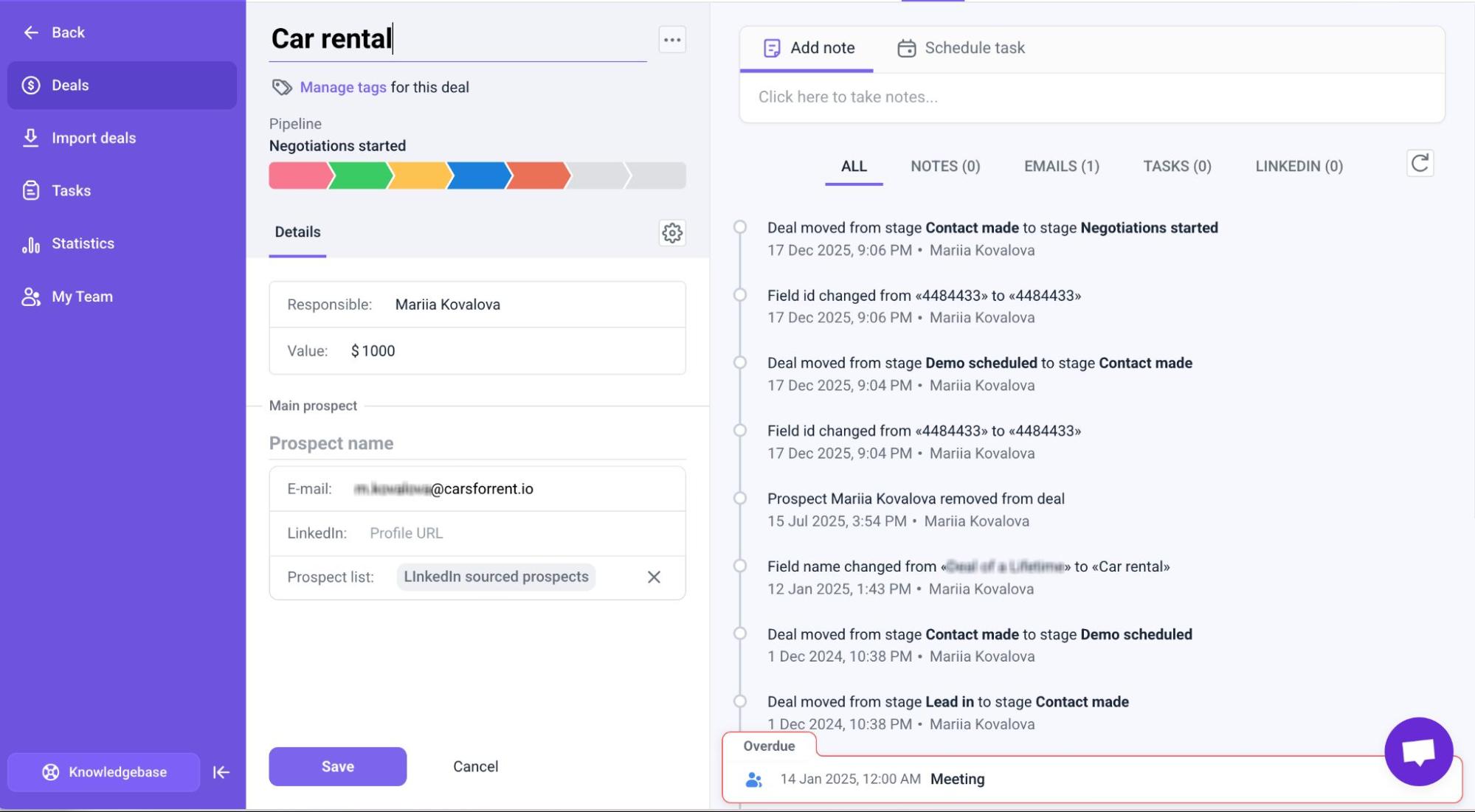
AI-driven activity (emails sent, replies, and lead status updates) is automatically logged, giving sales reps a real-time view of what’s happening within each deal. Human professionals can thus take the conversation over once intent is confirmed. They drive the promising deals to the closing stage, while AI continues to pull new prospects into the funnel with lead research, cold messages, and follow-ups.
This division of responsibilities keeps the pipeline moving efficiently, preventing any lead from slipping through the cracks.
Key takeaways:
The purpose of all AI BDR tools I’ve analyzed in this article is the same: remove repetitive manual work from outbound outreach, improve focus on high-intent leads, and help sales teams operate more consistently at scale. Still, they play slightly different roles across the sales workflow.
- Snov.io is best for teams that want a single AI BDR platform covering lead discovery, ICP building, personalized outreach, intent detection, as well as performance insights without stitching multiple tools together.
- Instantly.ai works for individuals or small teams that need to launch cold email campaigns fast, prioritizing deliverability over deep AI targeting or personalization.
- SmartReach AI fits sales teams running multichannel outbound who want structured sequencing and solid AI-assisted copy, but are comfortable with higher pricing tiers for advanced features.
- Apollo.io is good for teams that need access to a large contact database with AI-powered filtering and scoring for high-volume prospecting.
- Cognism is best for enterprise organizations that require GDPR-compliant data and strong EMEA coverage, especially for phone-based prospecting.
- Clay is essential for advanced, data-driven teams that want full control over enrichment logic, scoring, and workflows and are willing to pair it with separate B2B outreach AI tools.
- Regie.ai works well for BDRs producing outbound copy at scale who need consistent messaging aligned with personas and funnel stages.
- Lavender is a good choice for individual reps or small teams that want real-time AI coaching to improve the quality, clarity, and personalization of their emails.
- AiSDR may suit teams experimenting with autonomous B2B outreach AI tools to reduce manual BDR work in narrow or controlled use cases.
- 11x fits startups testing conversational AI to handle early engagement and basic lead qualification before human handoff.
- Artisan is a fair choice for teams exploring AI-led outbound orchestration and early-stage qualification with minimal human involvement.
- BDR.ai excels in high-volume outbound scenarios where AI sales automation speed matters more than deep personalization or transparency.
- Outreach.io is great for enterprise sales teams that need advanced execution, prioritization, plus forecasting across complex pipelines.
- Fireflies is best for teams that want insights from sales calls or meetings to improve follow-ups and internal alignment.
- Clari serves revenue leaders who need accurate forecasting, pipeline visibility, and deal-risk analysis at the executive level.
Overall, I recommend treating any AI business development representative as a workflow amplifier rather than a standalone replacement. Choose tools that cover as many connected processes as possible. The one you can safely start with is Snov.io. This platform balances AI automation, control, and insight, making it a perfect solution for BDRs.