
You hit send on 10,000 contacts and watch your bounce rate climb to 15%. Sender reputation damaged, emails landing in spam, and 1,500 addresses eating your budget for zero return. ESPs still charge you for every dead contact, and there’s no getting that spend back.
If you’re among 78.5% email senders who rate deliverability importance as 8 out of 10 or higher, you know how tough it feels.
Good news: the right email verification tool can turn this around. I’ve evaluated the best email verification API solutions on the market to help you avoid this nightmare.
Key points of my review:
TL;DR: Top 5 email verification API tools (in my opinion)
After reviewing 10 different best email verification APIs, here’s my quick comparison of the top five options.
*Pricing may change with time, so always visit the service’s website for actual information.
Feel free to explore these best email verification APIs in more detail to help you make your own choice.
How I selected the best email verification APIs
I compared each email verifier API based on these main factors:
- Accuracy. I evaluated how well each tool handles different types of emails, not just valid and invalid addresses, but trickier ones like catch-alls and disposable emails.
- Ease of use. I looked at how straightforward the API is to integrate, the quality of the documentation, including what integrations each tool supports.
- Pricing. I evaluated how credit systems work and whether the costs scale reasonably as the usage grows.
Plus, I reviewed G2 feedback during my research to see how email verification tools perform in real-world situations.
In my review, I grouped all email verifier APIs into three categories: real-time email validation APIs, bulk email verification APIs, and free email verification APIs.
Best real-time email validation APIs
Real-time email validation APIs check email validity instantly as users type or submit forms. They are commonly designed for point-of-capture validation, helping prevent invalid data from entering a system in the first place.
Let’s look into the best email verification APIs from this category.
Snov.io
G2 rating: 4.5/5
Pricing: From $39/month. Free testing available per request.
Best for: Real-time email validation combined with email finding, deliverability tools, and outreach campaigns in one place.
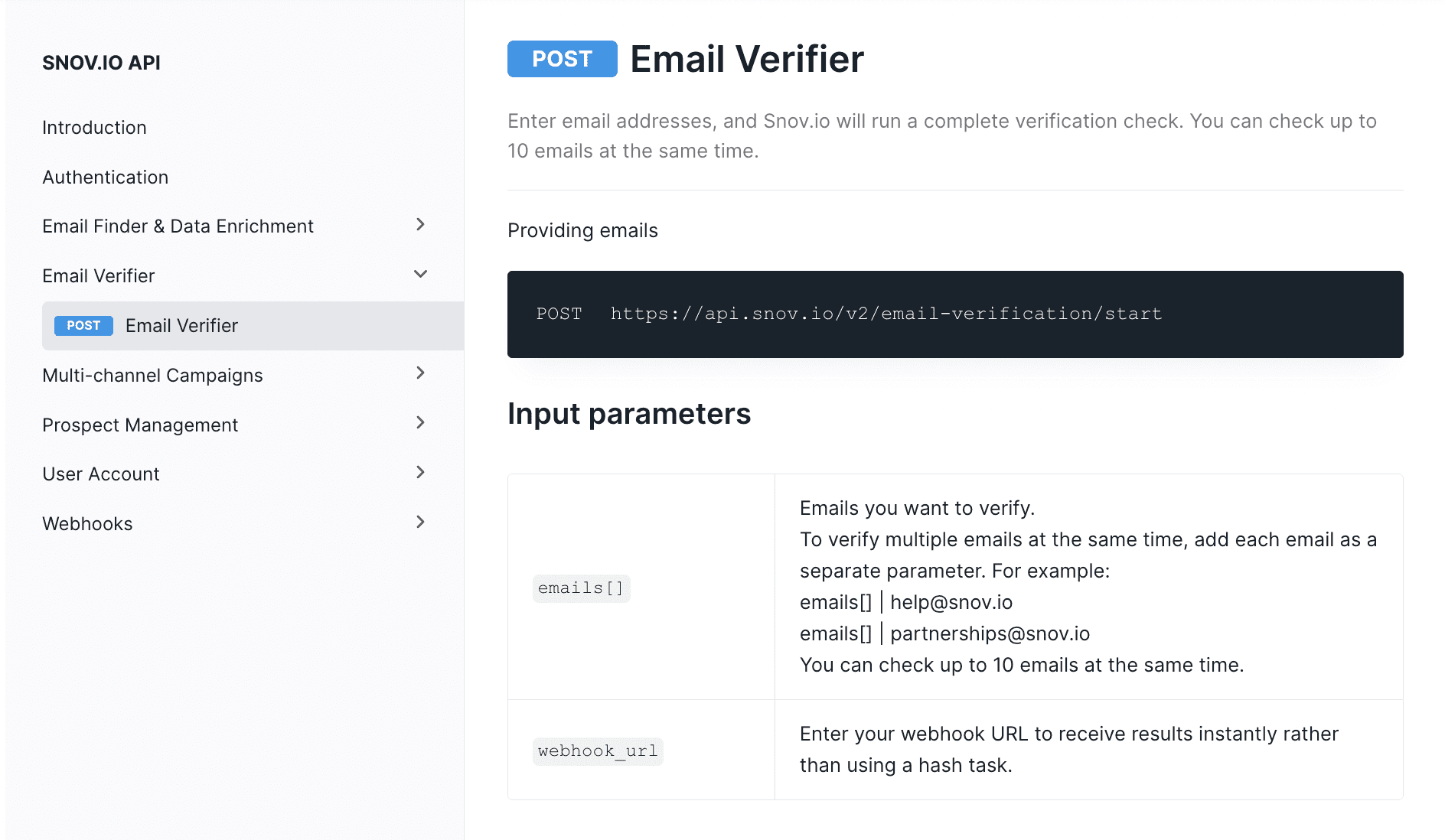
Snov.io is a lead generation and outreach automation platform that lets users leverage its features via a simple REST API. Its email verifier is one of the most powerful on the market. To verify email addresses, the API runs a 7-step verification process that checks syntax, domain validity, MX records, SMTP responses, etc.
Verification happens in real time with consistently fast response times (60 requests/minute), allowing you to check up to 10 email addresses at a time. While using Snov.io’s email verification tool via API, you can validate both new or unverified addresses or check the current status of the address that has been previously verified.
Unlike basic email verification APIs, Snov.io provides actionable context behind each result. For instance, if an email returns an “unknown” SMTP status, Snov.io explains possible reasons why verification was inconclusive: catch-all domains, greylisting, connection errors, or other deliverability risks.
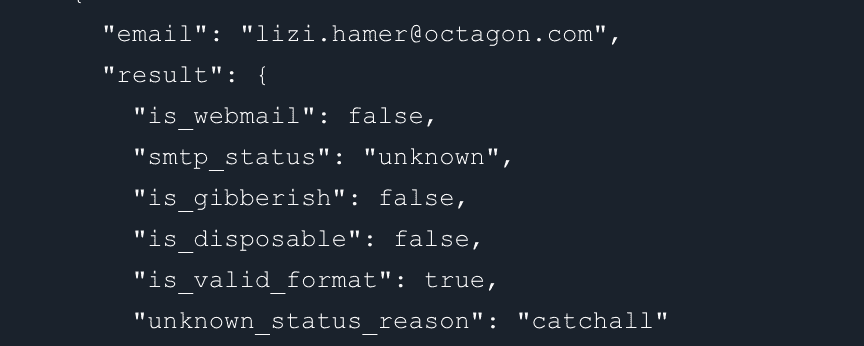
This helps you decide whether to send, skip, or recheck the email, rather than relying on a generic “unknown” outcome. As a result, you can segment risky emails, build smarter sending logic in your workflows, reduce bounce rates, and protect sender reputation.
The API integrates easily with 5000+ apps, and the documentation is clear enough for developers to get started quickly.
What I also like about this email verification API is its pricing model. You don’t need to spend your credits. Instead, usage is limited by hourly request caps, starting at about 500 checks on the Starter plan and going up to around 4,000 checks per hour on the Ultra plan.
What also makes Snov.io stand out is that while making a subscription, you don’t just get an email verification tool. You get a full lead generation and outreach automation platform with an email finder, multichannel campaigns, deliverability tools, and a CRM in one place. You can use all these features via API.
What users say about Snov.io:
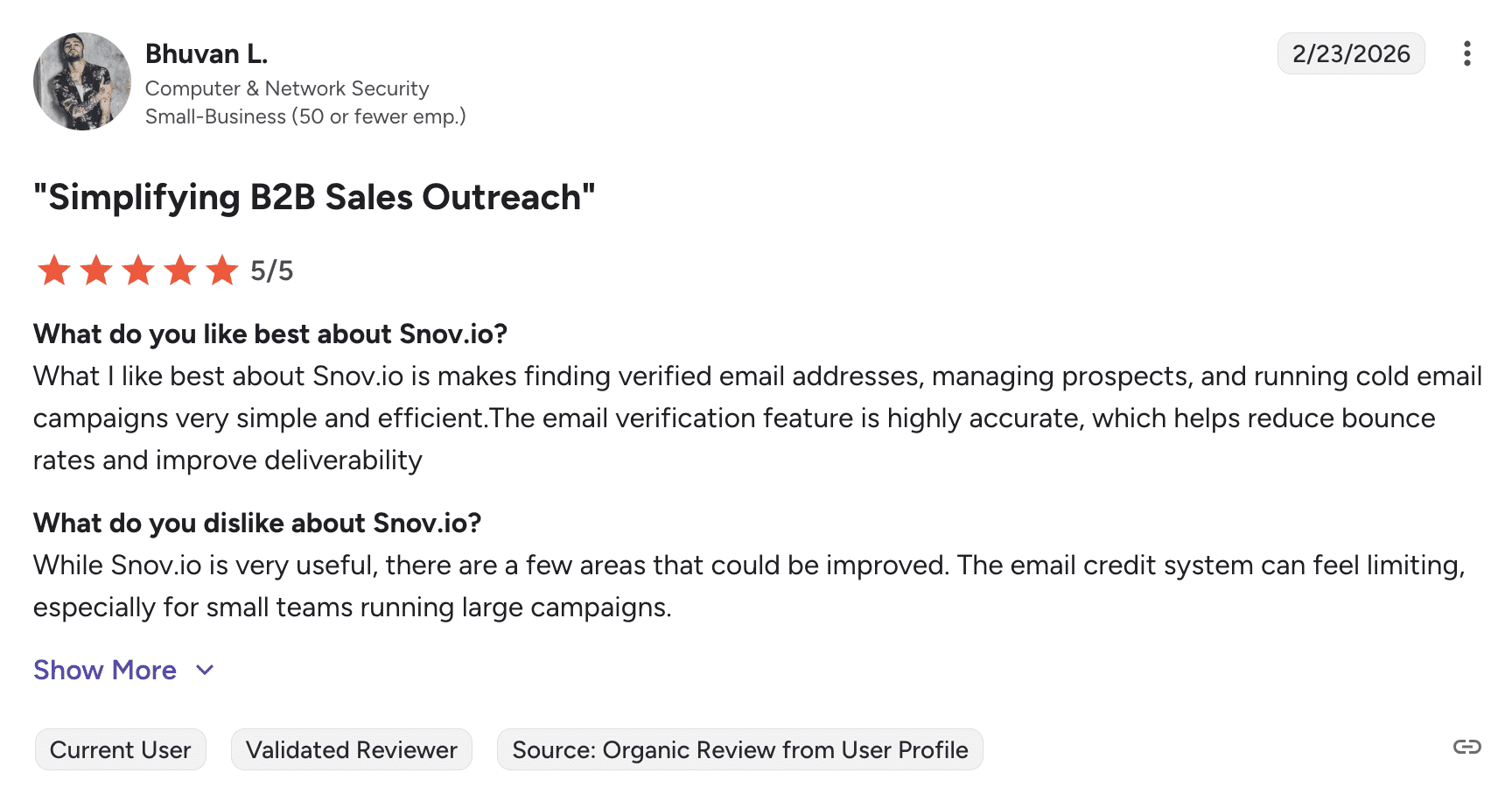
Users are generally happy, with most praising the verification accuracy and how well it fits into a broader prospecting workflow. It’s generally hard to find consistent complaints.
📍My final opinion about Snov.io:
I think Snov.io is one of the strongest email verification tools. Its request-focused API model, plus a unified set of tools for lead generation and outreach automation, make it a go-to solution for teams that need a cost-effective option with all necessary functionality in one place.

ZeroBounce
G2 rating: 4.7/5
Pricing: 100 checks free. Paid options start at $39 for 2000 verifications.
Best for: Enterprise-level real-time validation.
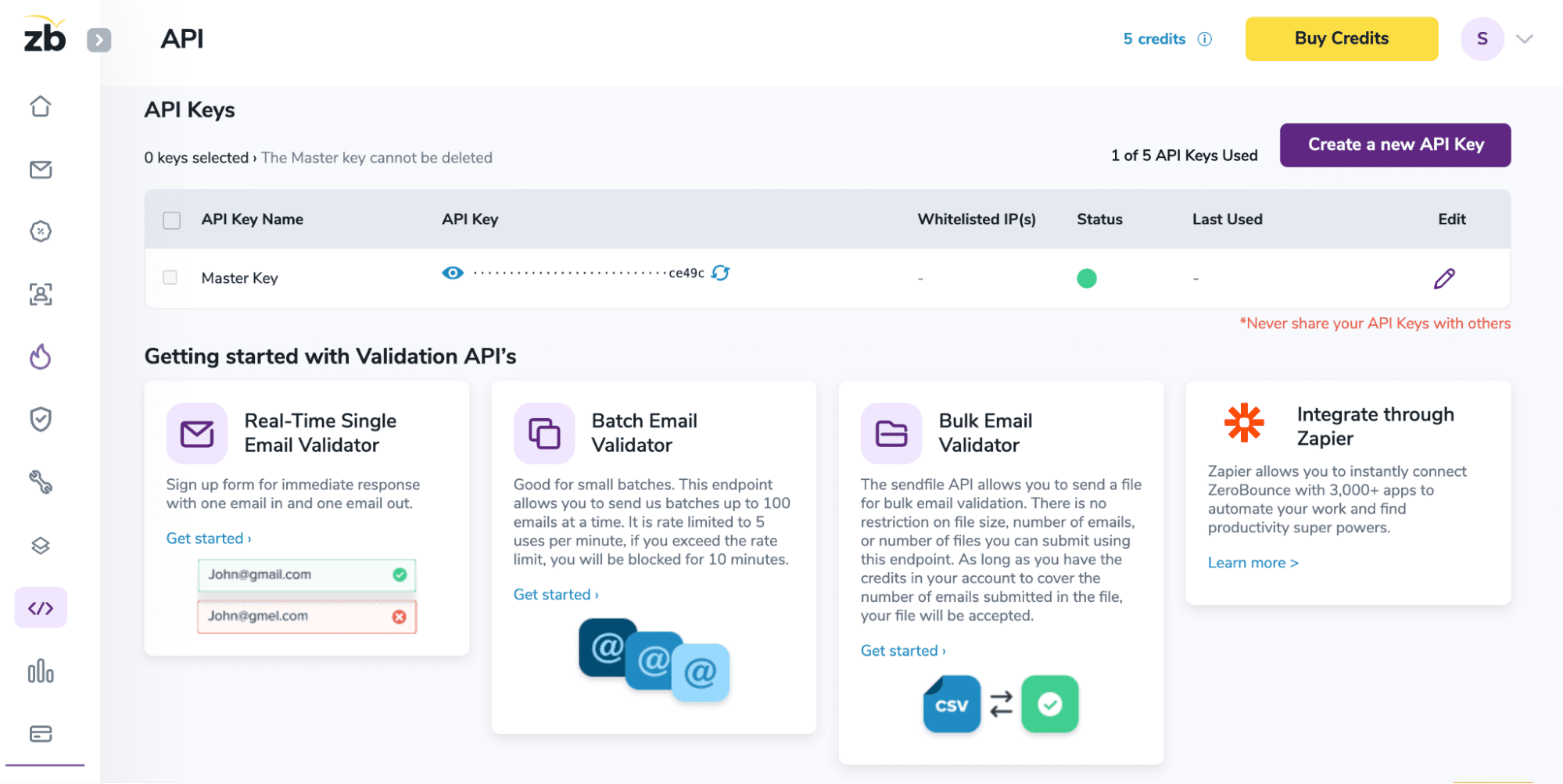
ZeroBounce covers all standard checks expected from an email verifier API and adds AI-powered scoring. Rather than just confirming whether an address exists, the scoring estimates the quality of contact using engagement data. This gives a more useful picture of overall list health than a simple pass or fail.
Security is handled seriously, with military-grade encryption and strict data protection practices. For teams managing sensitive customer data or working under compliance requirements, that level of care matters.
On the integrations side, ZeroBounce connects natively with HubSpot, Salesforce, Mailchimp, Klaviyo, ActiveCampaign, Zapier, Google Sheets, and Zoho. Support for multiple programming languages and prebuilt API wrappers also makes setup straightforward for developers.
Pricing is credit-based, starting at $39 for 2,000 verifications. Subscription plans lower the cost a bit, but high-volume usage can get pricey. It’s a good idea to estimate your needs before committing.
What users say about ZeroBounce:
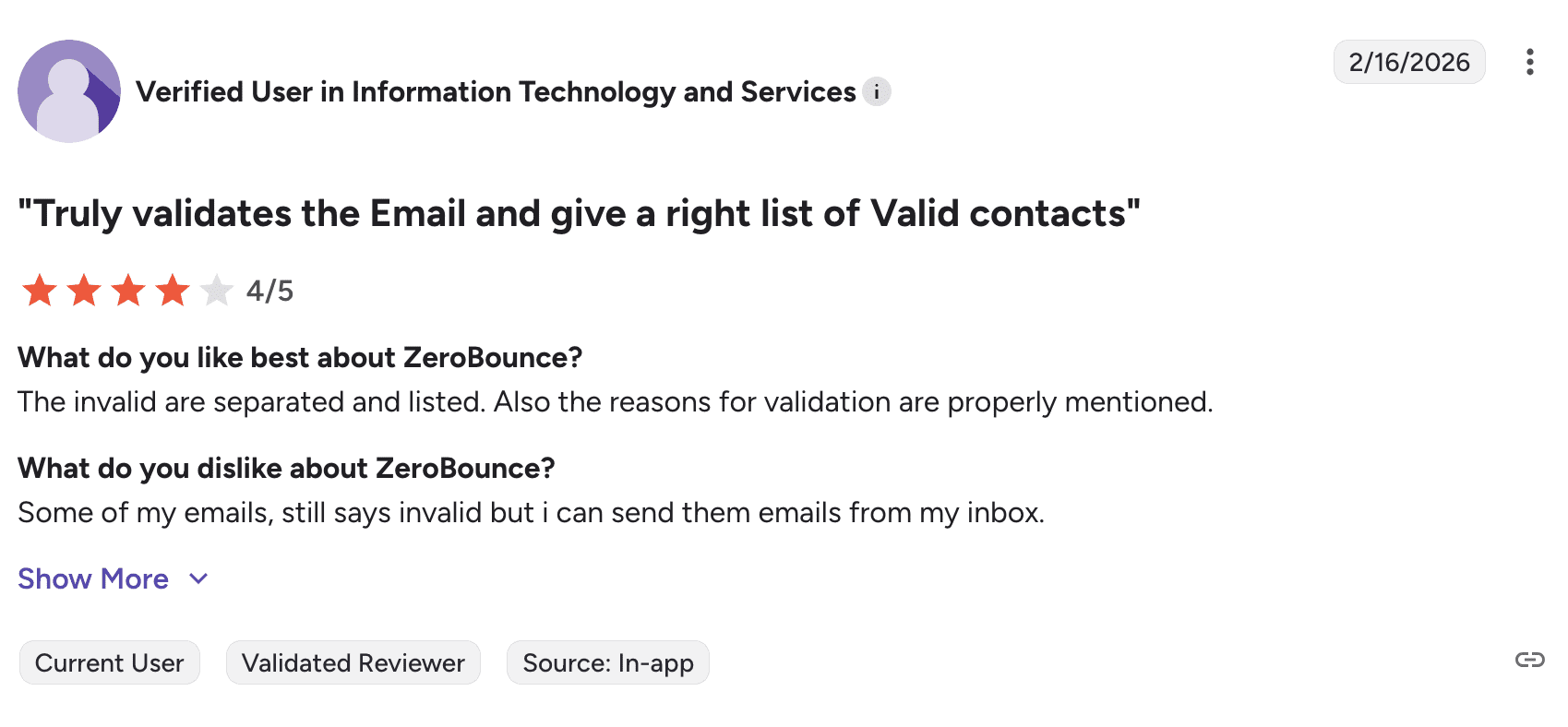
People like this email verification tool, especially its ability to segment invalid emails. What often annoys users is the move to forced subscription bundles. The common feeling is that you end up paying for features you’ll never touch.
📍My final opinion about ZeroBounce:
In my view, ZeroBounce offers more depth than typical verifiers, thanks to AI scoring on top of the basics. Those extra features, plus scaling pricing, make it a solid option for enterprise teams.
BriteVerify
G2 rating: 4.2/5
Pricing: Not publicly disclosed.
Best for: Lightweight and fast API for real-time checks.
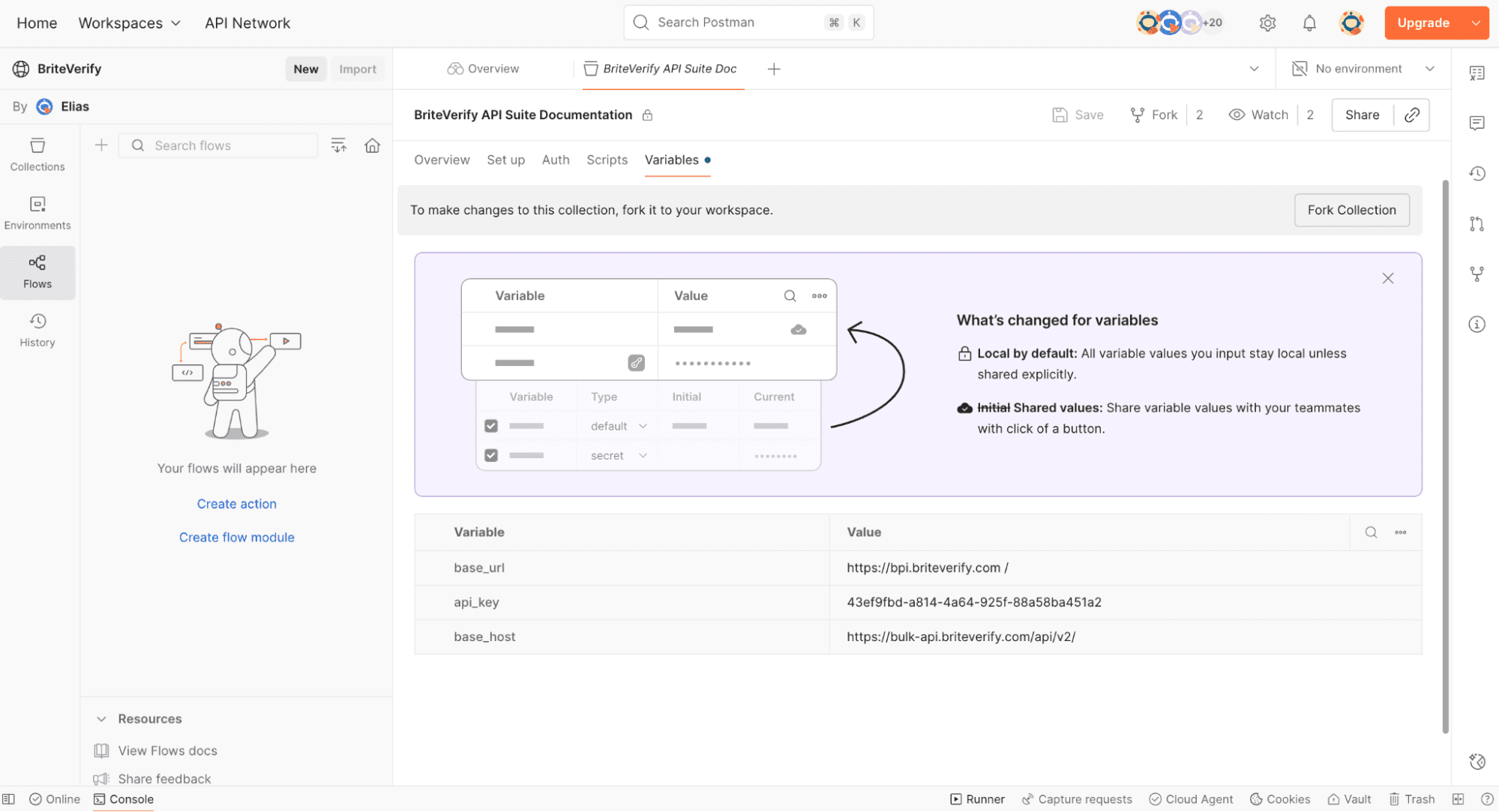
Though I included BriteVerify in a real-time email validation category, it’s also a strong bulk email verification tool. Technically, its API supports up to 500 verifications per minute per key, while bulk jobs can process up to 1 million emails per file.
The email verifier API returns three results: valid, invalid, or risky. The risky category highlights emails that technically exist but may still cause issues, such as full inboxes, disposable addresses, or catch-all domains. It also flags things like typos, role-based emails, and free email providers, which adds some helpful context.
The API itself is simple and has clear documentation. While it offers fewer native integrations than some competitors, the available ones are well-documented and easy to implement.
Pricing is not disclosed, to my regret, making it difficult to evaluate the tool’s cost-effectiveness or compare it with alternatives. The only information I got from their chat is that the tool’s pricing plans are tailored for enterprise solutions. To learn more, you need to schedule a demo.
What users say about BriteVerify:
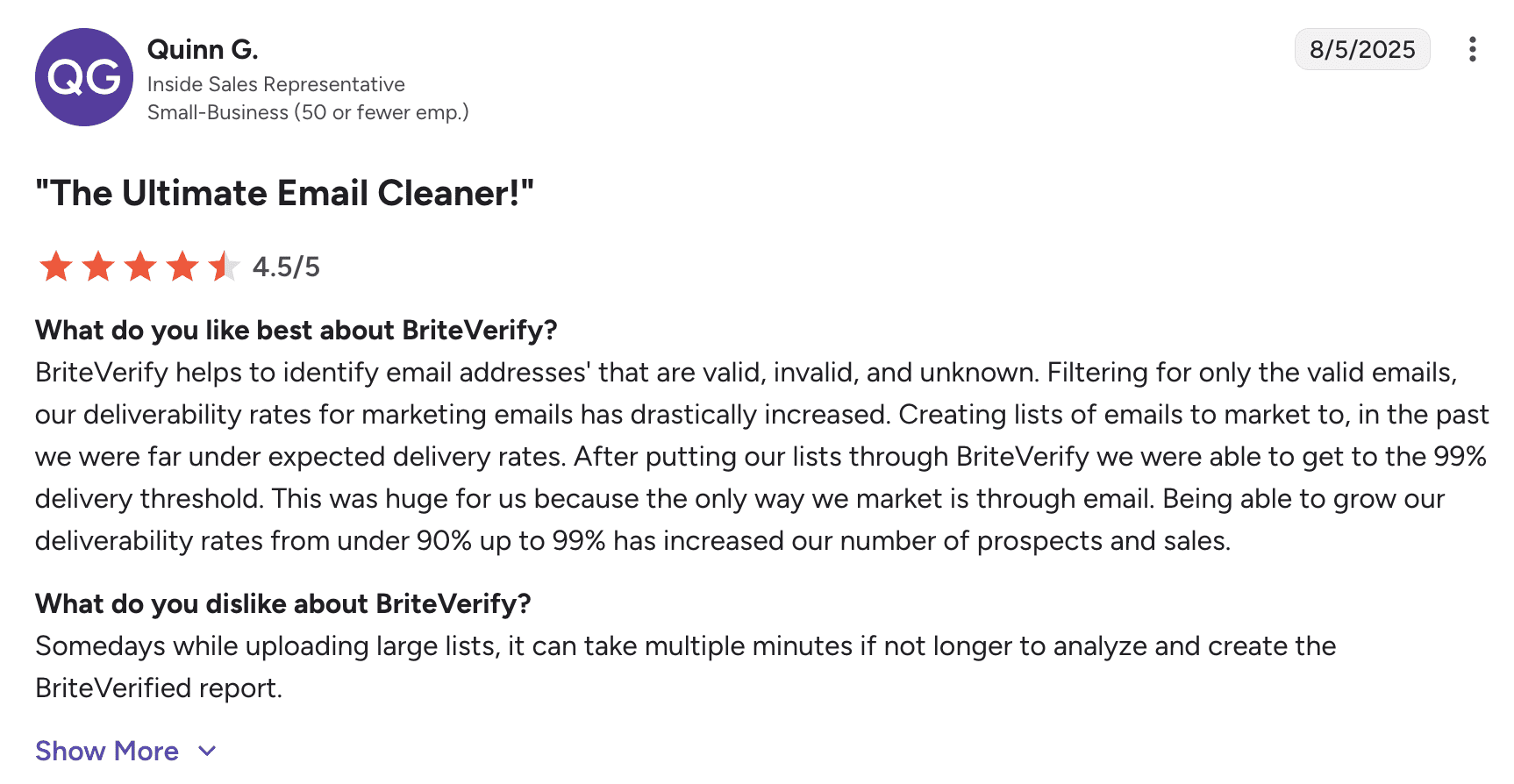
Users find it intuitive and fairly accurate, though credits can be depleted faster than expected on larger lists. Some also feel the email results are occasionally unclear, which calls for manual verification. Plus, it sometimes takes a long time to upload large lists.
📍My final opinion about BriteVerify:
BriteVerify is fast and delivers on its promises. The risky email category provides useful context, and the security model is among the better ones in this group. While it doesn’t integrate as widely as some other email verifier API providers, it’s a solid choice for teams that value dependable results. What it lacks, however, is a transparent pricing policy.


Hunter
G2 rating: 4.4/5
Pricing: API-only access starts at $11 for 1,000 verifications.
Best for: Easy to start, powerful for SMBs.
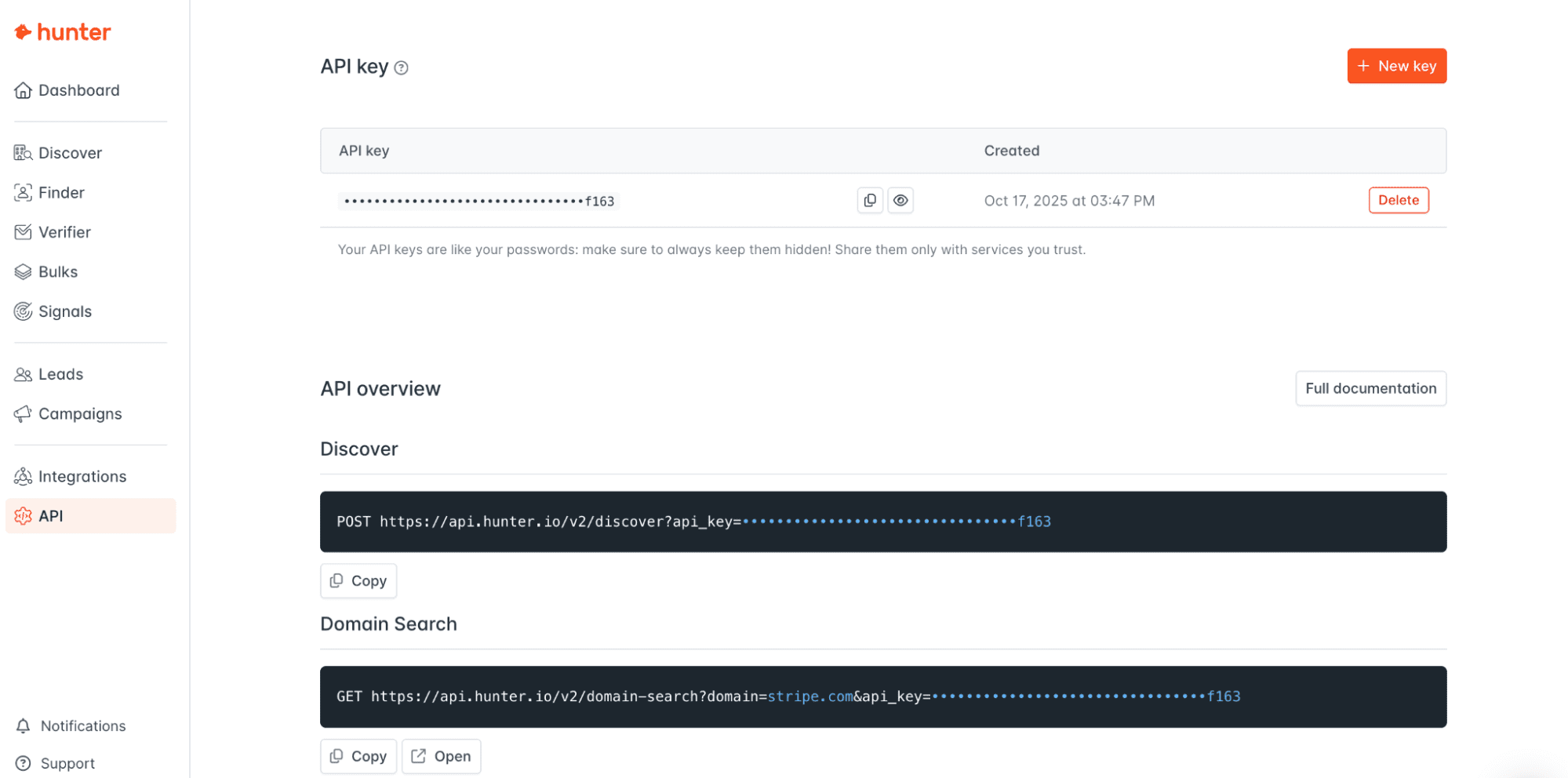
Hunter’s email verifier API is simple and easy to use for real-time validation. It returns 6 verification statuses: valid, invalid, accept all, webmail, disposable, and unknown. Each result also includes a deliverability score and checks like MX records, SMTP response, and gibberish detection.
One feature I find useful is the web sources data, which shows where an email address has appeared online. In my view, this provides more context than a simple “valid” or “invalid” result.
The API is stable and usually responds quickly. If a verification takes longer than 20 seconds, it returns a polling status. This means the check continues in the background rather than failing, and it still counts as a single request.
Hunter also integrates with tools such as HubSpot, Salesforce, Pipedrive, Zoho, Gmail, and Outlook. It also works with automation platforms like Zapier, Make, and Clay. The documentation is clear, which makes it easy to try first.
Pricing works on a credit system. Search and verification credits are purchased separately, starting from 1,000 credits.
What users say about Hunter.io:
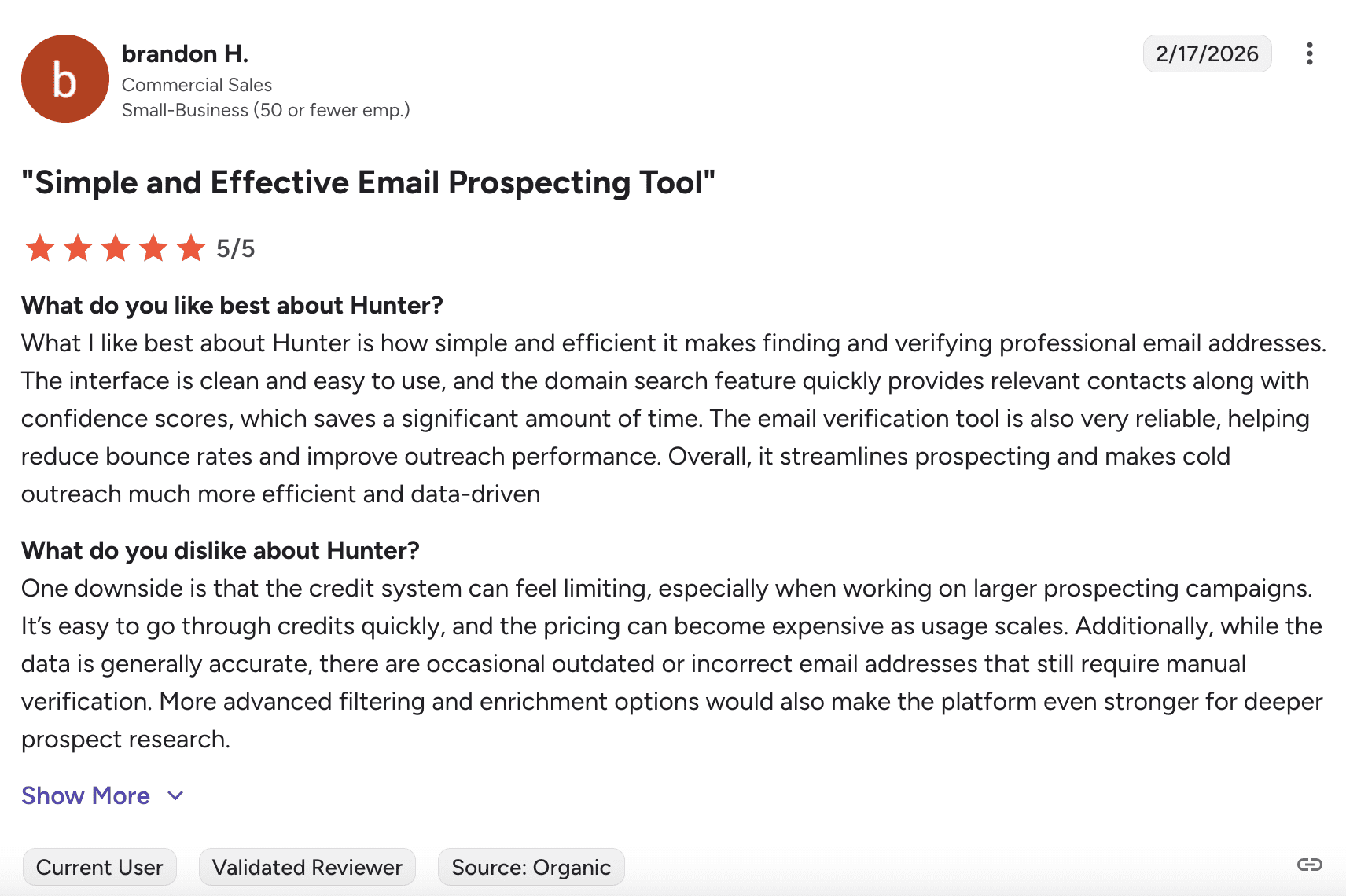
The interface and domain search get consistent praise, but credits run out faster than most users expect. Some people also flag occasional outdated emails slipping through.
📍My final opinion about Hunter.io:
I think the tool’s web source data is really useful, and the integration library works well. At the same time, its credit system can feel a bit restrictive when scaling up.
Best bulk email verification APIs
The next group in my review is dedicated to the tools that verify email addresses via API in bulk.
NeverBounce
G2 rating: 4.2/5
Pricing: 10 free credits upon signing up. Pay-as-you-go from $8 per 1,000 credits.
Best for: High-volume bulk cleaning.
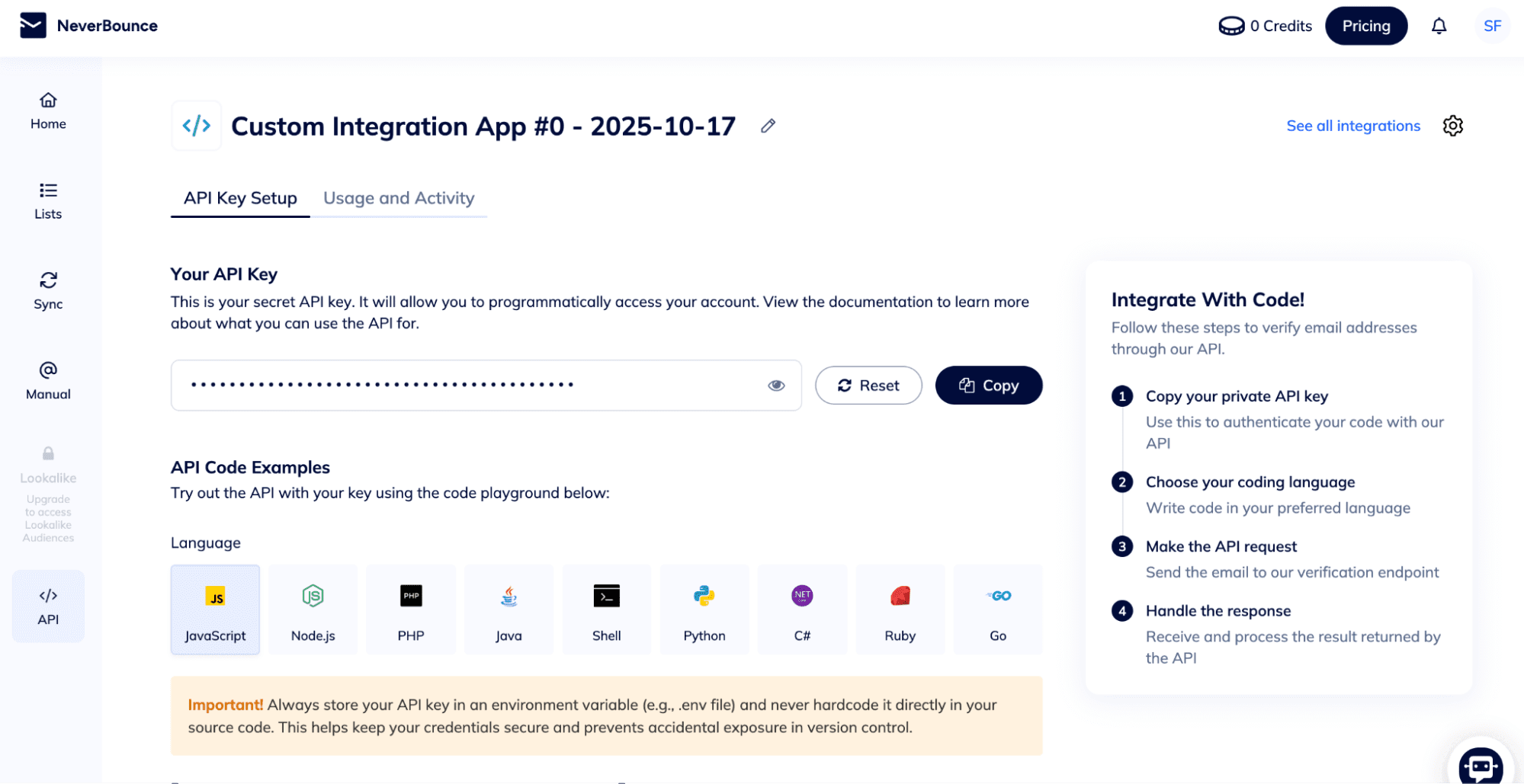
Owned by ZoomInfo, NeverBounce is built mainly for large-scale list cleaning. It classifies emails as valid, invalid, catch-all, disposable, or unknown, and also provides a bounce estimate for the entire list. In my view, this list-level estimate is helpful because it quickly shows the overall health of a database before sending campaigns.
As an email verification tool, the platform focuses strongly on bulk verification. Its 20+ step validation process checks each address multiple times across global servers to improve accuracy.
From a security perspective, NeverBounce includes domain validation for public API keys and per-IP request throttling. This helps prevent misuse and protects your credit balance.
It is fairly simple to verify email addresses with this API: submit a list, poll for progress, and download the results. Lists can be uploaded as CSV files or raw data, which makes it easy to connect with most data pipelines. It also integrates with many ESPs and tools through 18+ native integrations and Zapier.
As for the pricing, let me forewarn you: verification will stop if you run out of credits mid-job, so make sure to keep some extra on hand for big lists.
What users say about NeverBounce:
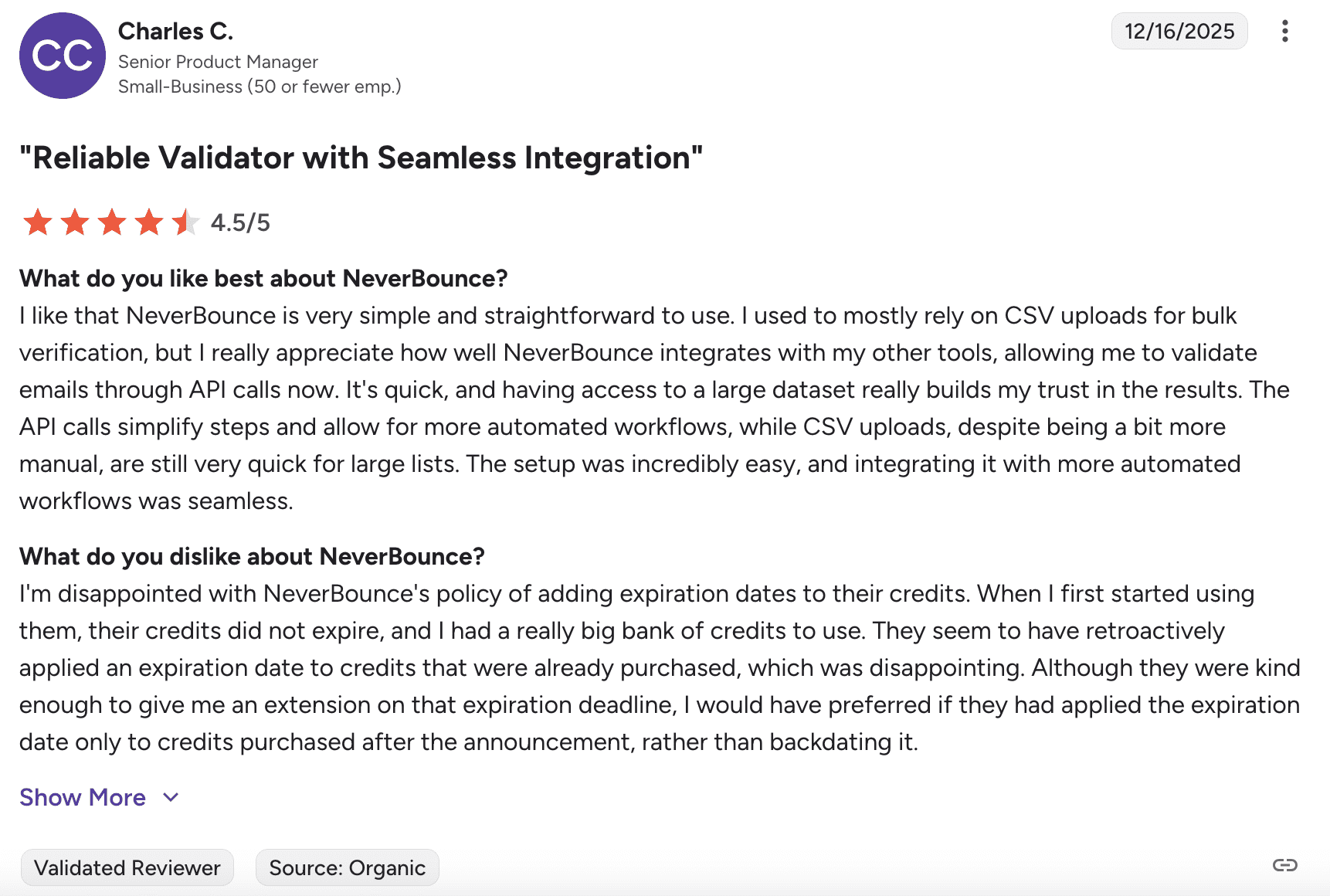
From the users’ point of view, NeverBounce is a solid tool with strong API integration. But the introduction of credit expiration dates feels frustrating for long-term customers.
📍My final opinion about NeverBounce:
I see NeverBounce as a strong choice for high-volume bulk cleaning. The list-level bounce estimates are helpful, while integrations cover most workflows.
EmailListVerify
G2 rating: 4.5/5
Pricing: 100 free checks. Paid plans start at $5 for 1,000 credits.
Best for: Great for budget-conscious users
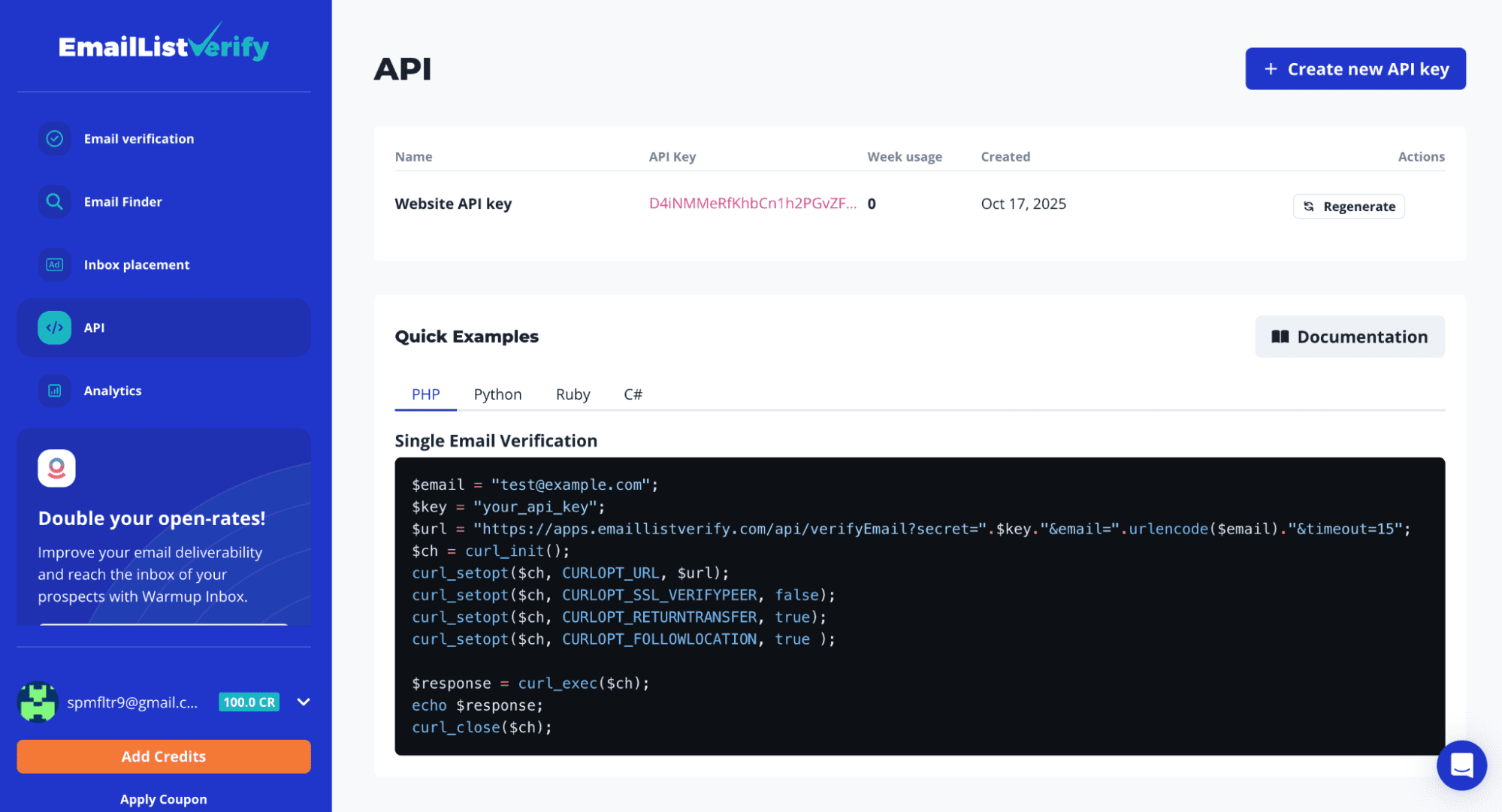
EmailListVerify focuses on simple, affordable real-time email validation. It checks syntax, DNS records, MX records, catch-all domains, and spam traps. Spam trap detection is especially useful, as sending to such addresses can seriously damage the sender’s reputation and harm email deliverability.
The API supports 2 authentication methods and also offers a high-quality verification mode that runs additional checks from multiple IPs. This helps reduce unknown results when verifying emails on stricter mail servers.
From a developer standpoint, the API is straightforward. It works with common languages like PHP, Python, Ruby, and C#, as well as cURL, and there’s also a simple widget for easier setup.
Pricing is one of its main advantages. It starts at about $5 for 1,000 verifications, with 100 free checks to try the tool.
What users say about EmailListVerify:
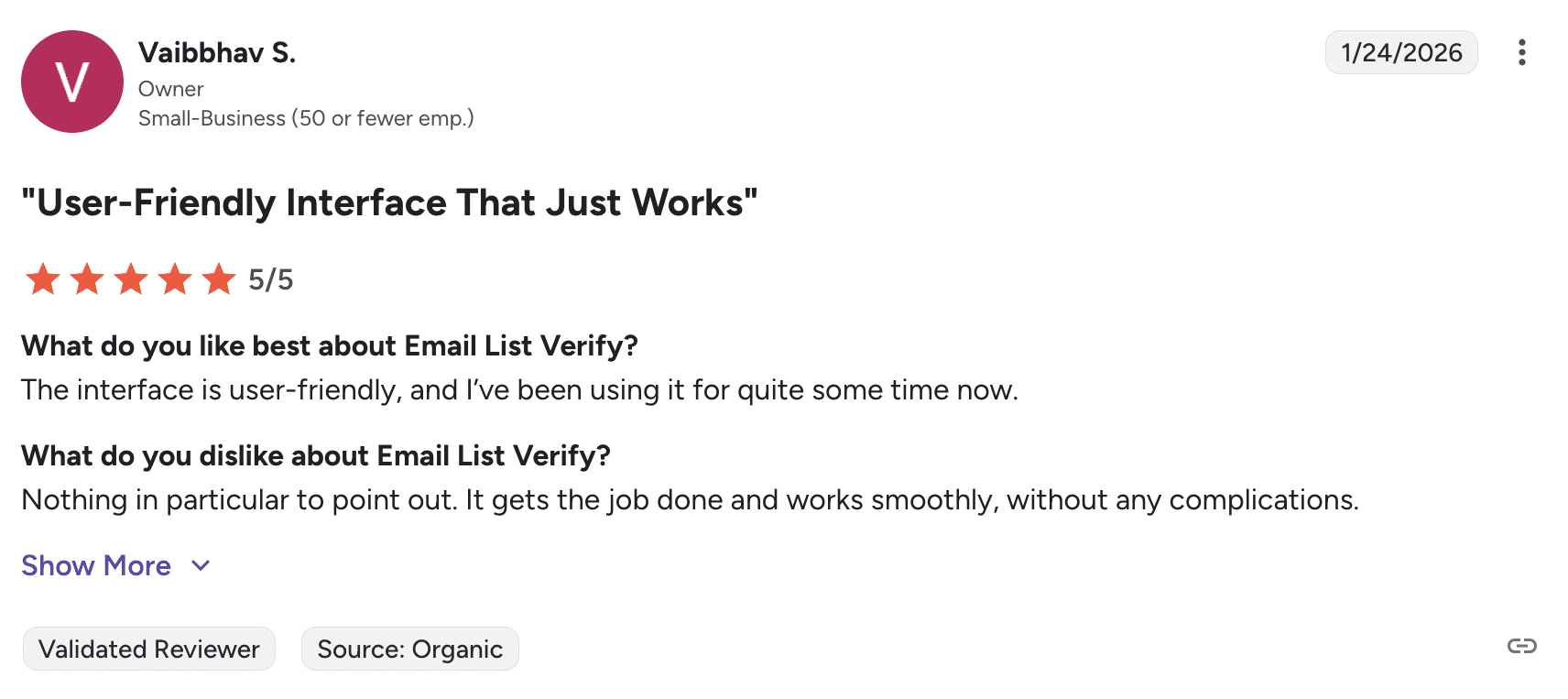
EmailListVerify is one of the more positively reviewed tools in this group. Users report fast processing, accurate results, and a noticeable drop in bounce rates almost immediately.
📍My final opinion about EmailListVerify:
Honestly, EmailListVerify surprised me. Spam trap detection and inbox placement testing punch well above the price point. Also, user feedback is consistently positive. So, I find this email verification tool worth trying.
Debounce
G2 rating: 4.5/5
Pricing: 100 free credits. Pain plans start from $15 for 5,000 verifications.
Best for: Teams seeking a balance between pricing accuracy.
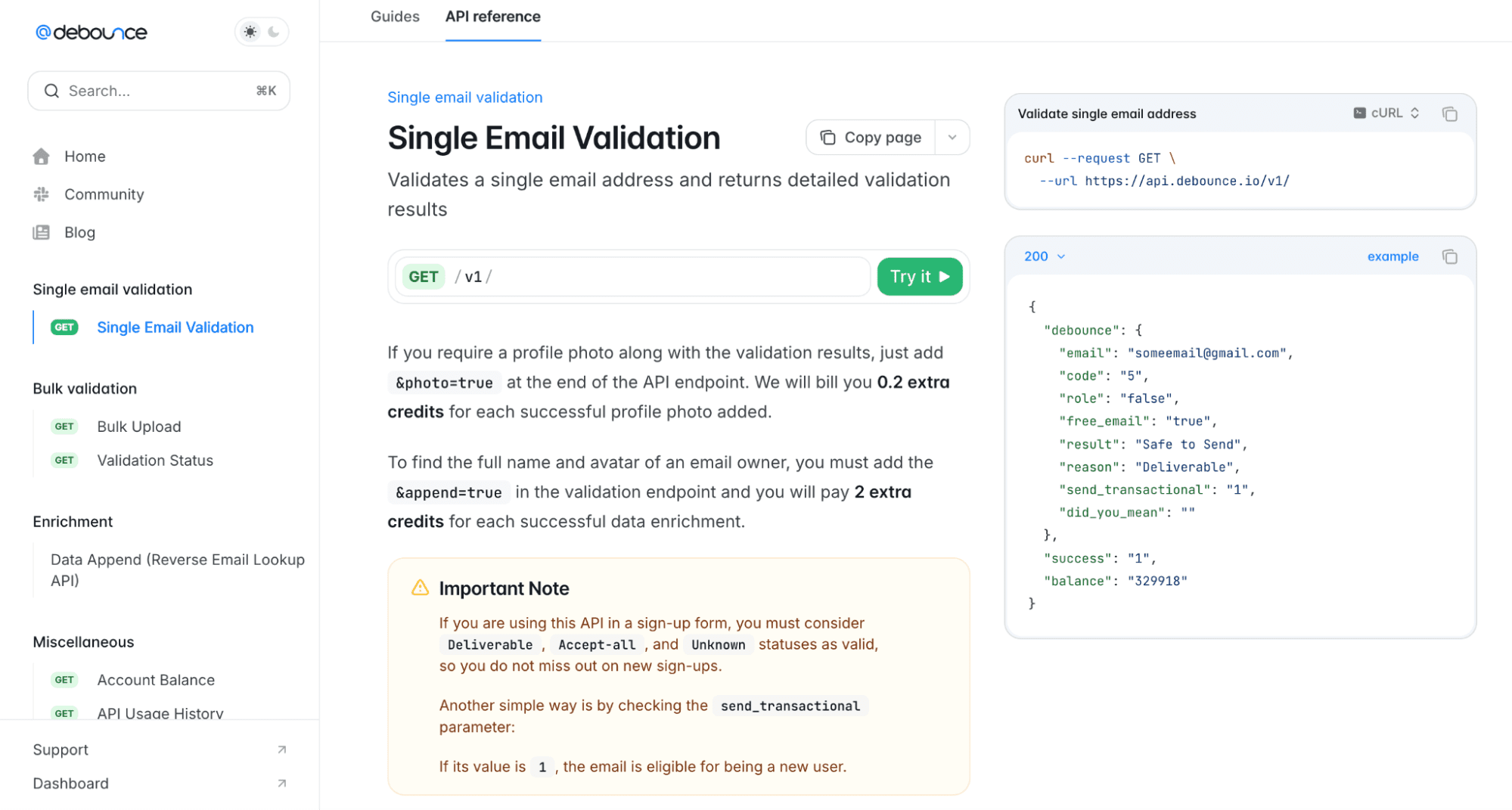
DeBounce is a bulk email verification tool that promises 97.5% deliverability. The platform runs 9 verification checks. These include syntax, DNS, MX, SMTP, mailbox existence, disposables, and domain typo detection. That last one is genuinely useful, especially for inbound lead generation.
Integrations cover HubSpot, Mailchimp, ActiveCampaign, Klaviyo, SendGrid, Mailgun, and a handful of others. Lists can be pulled and verified directly from these platforms, which cuts out the usual export-and-import cycle.
Pricing starts at around $10 for 5,000 credits with volume discounts built in. New accounts get 100 free credits, and no credit card is needed. Credits also never expire, which I think works well for users who clean email lists occasionally.
What users say about Debounce:
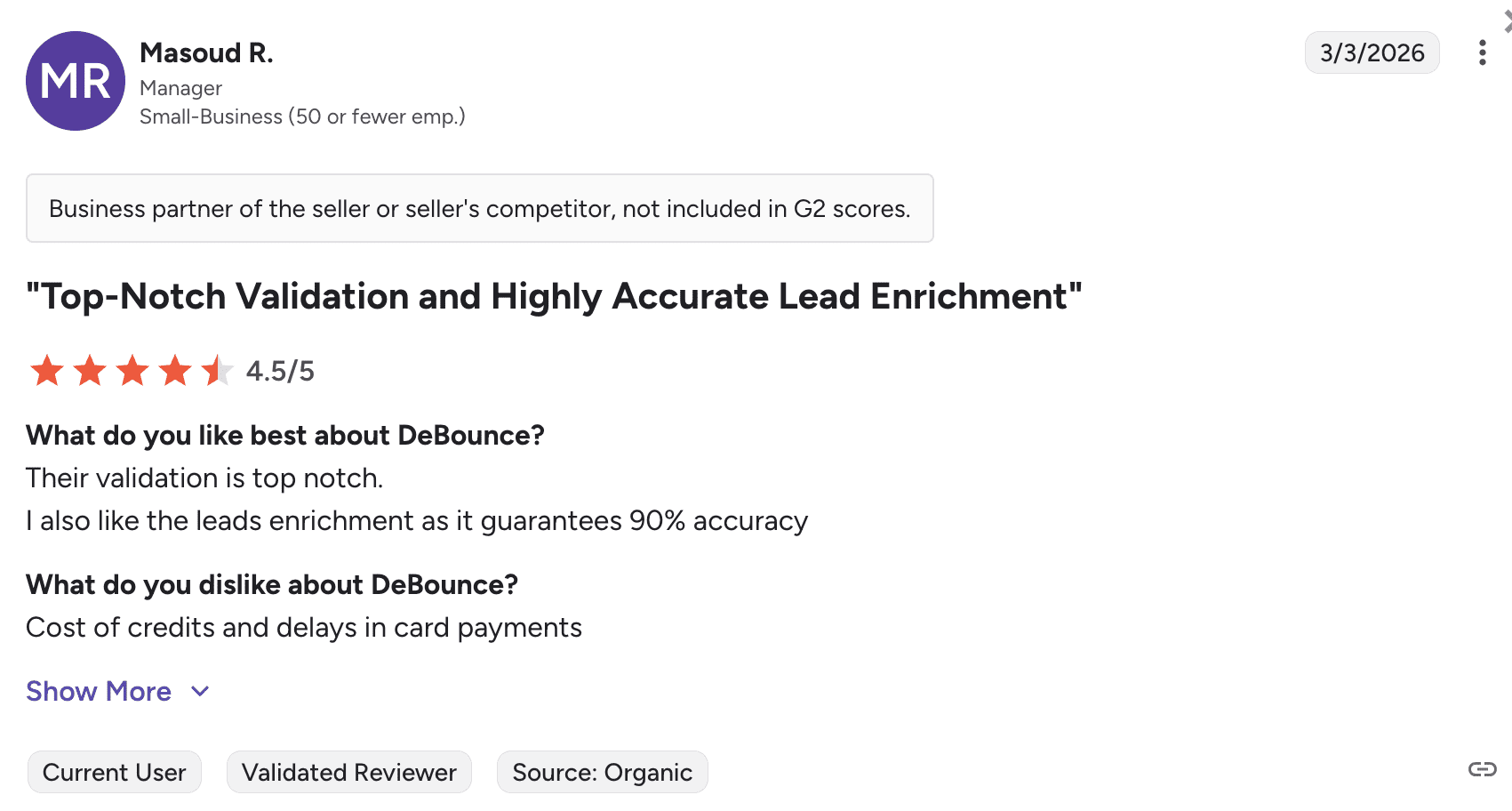
Users praise the tool’s strong validation quality, as well as the enrichment features. The main complaints are occasional payment delays.
📍My final opinion about Debounce:
To me, DeBounce feels like a reliable middle ground. With nine verification layers, typosquatting detection, and credits that never expire, it seems both dependable and fairly priced.
Best free email verification APIs
These email verifier APIs have free tiers that make testing and implementation a breeze, helping you validate addresses without commitment.
Clearout
G2 rating: 4.6/5
Pricing: 100 free credits monthly. Paid plans from $23 for 3,000 credits.
Best for: Developer experience and support
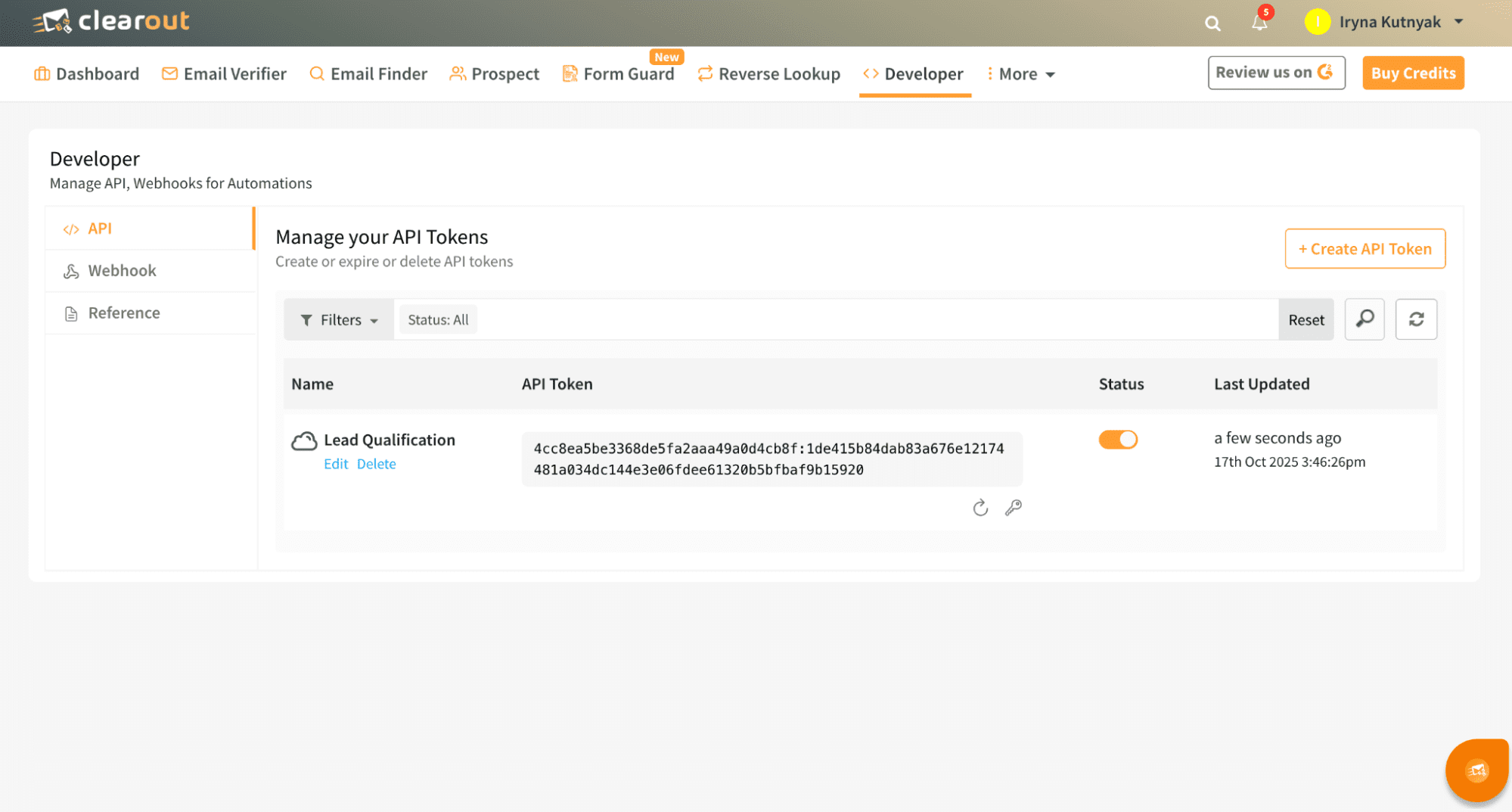
Clearout is designed with developers in mind. The documentation is clear, and there are SDKs for several programming languages, which makes the API fairly easy to integrate. It also includes AI-powered verdicts, which help interpret the verification results.
Clearout runs more than 20 verification checks. These include syntax validation, MX record checks, SMTP verification, disposable email detection, catch-all detection, role accounts, spam traps, and mailbox errors. One feature I found especially useful is automatic duplicate removal.
The email verifier API supports multiple concurrent requests and doesn’t limit how many emails you can verify in a single request. The allowlist and blocklist options also give teams more control over which emails pass or get flagged.
The platform integrates with tools like HubSpot, Mailchimp, ActiveCampaign, Klaviyo, Zoho, Apollo, SendGrid, and Lemlist. It also works with WordPress form builders such as Gravity Forms, Ninja Forms, and WPForms.
Clearout offers a free plan with 100 lifetime credits, which is a simple way to try its API. Paid plans start at about $23 per month for 3,000 credits, and unused credits roll over, which is useful if you verify email addresses with the API inconsistently.
What users say about Clearout:
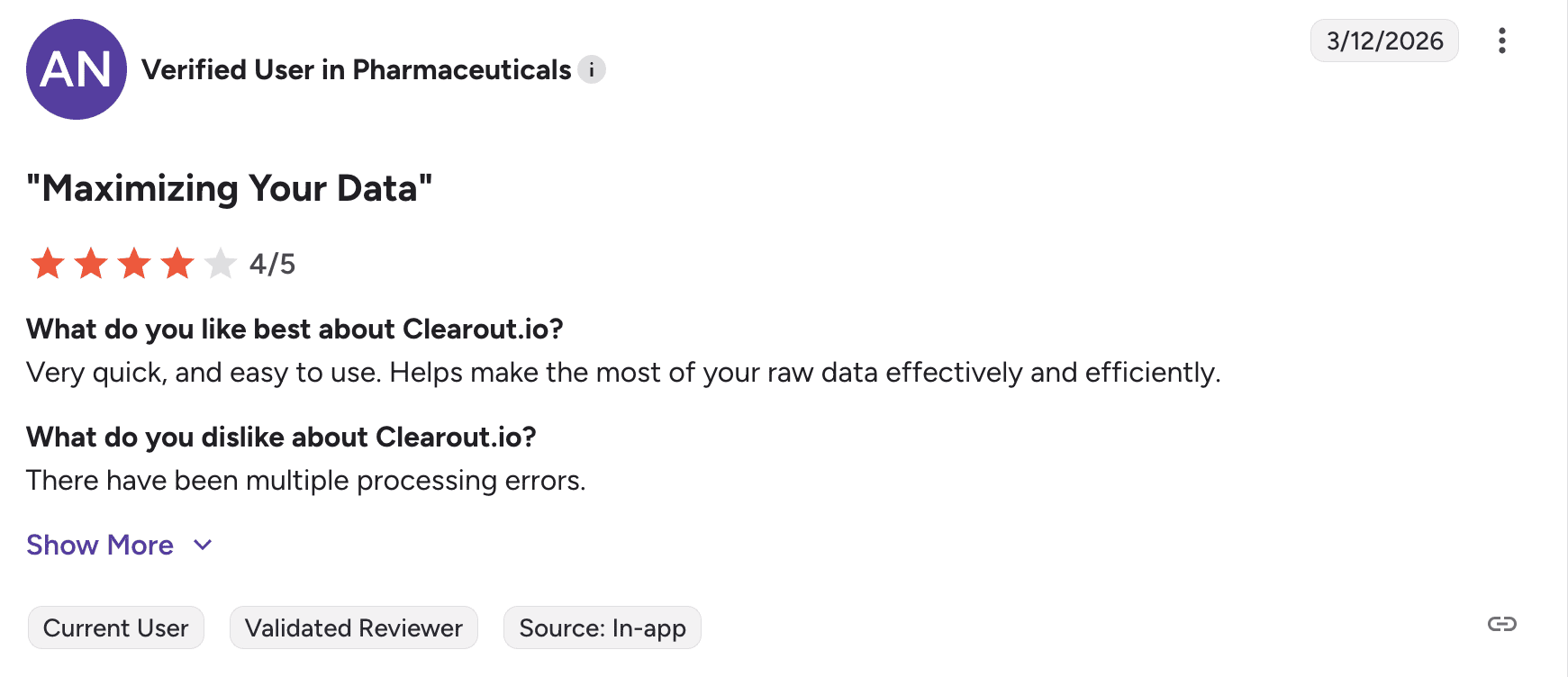
Users find it simple and effective, with the de-duplication feature being a favorite. Some report occasional processing errors and slower speeds compared to competitors.
📍My final opinion about Clearout:
From my perspective, Clearout covers a lot, and the free tier is worth checking out first. The de-duplication feature is useful, but since some users report processing errors and slower speeds, keep this in mind.
Verifalia
G2 rating: 4.5/5
Pricing: Free plan includes 25 credits daily. Subscriptions from $7.90/month for 1000 credits if you pay as you go.
Best for: Flexible API usage
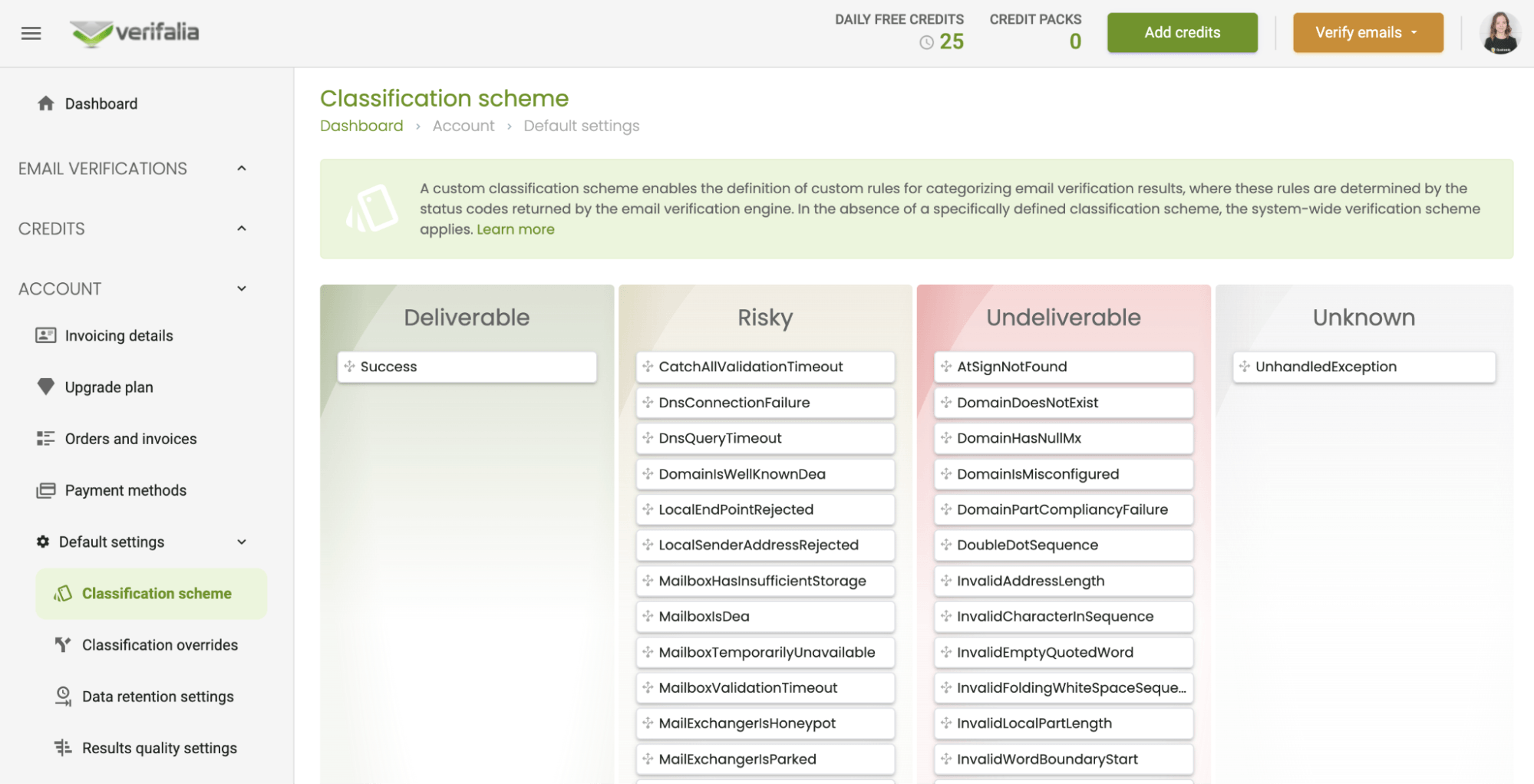
Verifalia claims about 92% accuracy, which is a strong result for an email verification service. It feels built with developers in mind: integrating the API into an app requires little effort.
The platform runs all the standard checks. It validates email syntax, checks DNS and MX records, performs SMTP verification, attempts mailbox confirmation, etc. What I found useful is the level of detail in the results. Instead of returning only “valid” or “invalid,” it provides more than 40 status codes.
Two features stood out to me in particular. First, Verifalia supports international email addresses, including Chinese, Arabic, Cyrillic, and other scripts. Second, it includes Yahoo-specific verification, which many email verification tools struggle with because Yahoo servers often limit standard checks.
Verifalia provides SDKs for several languages, including .NET, Java, Node.js, PHP, Ruby, and Go. There’s also a simple JavaScript widget for real-time form validation with minimal setup. Through Zapier and Pipedream, the API can connect to many other apps, making integrations quite flexible.
Pricing is pay-as-you-go, starting at about $7.90 for 1,000 credits, and the credits never expire. From my perspective, this model works well for teams that only occasionally verify emails.
What users say about Verifalia:
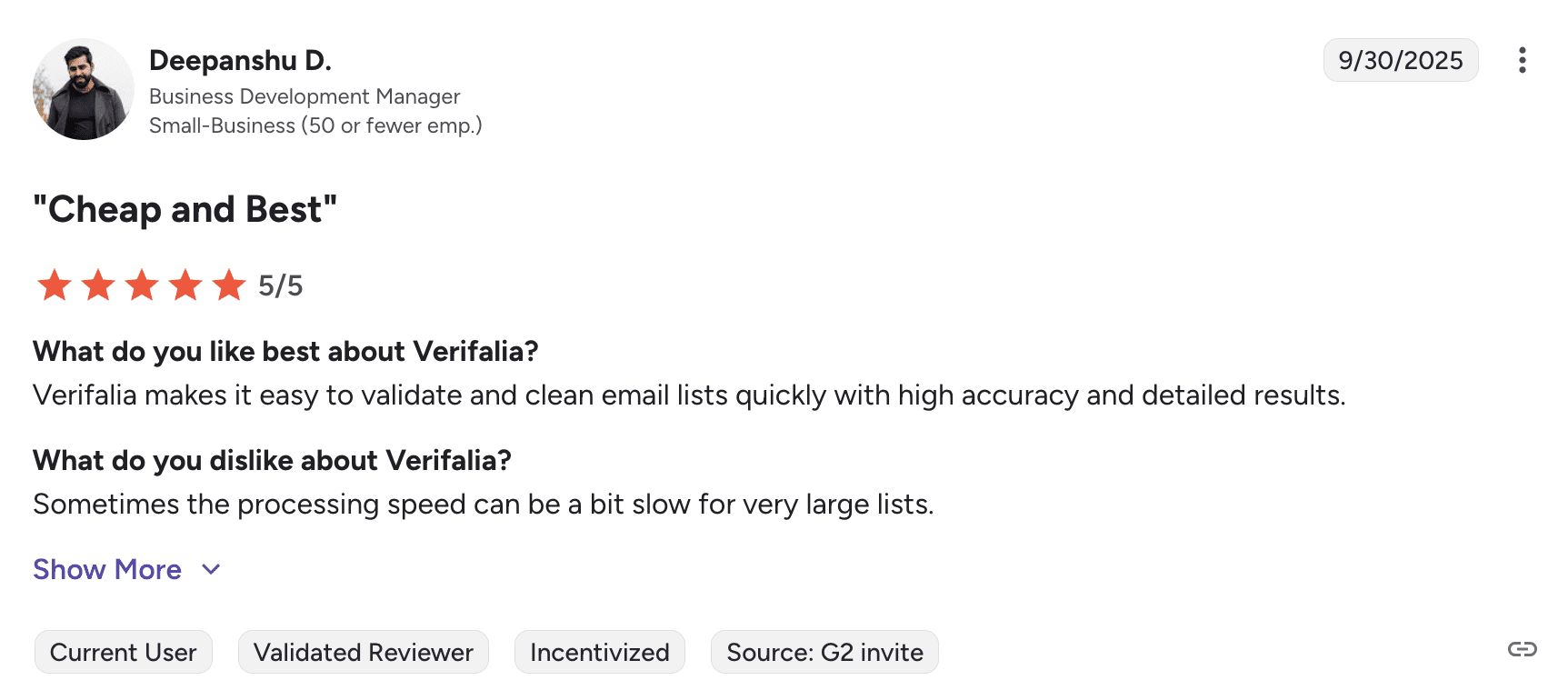
Users are happy with the accuracy and detailed results provided by the service. The main sticking point is speed with very large lists, which lags behind other email verification tools.
📍My final opinion about Verifalia:
To me, Verifalia seems like one of the most complete email verifier API options for teams with international or complex verification needs. But processing speed with very large lists is one of the noticeable weaknesses.
Emailable
G2 rating: 4.8/5
Pricing: 250 free credits. Paid options start at $32.30 for 5,000 credits.
Best for: Teams that need a simplified API with bulk capabilities
Emailable boasts 99% accuracy and extensive bulk-processing capabilities. Each verification returns deliverability status, quality score, MX records, SMTP provider, etc. The contact enrichment is a genuinely useful bonus. First name, last name, and gender come back with each result.
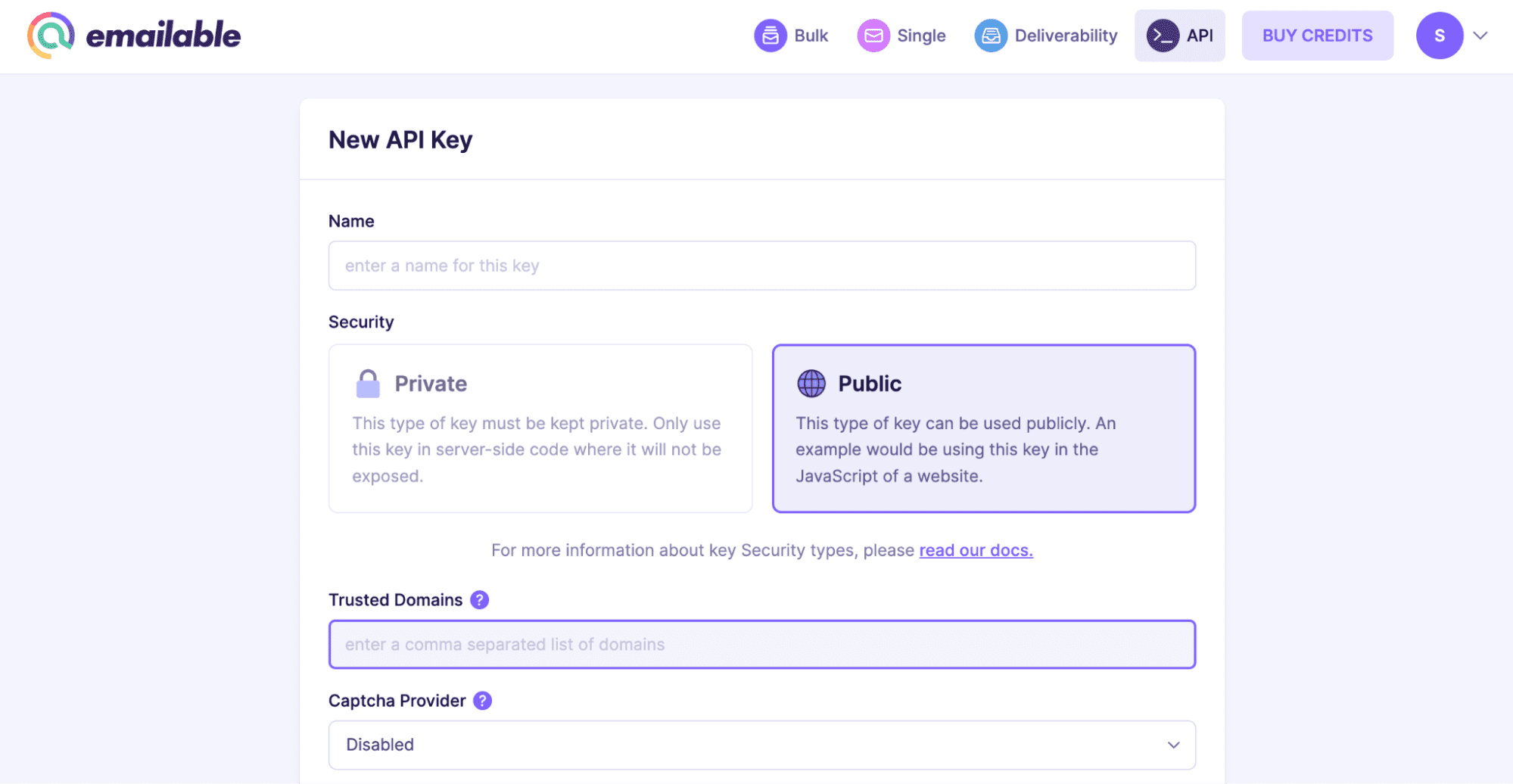
Security is well covered with AES-256 encryption, separate public and private API keys, 30-day data deletion, and full GDPR compliance.
The API is easy to work with. Client libraries are available for Node.js, Ruby, and Python. A JavaScript widget handles real-time form validation, and Zapier and Make connect it to most CRM and marketing tools. Documentation is generally clear throughout.
Pricing starts at around $32.30 for 5,000 credits per month, which is quite generous. Plus, new accounts get 250 free credits to test the waters first.
What users say about Emailable:
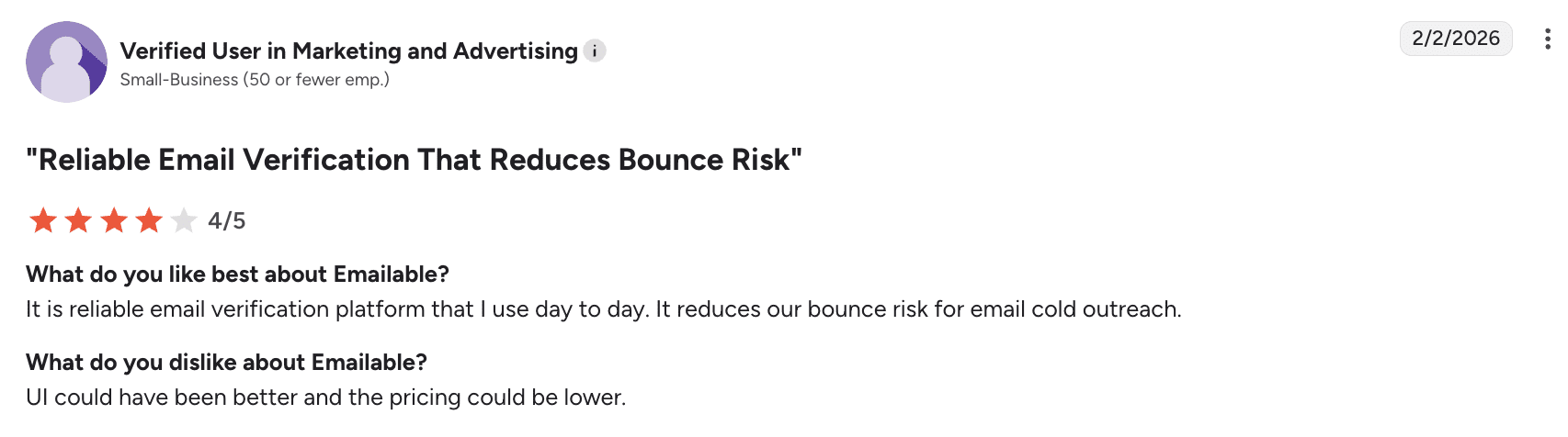
Users love the tool’s reliability for daily verification and for reducing bounces. On the downside, many express frustration with the underwhelming UI and pricing, especially at a larger scale.
📍My final opinion about Emailable:
I find Emailable reliable and easy to integrate, while the contact enrichment data really sets this email verification tool apart. The UI feels a bit underwhelming, and pricing can be tough to justify at scale, but for teams needing solid verification with helpful lead context, it works well.
How to choose the best email verification API
The choice of the best solution depends on many factors, but everything boils down to the particular needs of your team:
✅ List size: Small businesses with under 10,000 addresses need different solutions than enterprises processing millions of records.
✅ Sending frequency: Daily campaigns require real-time verification, while monthly newsletters work better with batch processing.
✅ Team expertise: Non-technical users need simple dashboards, while developers can leverage advanced API features.
✅ Integration compatibility: Your email verifier API should work with the email marketing platforms and deliverability tools you’re already using.
✅ Data security: GDPR compliance is mandatory for European contact processing, with additional requirements for healthcare and finance.
✅ Pricing models vs your budget: Pay-per-verification works for low volumes, while monthly subscriptions suit regular campaigns. Enterprise plans include dedicated support, while annual subscriptions help you save the most. The choice depends on your needs and goals.

Key takeaways:
To sum up my review of the best email verification APIs, all solutions on my list have their strengths. Let’s recap what each tool is best for, so you can make a choice based on your current needs and budget:
- Snov.io is most helpful for teams that need verification, lead generation, plus outreach automation workflows, provided in a unified, budget-friendly toolset.
- ZeroBounce suits better for enterprise-grade validation with advanced scoring and security.
- BriteVerify fits those teams that need fast, lightweight, real-time verification.
- Hunter will satisfy the needs of SMBs by offering simple verification, plus email finding.
- NeverBounce is really good for high-volume bulk email list cleaning.
- EmailListVerify boasts of budget-friendly bulk verification with strong accuracy.
- DeBounce is a good solution for users who want balanced pricing and multi-layer validation.
- Clearout is for teams that need a developer-friendly API with strong documentation and support.
- Verifalia suits best for those teams interested in flexible API usage and international email verification.
- Emailable is for users who need easy integration with bulk processing and data enrichment.
If you need a combination of high API verification accuracy, strong email discovery, a deliverability toolkit, multichannel outreach, and CRM capabilities, start with Snov.io. You’ll be pleasantly surprised to get all the necessary features for lead generation and outreach automation wrapped up in a single package.
The tool’s evergreen freemium will let you evaluate if it’s right for you.