TL;DR: How to grow an affiliate marketing email list
Build an email list for affiliate marketing by focusing on strategies that attract the right subscribers and nurture them effectively:
- Create a lead magnet: Offer a guide, checklist, or template that solves one clear problem.
- Build a landing page: Use a clear headline, simple form, and zero distractions
- Drive traffic: Publish content, share on social media, and strategically place opt-in forms.
- Automate value-first sequences: Send educational content via email and follow up with outreach automation tools.
- Verify and segment your list: Use Snov.io Email Verifier to remove invalid addresses, segment by interests, and track opens/clicks.
These steps will help you grow an affiliate marketing email list that converts efficiently.
Visitors browse your affiliate site, make no purchases, and just never return. This cycle forces you to constantly acquire new traffic rather than build a sustainable audience. Solution? Discover how to build an email list for affiliate marketing.
This guide shows you how to grow an affiliate marketing email list that converts one-time visitors into consistent buyers.
Outline:
Why building your own email list is critical for affiliate marketing
Affiliate marketing is growing fast, so much so that spending is projected to reach $27.78 billion by 2027. Its beauty lies in the flexibility: you can promote products you believe in across virtually any niche. Plus, get a steady income stream that grows alongside your audience. Some affiliate programs even offer generous 40% lifetime commissions, such as Snov.io.
At Snov.io, we treat our affiliates as strategic partners, not just promoters. Our goal is to create a program that provides partners with clear commissions, transparent tracking, and ongoing support. We believe in building trust through consistency, fairness, and shared growth.
PR and Communications Manager at Snov.io

But most visitors won’t convert on their first visit; they need time to trust your recommendations and compare their options. This is why learning how to grow an affiliate marketing email list matters so much. It essentially lets you capture interested visitors and nurture them over time.
Here are a few more reasons why learning how to build an email list for affiliate marketing is so strategically important:
- Builds trust and authority
By sharing valuable content, you position yourself as an authority in your niche. People start seeing you as an expert and begin trusting you. Once that trust is there, they’re more willing to take recommendations and purchase the products you promote. This means higher conversion rates and more affiliate earnings.
- Complete ownership and control
Unlike social media followers, your email list is an asset you own completely. Each subscriber represents someone who has expressed interest in your niche. This, obviously, makes them far more likely to purchase through your affiliate links.
- Protection from algorithm changes
Email is owned media, which protects you from constant algorithm updates from search engines. This is instrumental in helping you maintain an income regardless of platform changes.
- Direct communication channel
When properly nurtured, your email list transforms from a simple database into a community of engaged followers. They trust your recommendations and look forward to your content. You’re not competing with algorithms or distractions, just delivering value straight to interested inboxes.
Top-performing affiliates focus on building trust and growing communities around their expertise. Organic lists outperform bought ones, attracting engaged, responsive subscribers while staying ethical.
With a strong list, affiliates can segment audiences, run multiple campaigns, and reuse the same contacts efficiently
PR and Communications Manager at Snov.io
Sounds exciting, right? Keep reading and learn how to grow an affiliate marketing email list on your own.

Step-by-step guide to how to build an email list for affiliate marketing
Building an email list for affiliate marketing can feel overwhelming at first. But does it actually have to be? We believe that with the right steps, it becomes smooth sailing.
If you’re wondering how to grow an affiliate marketing email list, the guide below will walk you through the entire process.
Create a valuable lead magnet that attracts the right audience
Begin by creating a compelling incentive that encourages visitors to join your list. The emphasis should be on offering something truly useful, such as:
- Guide
- Checklist
- Templates
Lead magnets perform best when they are specific and tightly connected to your niche. This helps you attract subscribers who are already interested in the type of affiliate recommendations you plan to share. Many marketers also develop multiple lead magnets to appeal to different topics within the same niche, which naturally raises conversion rates.
Build a focused landing page or opt-in environment
Once your lead magnet is ready, you’ll need a dedicated landing page or opt-in form designed specifically to capture email addresses. Keep this page simple, focused, and free from distractions.
Strong landing pages normally feature a clear headline, a concise explanation of the value your subscriber will receive, and a clean, easy-to-complete form. The design should load quickly, feel trustworthy, work well on mobile, etc.
After someone subscribes, redirect them to a confirmation or thank-you page where they can access the promised resource. This immediate delivery builds trust and encourages the subscriber to stay engaged.
Drive targeted traffic to your signup offer
With your landing page in place, the next stage is driving the right people to it. High-quality content is one of the most consistent ways to attract visitors who are already inclined to join your list. Whether you’re publishing how-to articles, reviews, or niche-specific insights, each piece becomes an opportunity to direct users toward your signup page.
Social media also plays a key role. Sharing useful posts, previews of lead magnets, or quick tips can steadily bring in subscribers. You can further support your efforts by placing opt-in forms in strategic parts of the website. For instance, the sidebar, within blog posts, or as exit-intent pop-ups, as long as they enhance rather than interrupt the reader experience.
Interested in scaling faster? Try paid ads on Google, Facebook, or LinkedIn that put lead magnets in front of qualified prospects immediately. For example, LinkedIn Lead Gen Forms are built into Sponsored Content. They let you target by job title, seniority, and company size, then retarget engaged users who didn’t convert on their first visit.
|
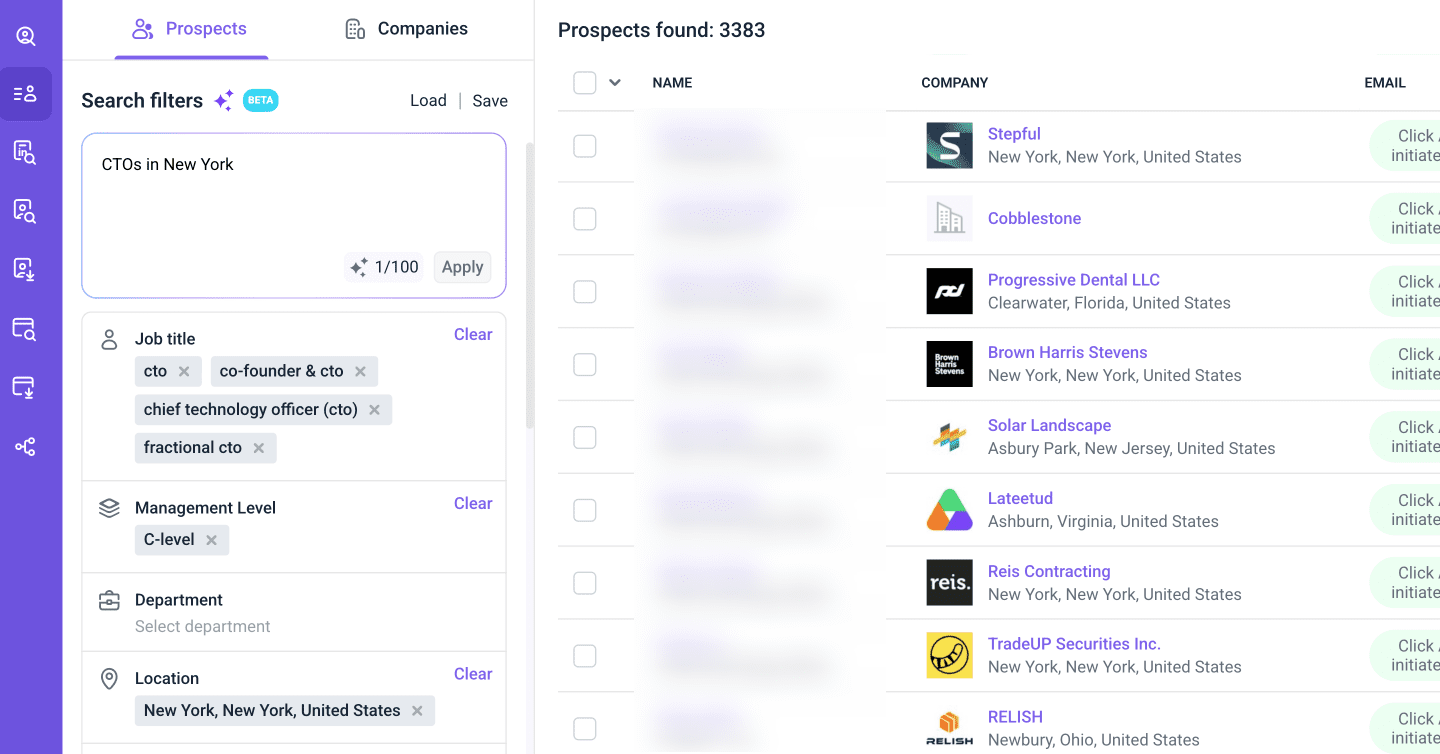
💡Expert tips While organic traffic builds over time, database email search tools offer a more direct approach. If you know your ideal customer, tools like Snov.io’s Email Finder. It helps you find them based on job title, company size, and industry. This way, instead of hoping the right audience eventually finds your content, you reach pre-verified leads who fit your profile. |
Segment and automate to build meaningful relationships
Once subscribers begin joining your list, the focus shifts to managing and nurturing them effectively. Segmentation helps you send the right messages to the right people. Group subscribers based on their interests, engagement level, or the lead magnet they downloaded.
From there, put key automations in place. Set up automated sequences, especially welcome emails, that introduce your brand, deliver value, as well as set expectations.
Tools like Snov.io make automations and segmentation seamless. This helps maintain consistent communication and helps build a relationship with your audience long before any affiliate offers.
Provide value first and build trust before promoting affiliate offers
Once you have an engaged audience, focus on building trust before you start promoting affiliate products. Lead with value by sharing helpful, relevant content. If you push sales too quickly, it’ll backfire; instead, educate, support, and guide your readers.
Keep people interested with clear subject lines that show benefits and content that’s easy to read. As trust builds over time, recommending affiliate products will feel natural. Do this through honest reviews, useful comparisons, or practical examples that actually help your audience make good decisions.
Maintain, clean, and optimize your list over time
As your list grows, you’ll need to maintain its health by monitoring engagement and removing inactive or invalid emails. Thus, email verification becomes an indispensable process that helps reduce bounce rates and protect your sender reputation.
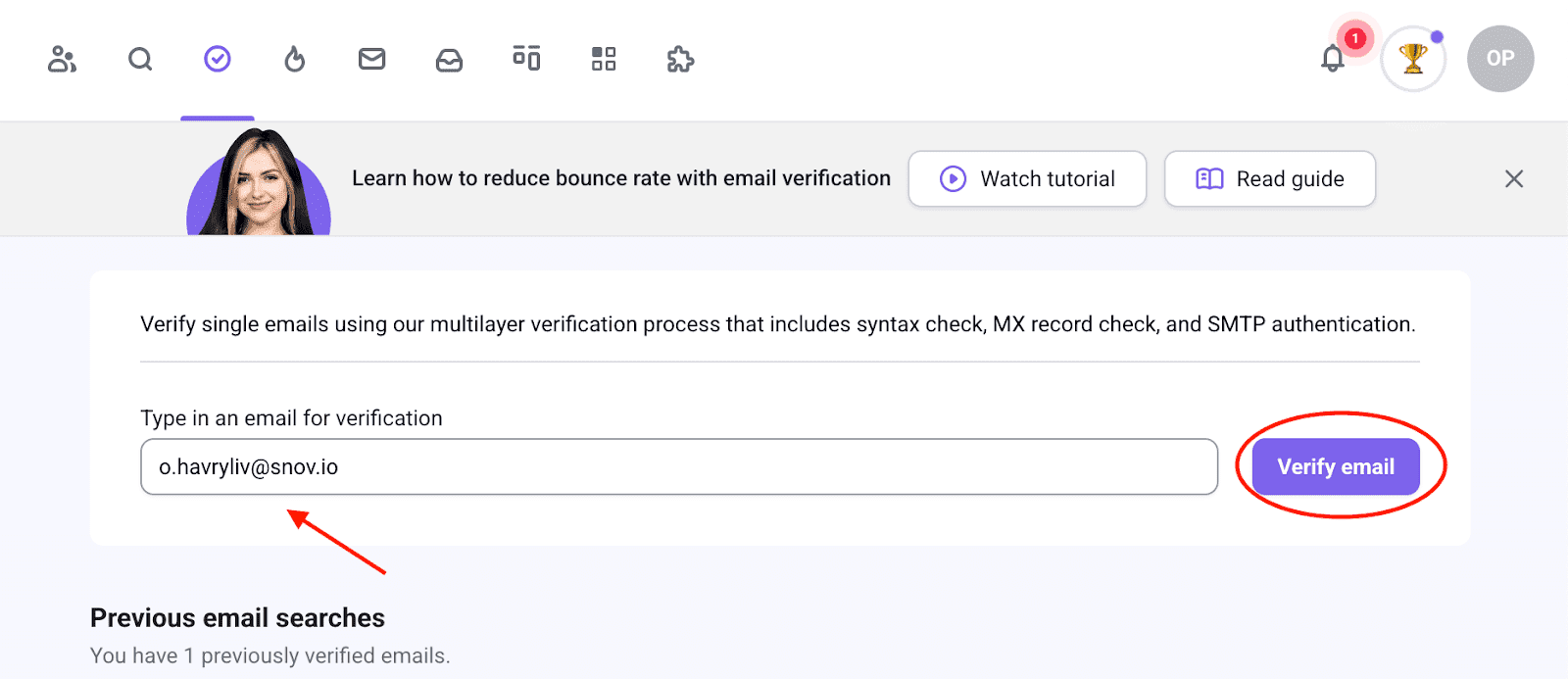
Tools like Snov.io Email Verifier can help streamline this process by allowing you to verify individual email addresses, process bulk verifications of up to 100,000 emails at once, or automatically verify emails directly within your prospect lists.
Another key point is performance tracking. It helps you see what resonates with your audience and what needs improvement. With this information in mind, you can eventually refine email content, test different approaches, and adjust segmentation.
How to choose the right email tools for affiliate marketing
Choosing the right email tools for affiliate marketing is critical if you want to build an email list for affiliate marketing that actually converts. The tools you pick determine how easily you can segment, automate, and track campaigns.
Below are our recommendations on what matters most when picking tools:
Automation features
In this day and age, you simply can’t afford to spend hours sending emails one by one. And honestly, why would you? Modern email tools let you automate the process and save an enormous amount of time. Look for a platform that takes care of repetitive tasks.
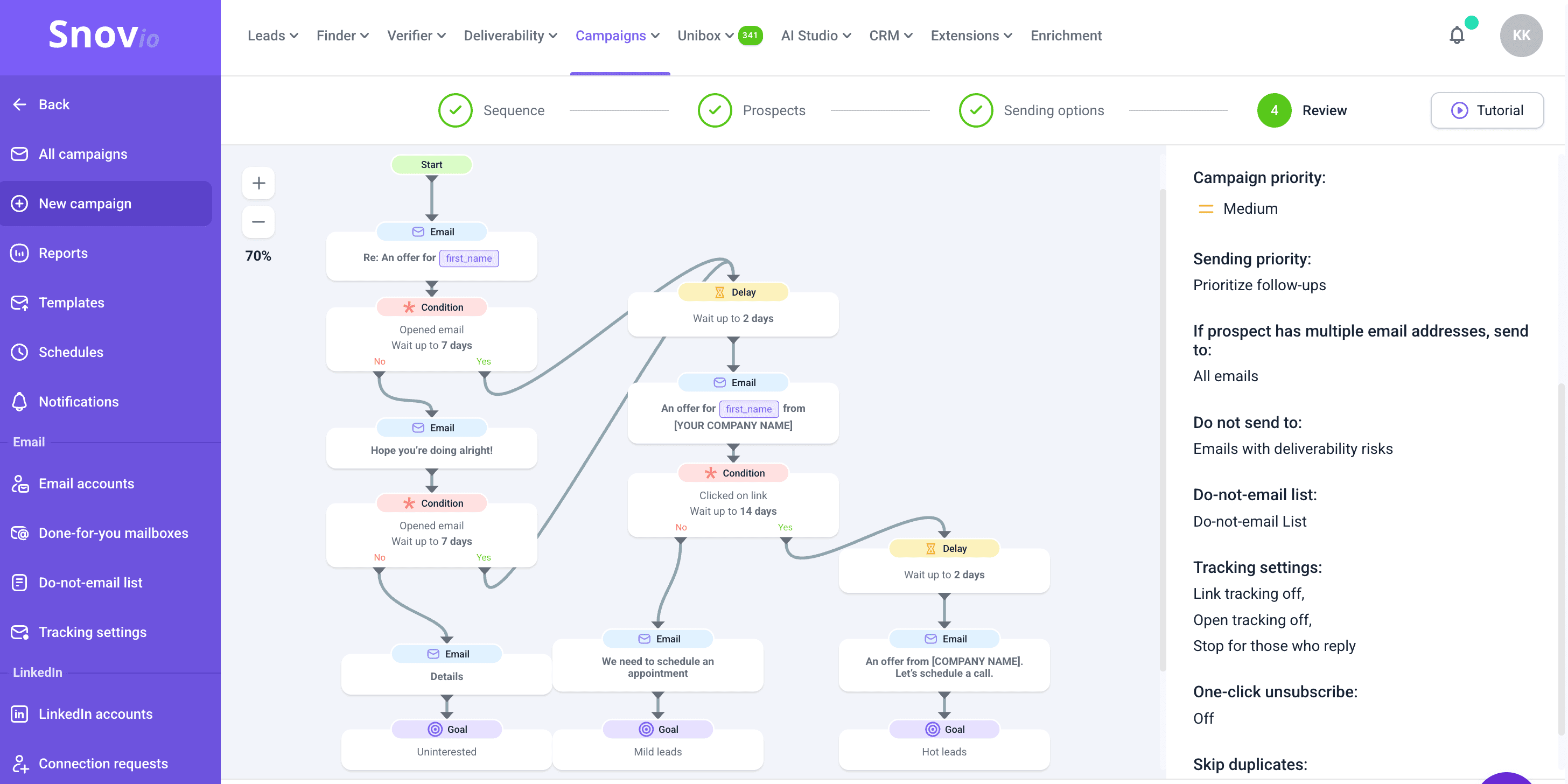
What does quality automation look like? Tools like Snov.io include automated, condition-based scheduling and follow-ups that keep prospects engaged without any manual effort on your part.
A unified inbox is also a valuable bonus. It consolidates all your replies in one place, which means no more switching between multiple platforms.
Personalization tools
People can almost smell a generic blast from a mile away. This kind of email gets ignored, deleted, or, in the worst case, even reported. It does nothing for building trust, and trust is a cornerstone of your affiliate marketing success.
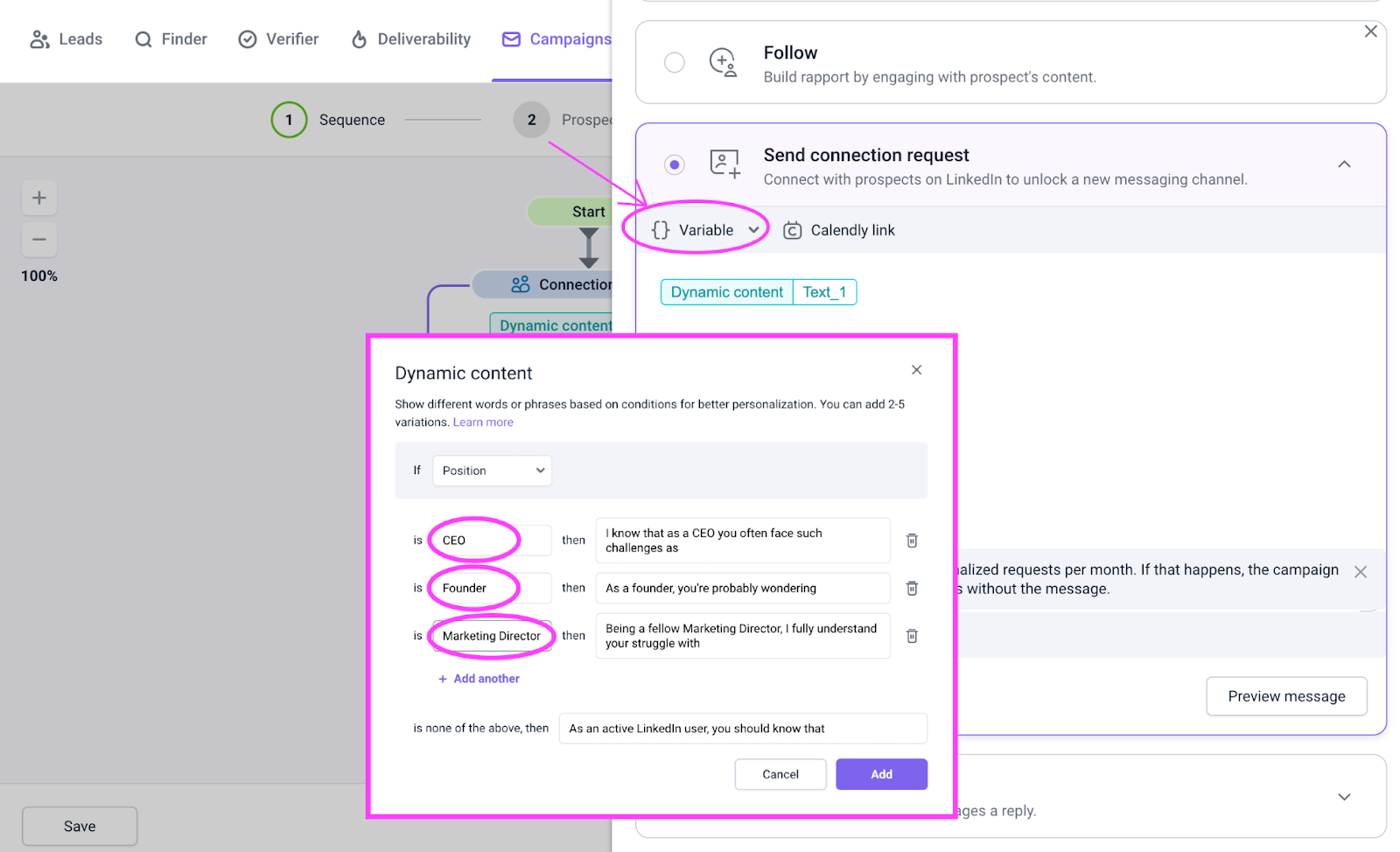
You need tools that let you insert recipient-specific details, customize content for different segments, and test different versions automatically. When each email feels personal, open rates increase, click rates improve, and sales follow. It really is that simple.
Analytics and tracking
Flying blind gets expensive fast. To grow an affiliate marketing email list effectively, you need to know what’s actually working.
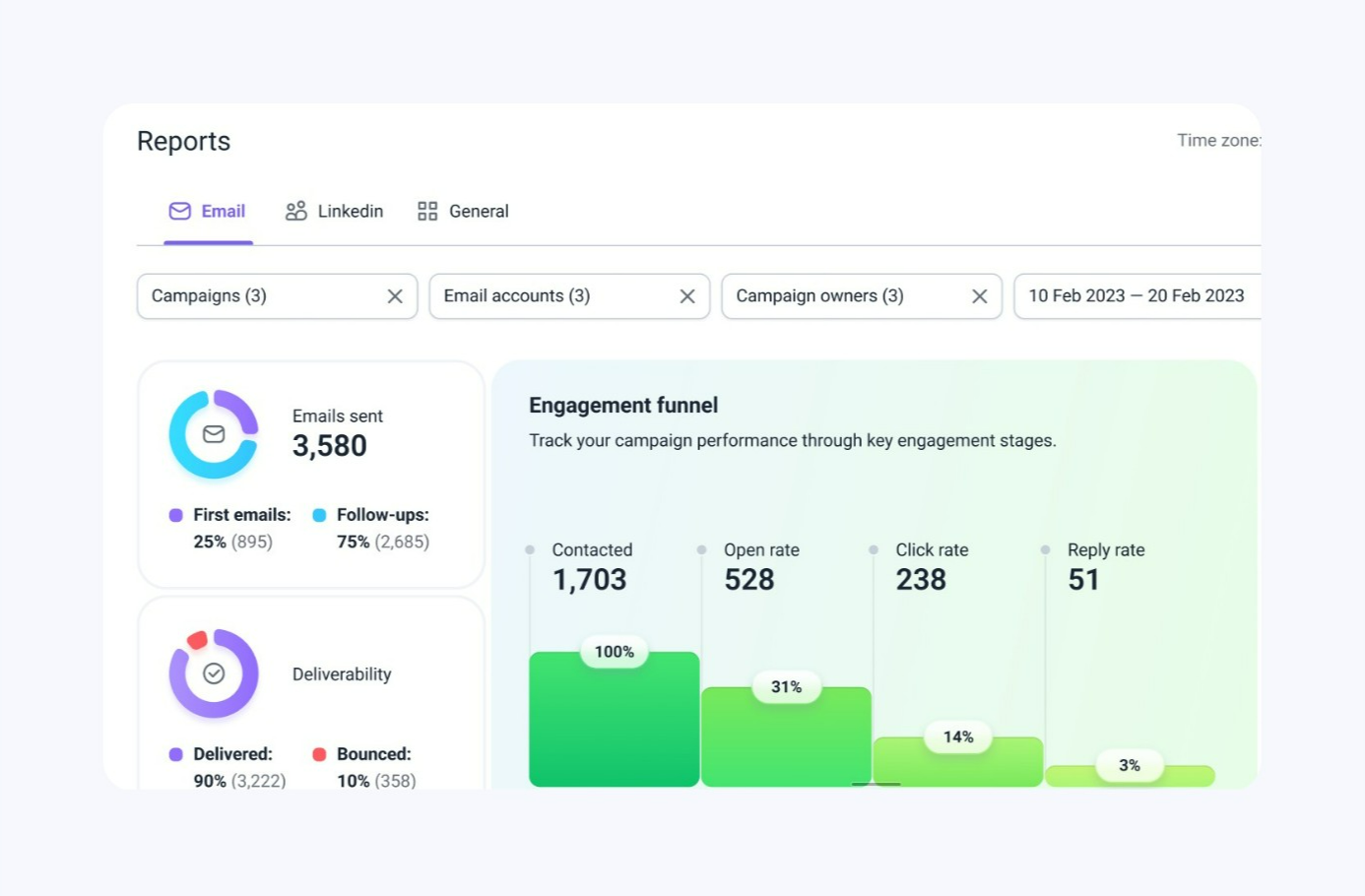
That’s why we recommend focusing on tools that track performance in real time. Clear data helps you see which subject lines perform, where people lose interest, and what truly drives sales.
|
💡Expert tip Based on our proprietary research, we don’t recommend using open tracking. Campaigns without it consistently see 2x higher reply rates. Focus instead on metrics that show actual engagement, like replies, meetings booked, and conversions. |
Remember, when everything is visible from one dashboard, you can adjust quickly and turn guesswork into a reliable strategy.
Deliverability tools
Your efforts become meaningless if those carefully crafted emails never reach the inbox. Not to mention that high bounce rates damage your sender’s reputation and make every future campaign harder.
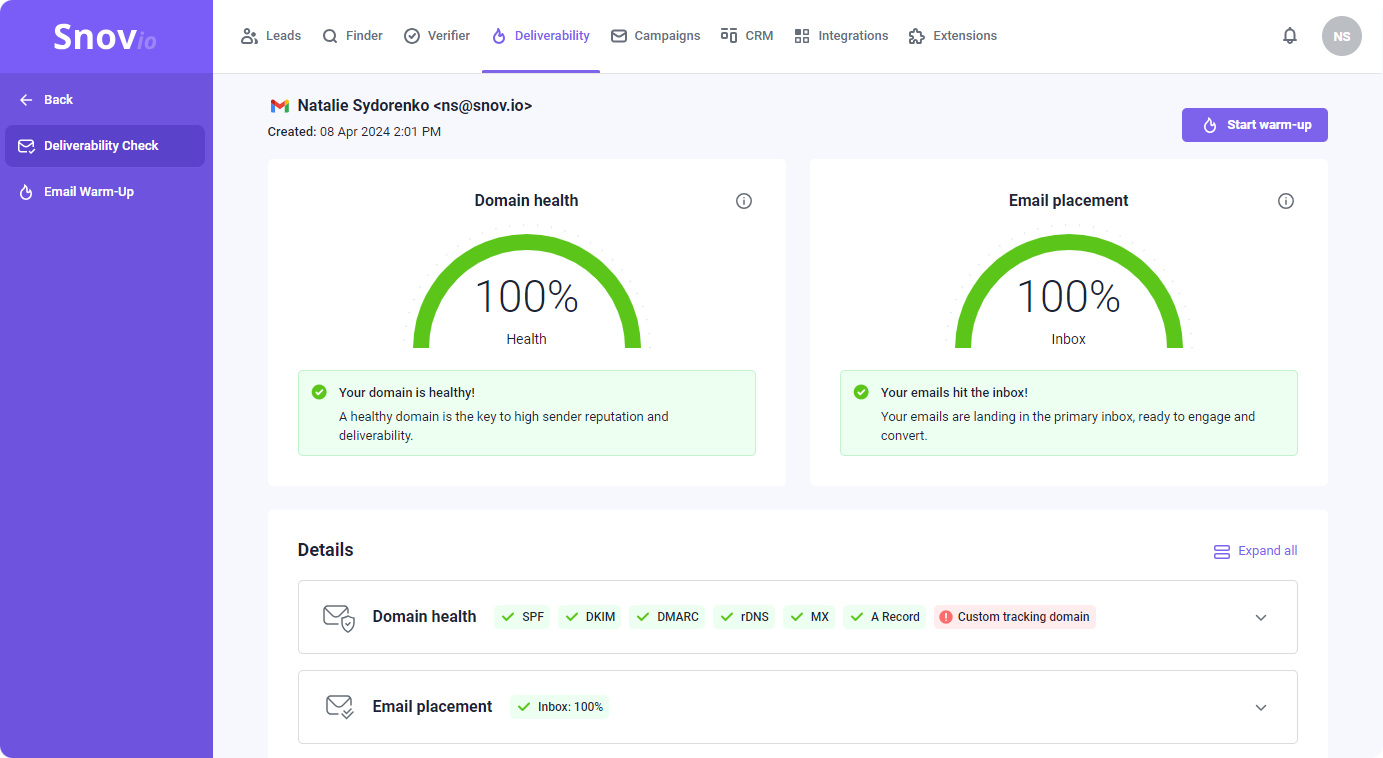
This is why we recommend prioritizing tools that include:
- Domain health monitoring to catch technical issues early
- Content checkers that flag spam triggers before you hit send
- Placement tests that show whether you’ll land in the inbox or the spam folder.
Email warm-up features that gradually build your sending reputation are just as important. Remember, these aren’t extras; they are essentials that protect your ability to reach subscribers.
Support and onboarding
Let’s be honest: almost every tool has a learning curve; you will inevitably run into issues. Delayed customer support can affect your revenue when you build an email list for affiliate marketing.
Choose services that offer real human support instead of chatbots. Prioritize tools with knowledge bases that provide clear step-by-step guides and onboarding that walks you through setup. Remember that quicker implementation means faster income generation.

Key takeaways
Growing an email list for affiliate marketing is not optional if you want a steady income. It’s actually what makes the difference in the matter.
The strategies in this guide work if you put them into action. Begin with a lead magnet that solves a real problem, create a landing page that converts, and drive targeted traffic. Then use segmentation and automation to build relationships before sharing affiliate offers.
Most importantly, choose tools that support your growth rather than hinder it. When you know how to grow an affiliate marketing email list with the right systems in place, scaling becomes straightforward. Start by creating a Snov.io free account and see how automation can transform your results.