
TL;DR
Better LinkedIn outreach starts with understanding connection levels, and tools like Snov.io make the process easier:
- 1st-degree connections on LinkedIn are people you’re directly connected with. Use Snov.io to automate warm, personalized outreach and follow-ups.
- 2nd-degree connections are connected to your network. Warm them up with soft engagement before sending personalized connection requests.
- 3rd-degree connections have no direct or mutual ties. Use Snov.io’s LinkedIn Email Finder to reach them effectively outside of LinkedIn.
Bottom line: Smart LinkedIn outreach is about using the right approach for each connection level—nurture 1st-degree, warm up 2nd-degree, and prospect 3rd-degree, then scale with personalization and multichannel follow-ups.
Getting poor LinkedIn outreach results? You’re probably treating all connections the same way, which kills engagement and wastes opportunities.
In this article, you’ll discover how to strategically engage LinkedIn’s 1st, 2nd, and 3rd-degree connections with tailored approaches for each level.
Key points of the article:
Understanding LinkedIn connection levels
LinkedIn organizes your network into connection levels based on how closely you’re linked to other users. These levels determine how you can interact with people and expand your reach on the platform.
What are 1st-degree connections on LinkedIn?
1st-degree connections on LinkedIn are people you are directly connected to. This relationship forms when someone accepts your invitation or vice versa. You will see a “1st” badge next to their name in search results and on their profile.
1st degree connections are the foundation of your network. You can message them freely, engage with their posts, and collaborate more easily.
What are 2nd-degree connections on LinkedIn?
2nd-degree connections on LinkedIn are individuals who are connected to your 1st-degree contacts. LinkedIn highlights this relationship with a “2nd” badge next to their name. You’re not connected to them yourself, but you have at least one mutual contact.
It’s impossible to message 2nd-degree connections directly unless you use InMail, but you can send them a connection request. And since you already have someone in common, it often feels more natural to reach out.
How to send a connection request on LinkedIn?
Navigate to the profile of the person you’d like to connect with.
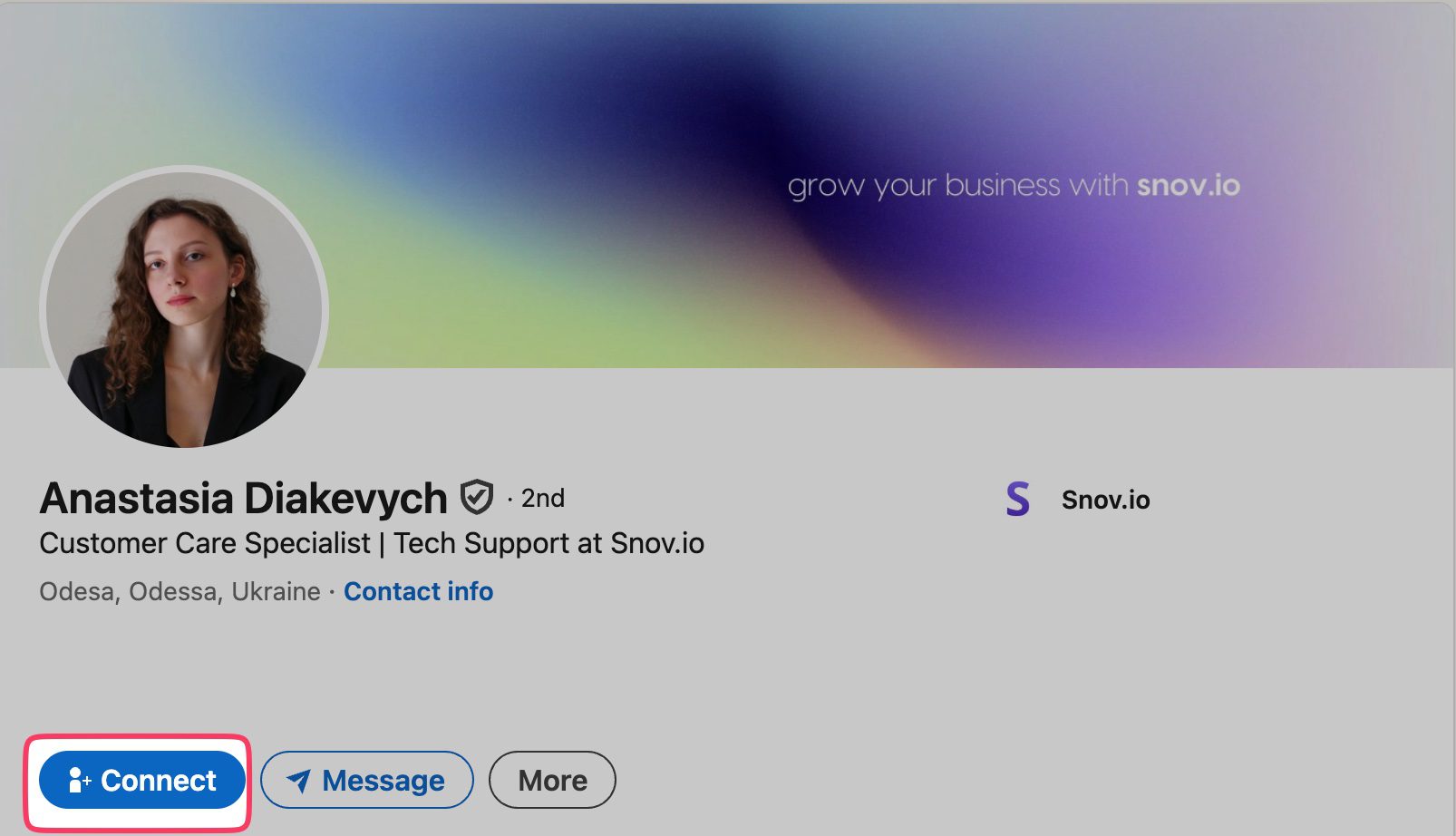
Click the Connect button on their profile and choose whether to add a personalized note.
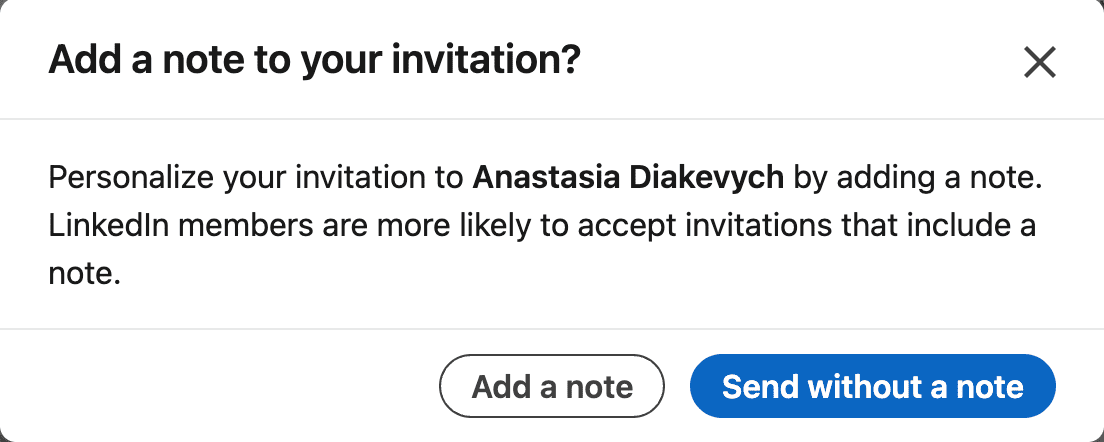
Finally, click Send invitation.

7 Ways to Message Someone on LinkedIn Without Premium
March 16 2026

What are 3rd-degree connections on LinkedIn?
LinkedIn connection levels go further with 3rd-degree connections, who are linked to your 2nd-degree contacts. These individuals are three steps removed from you. You might see a “3rd” badge or limited profile information depending on their privacy settings.
While you may not be able to message them or send a request, 3rd-degree connections still hold value. They can help you explore new industries, spot hiring trends, or find future opportunities for outreach.
|
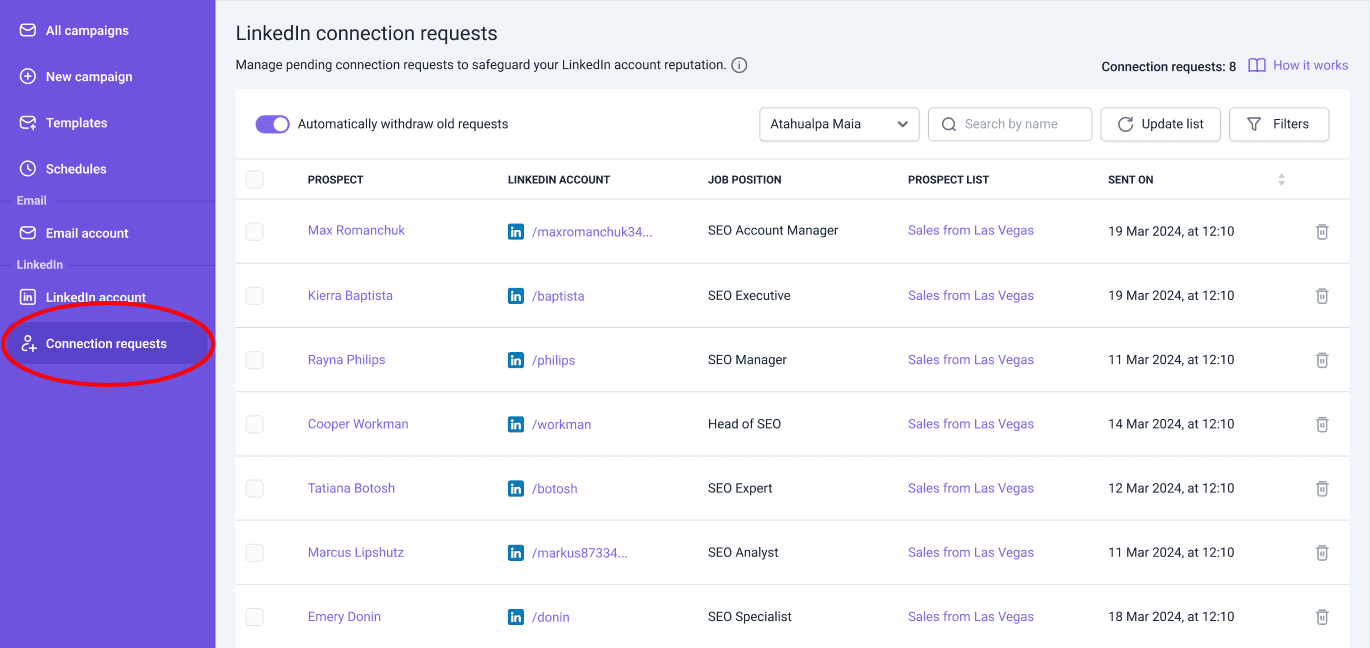
📍Bonus tip LinkedIn monitors user activity, so maintaining clean request habits is important for avoiding restrictions. With Snov.io, you can manage pending requests efficiently through both automatic and manual methods. We recommend keeping pending requests below 500 per account for profile safety. Also, after withdrawal, you can’t send another one to the same lead for 3 weeks. |
How to strategically use different LinkedIn connection levels
Understanding how LinkedIn relationships work is just the starting point. To truly build a LinkedIn network that drives results, treating each connection level differently is essential.
Below, we’ll show you how to do this.
Engaging 1st-degree connections for warm outreach
1st degree connections on LinkedIn are your direct network. These are people you can message freely and build long-term professional relationships with.
We recommend engaging 1st-degree connections with personalized, value-first conversations. Since there’s already a relationship, you can be more direct and tailored in your messaging. Consider following up after events, sharing helpful content, or checking in on previous conversations.
To scale these efforts, consider automating your LinkedIn outreach with conditional workflows.
For example, if someone replies positively, you can tag them for priority follow-up. If there’s no response, you can switch to email outreach instead.
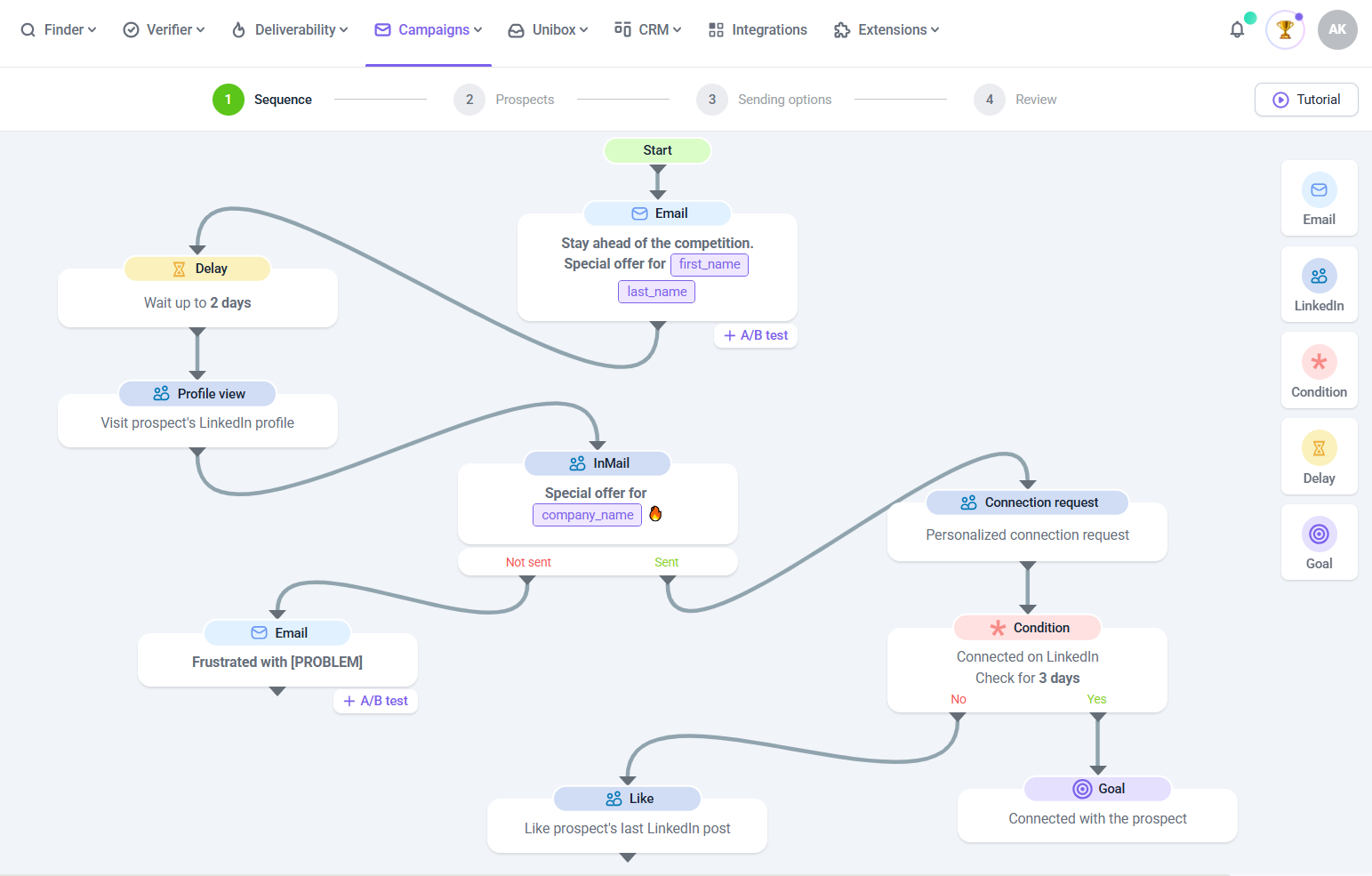
Plus, even with automation, you can send fully personalized messages using variables (like first name, company, job title), dynamic content, and spintax features. They pull in recipient information while creating natural message variations.
Take it a step further by relying on Snov.io Sentiment Analysis to gauge the tone of replies.
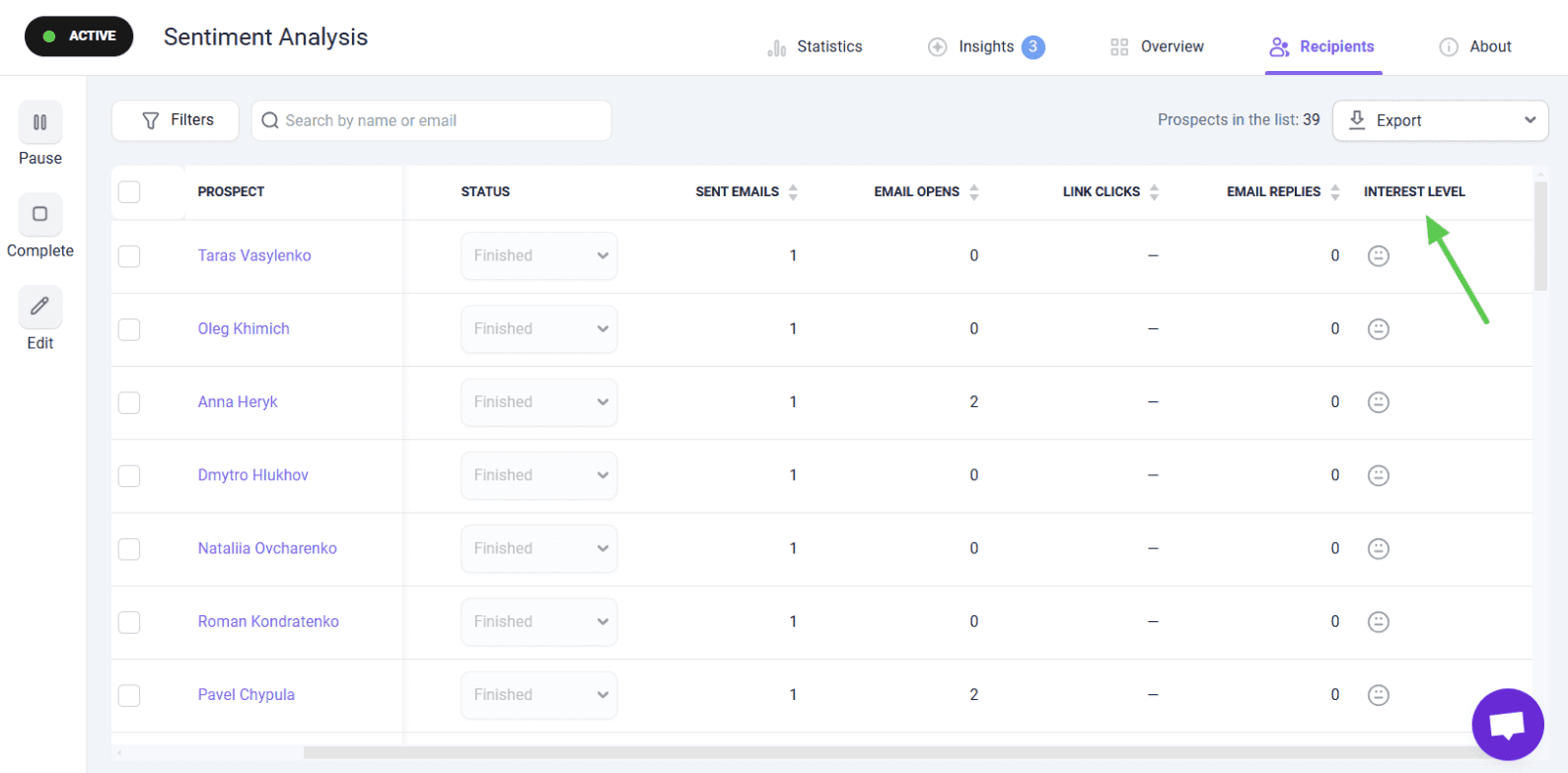
This AI-powered feature scans the content of each message and classifies it as:
❤️Interested: Positive sentiment, likely to continue the conversation
💛Maybe: Neutral, showing hesitation but not a hard no
💚Not interested: Negative sentiment, indicating disinterest or bad timing
After discovering their sentiment, consider these approaches:
- Interested prospects: Transition to a more personal conversation or meeting with your 1st degree connections
- Maybe prospects: Provide additional value through relevant resources or social proof
- Not interested: Respect their position and consider long-term nurturing with helpful content
This helps you prioritize LinkedIn leads based on real-time interest, rather than just activity.
Turning 2nd-degree connections into leads
2nd-degree connections on LinkedIn are ideal prospects. You’re not connected yet, but you share mutual contacts, which gives you a natural entry point.
In these cases, we recommend warm-up sequences before sending an invite. For example:
- View their profile (they’ll see you in their “Who viewed your profile” section)
- Like their recent posts to show genuine interest
This soft engagement makes your profile familiar before the request lands. After that, send a request with a short, personalized message mentioning your shared contact or industry overlap.
You can easily build and automate this sequence in Snov.io. Simply drag in LinkedIn actions, such as View, Like a post, Follow, and Send a request. If the request is accepted, continue with a personalized message. If not, consider emailing them.
Leveraging 3rd-degree connections for cold prospecting
3rd-degree connections are more removed from your network. Nevertheless, they often hold hidden potential, particularly for top-of-funnel LinkedIn lead generation.
Since you may not be able to message them directly, we recommend trying Snov.io’s LinkedIn Prospect Finder. This browser extension lets you collect leads from: LinkedIn search results, company pages, personal profiles, etc.
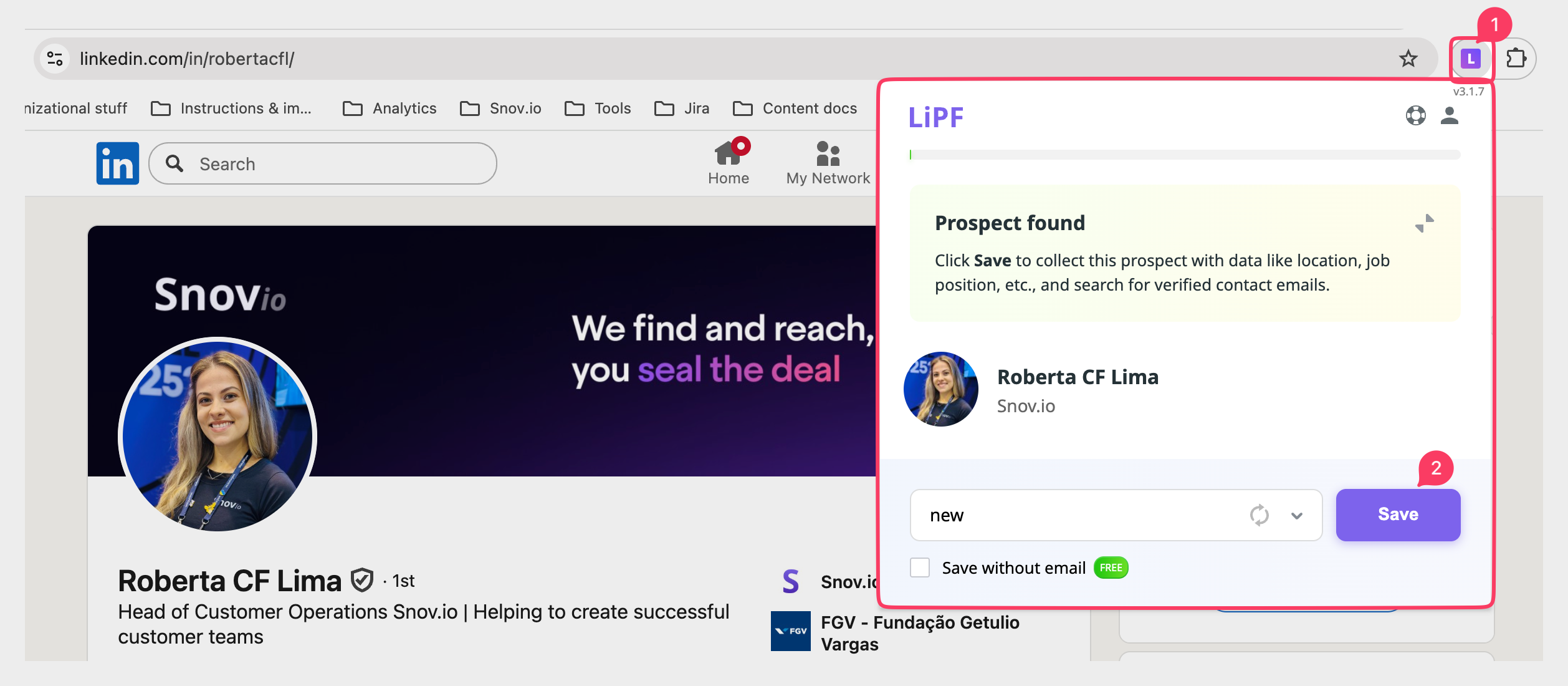
Once you’ve collected their profiles, switch from LinkedIn to email. This gives you more room for personalizing your message and following up. You can then build automated sequences that adapt based on engagement. For example, if someone opens but doesn’t reply, follow up with a gentle nudge a few days later.
When done right, LinkedIn outreach becomes more than just sending messages. It turns into a repeatable, scalable system for connecting with the right people and at the right time.
LinkedIn outreach tips
Effective LinkedIn outreach comes down to building genuine relationships that later convert into business opportunities. Here are strategies to maximize your success:
Optimize your LinkedIn profile
Before you start messaging prospects, make sure your LinkedIn profile is polished and aligned with your positioning. Outreach starts with your personal brand, and if your profile doesn’t inspire trust, your message likely won’t either.
We recommend treating your profile as a dynamic landing page that evolves with your career. Use it for:
- Building authority with a clear, value-focused summary
- Displaying credibility with detailed experience and featured content
- Conveying personality through your headline and voice
Your LinkedIn account is the first thing people see when you try to connect. These first impressions often shape how you are perceived, especially beyond 1st-degree connections.
🎁Check out our LinkedIn optimization guide to ensure your profile is complete and compelling.
Set the stage for LinkedIn outreach
The secret to successful outreach lies in preparation and building a strong reputation. Invest time in improving visibility through consistent engagement.
- View, like, and comment on their posts
- Follow them and watch their content
- React to shared articles or recent updates
This upfront interaction warms up your prospects and gets them familiar with you. At the same time, it boosts your Social Selling Index (SSI), LinkedIn’s main reputation score.
Your SSI score reflects how effectively you build your brand, connect with relevant people, and share valuable insights. A higher SSI translates directly into more successful LinkedIn outreach efforts, particularly when reaching 2nd degree connections and 3rd-degree connections.
Automation can help you boost your SSI by handling simple tasks like profile visits and post engagement with your target audience. The key is picking the right tools since LinkedIn tracks unusual activity patterns.
Snov.io addresses this concern by letting you monitor your SSI score while using location-based proxies to keep your automated actions looking natural. It also includes built-in safety limits to protect your account.
Master the art of personalization
Data shows that 96% of marketers see increased sales from personalized experiences. This is a fundamental principle of any successful LinkedIn sales strategy. But true personalization extends far beyond simply including someone’s first name in your message.
Luckily, LinkedIn profiles contain a treasure trove of information about your prospects. Leverage their background, recent content, and shared interests to craft messages that resonate personally. This will help you advance LinkedIn leads through your sales process.
Lead with value, not needs
Prospects actively seek solutions for their business challenges. When crafting your LinkedIn outreach messages, consider the obstacles they likely face in their role or industry.
You might help potential LinkedIn leads by:
- Sharing industry-specific resources or tools
- Offering insights from your professional experience
- Facilitating valuable introductions within your network
- Expressing genuine interest and curiosity about their work
64% of decision-makers are open to hearing from professionals who share useful insights. So, focus on offering value through your outreach, rather than immediately asking for something.
Establish authority
Authority forms the foundation of meaningful relationships and successful LinkedIn marketing funnel conversions. But the amount you need to establish varies by relationship level:
- 1st degree connections may already know your credibility
- 2nd-degree connections may need moderate validation through mutual contacts
- 3rd-degree connections require the strongest social proof for establishing trust
Keep it balanced and don’t overwhelm people with too many credentials. A simple mention of your role or company builds credibility without sounding like you’re bragging.
Leverage peer success stories
Social proof is one of the strongest ways to influence people in business. If you’ve achieved results for similar companies, include that in your LinkedIn messages. For example: “I recently helped a marketing director at a SaaS company increase their qualified leads by 45%.”
This demonstrates your understanding of their business. Plus, it proves you deliver tangible results for their peers. Such an approach is more effective than a service pitch, as it helps build trust with leads.
Create emotional connections
Professional networking isn’t purely transactional; emotional elements often determine the strength of relationships. However, your approach should vary:
- 1st-degree connections: Build on existing emotional bonds and shared experiences
- 2nd degree connections: Find common ground through mutual contacts or shared professional journeys
- 3rd-degree connections: Connect through their content, career achievements, or industry insights
Perhaps their recent post challenged your assumptions about industry trends. Maybe their career progression inspired a strategic decision you made.
These genuine interactions often evolve into valuable relationships and engaged LinkedIn leads.
Go multichannel
LinkedIn is a powerful platform to start outreach, but relying on it alone can limit your results. Weekly restrictions or inactive prospects can make it harder to build meaningful relationships.
That’s why combining LinkedIn with email outreach is a smarter strategy.
Why use both LinkedIn and email?
- Fewer limitations
Email helps you reach prospects without platform restrictions.
- More room for personalization
You can craft detailed, customized messages that speak directly to each lead’s needs.
- Direct inbox access
Prospects are often more likely to engage with messages received in their inbox than on a social platform.
With Snov.io Email Campaigns, your outreach becomes smarter and more efficient. You can set up automated workflows that adjust based on how leads interact with your messages. This saves time while keeping your communication personal and relevant.
Remember that people have different preferences in terms of communication. Some are active on LinkedIn and respond well to casual networking. Others prefer the professionalism and clarity of email. Using both channels gives you wider coverage and a better chance of getting a reply.
Key takeaways
Knowing how to approach 1st-degree connections on LinkedIn with a personal touch makes a huge difference. So does learning to engage 2nd degree connections through mutual contacts. And mastering how to reach out to 3rd-degree connections? That’s what separates successful networkers from those who struggle.
Your lead generation strategy doesn’t have to feel robotic or pushy. Leverage smart automation tools like Snov.io to turn LinkedIn connection levels into real opportunities.