
TL;DR
Outbound prospecting is a proactive sales approach in which reps identify, research, and reach out to targeted leads who haven’t yet shown interest.
Unlike traditional cold calls and mass emails, modern outbound in 2026 is built upon precision and personalization. Successful sales teams utilize buyer signals, intent data, AI-powered outreach, and omnichannel engagement.
These techniques help businesses generate qualified leads, shorten sales cycles, and boost revenue. But while some companies use separate apps to achieve each goal, you can streamline your processes and save money by utilizing Snov.io’s all-in-one solution.
Ensuring a steady flow of quality leads into the sales funnel is one of the biggest challenges companies face nowadays. To keep their sales cycle moving, many businesses have adopted outbound prospecting as their primary growth strategy.
In this article, we’ll discuss an outbound sales strategy and the tools that are crucial for its success. You’ll also learn a step-by-step process for sales prospecting, along with some tips for improving your business results.
Outline:
- What is outbound prospecting?
- What are the benefits of outbound prospecting?
- Outbound vs inbound prospecting (and a hybrid strategy)
- How to implement outbound prospecting with Snov.io’s integrated platform
- Outbound prospecting tools comparison: Why choose Snov.io
- Advanced outbound prospecting strategies for 2026
- Key takeaways
What is outbound prospecting?
Outbound prospecting is a proactive sales approach where companies initiate contact with targeted leads yet to express interest. It’s the process in which sales representatives research, identify, and reach out to prospects to convert them into customers.
The most popular outreach strategies for outbound prospecting have always been cold emailing and cold calling. But in 2026, outbound is more than cold calls, mass emails, and generic messages. Customers expect relevance, timing, and value from the very first touch.
Instead of “spraying and praying,” smart teams tailor their outreach based on buyer signals, their prospects’ behavior, and decision-making patterns. They leverage modern techniques to reach their leads at the perfect place and time.
For example, advanced intent-monitoring tools show when a company is actively researching your topic, visiting competitor sites, reading product reviews, or expanding its team. Getting these signals in time lets sales teams reach out at the right moment, not randomly.
AI-powered personalization has also become a core part of outbound sales. Sales reps can now automatically generate tailored messaging based on role, industry, pain points, technology stack, or even a prospect’s recent activity online.
And we’re not talking only about emails. In 2026, outbound prospecting relies heavily on multi-channel engagement: email, LinkedIn, custom videos, voice drops, social touches, and targeted ads.
So at its core, outbound prospecting these days is precise, data-driven, and adaptive.
What are the benefits of outbound prospecting?
The benefits of outbound prospecting include a shorter sales cycle, accelerated growth, and faster investment turnaround. Let’s explore each of these advantages and see how outbound prospecting helps businesses achieve them.
Generate better quality leads
Outbound sales is a perfect way for businesses to attract high-quality prospects to their sales funnel. By actively pursuing targeted clients, sales representatives can engage in more effective conversations that ultimately lead to better opportunities.
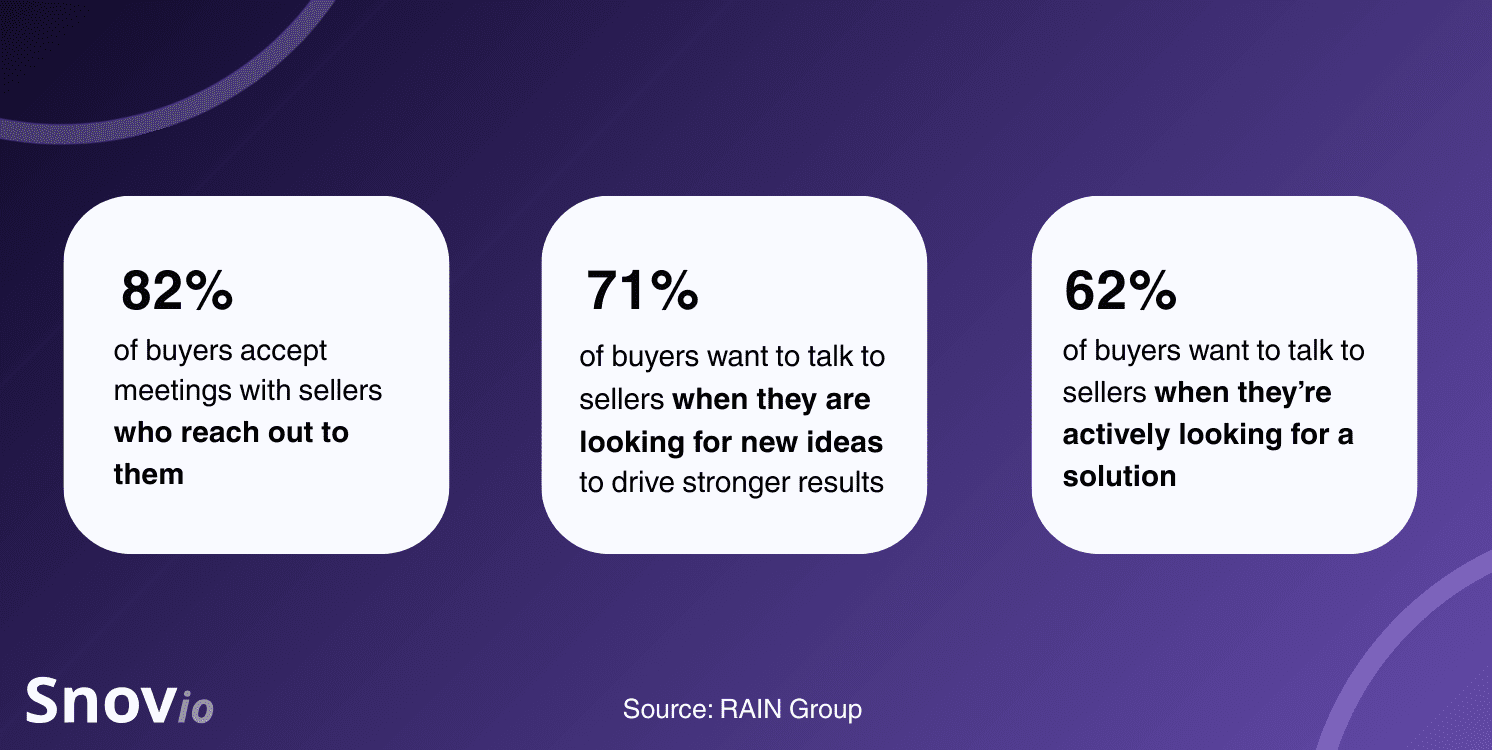
A critical step in your outbound sales strategy is understanding ideal clients by identifying their needs and challenges. Instead of reaching out to people randomly, the sales team will know who they’re targeting from the start and how to initiate contact.
When done right, outbound sales can result in a smoother sales process, yielding many qualified leads with a high chance of conversion.
Increase sales and revenue
Boosting sales and revenue — especially in the short term — has been and will always be a significant challenge to growth for many companies. That’s especially true for startups and struggling businesses trying to launch new products and services. They don’t have time to wait for inbound leads to come in.
The advantage of outbound prospecting is that it enables you to take matters into your own hands. Instead of waiting for new prospects to enter your sales pipeline magically, you deliberately introduce them to your offers and show them why they need your help.
Another great thing about outbound prospecting is that many of its processes can be automated for even faster results. For example, many of our clients have doubled the number of meetings held and deals closed since they started using Snov.io.
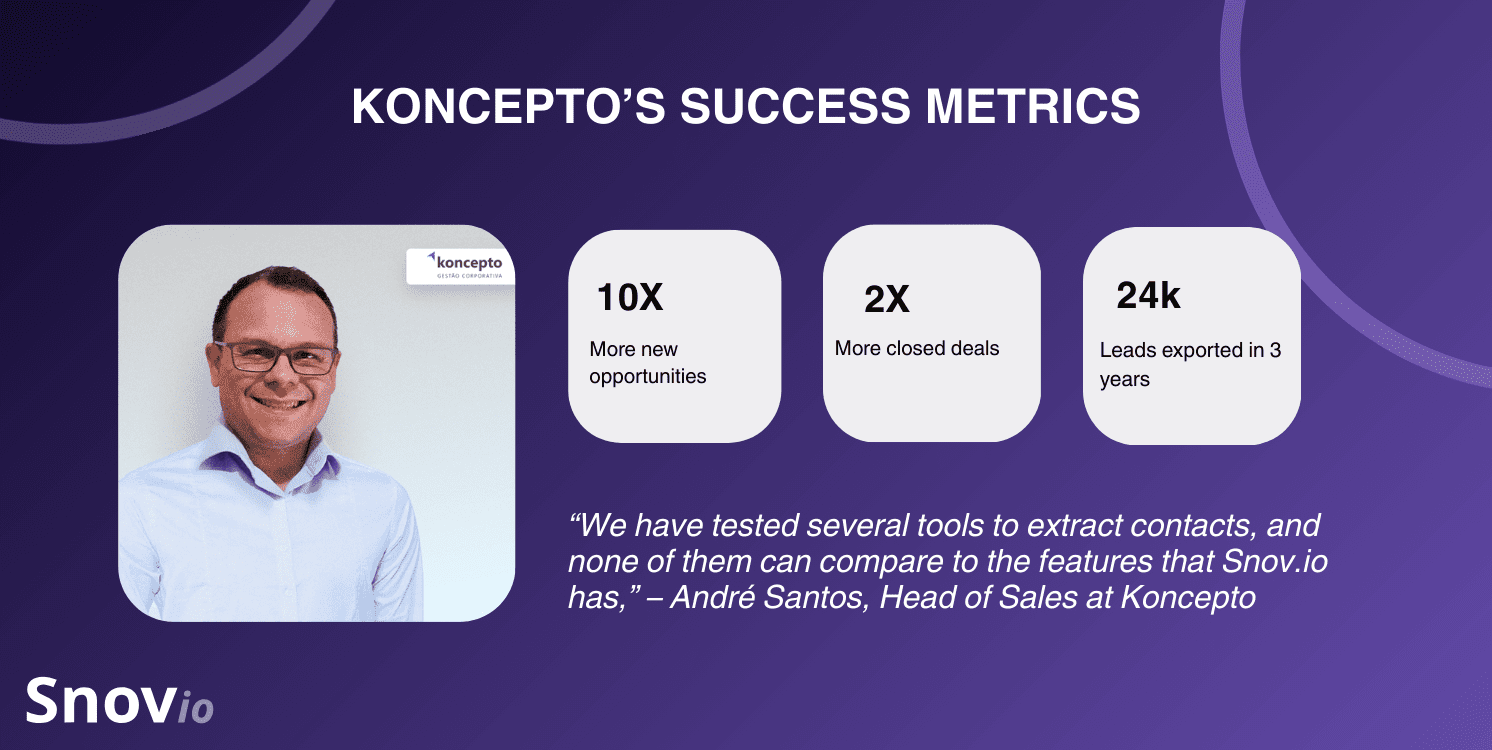
That’s why cold prospecting has been the top go-to-market strategy for many B2B companies aiming to close more deals. It’s effective, versatile, and can be enhanced by adding specialized software instead of expanding the team.
Shorten the sales cycle
Another big issue facing organizations in many industries is unnecessarily long sales cycles. Not only do those affect everyone’s productivity, but they also leave space for competitors to lead the way and dominate the market.
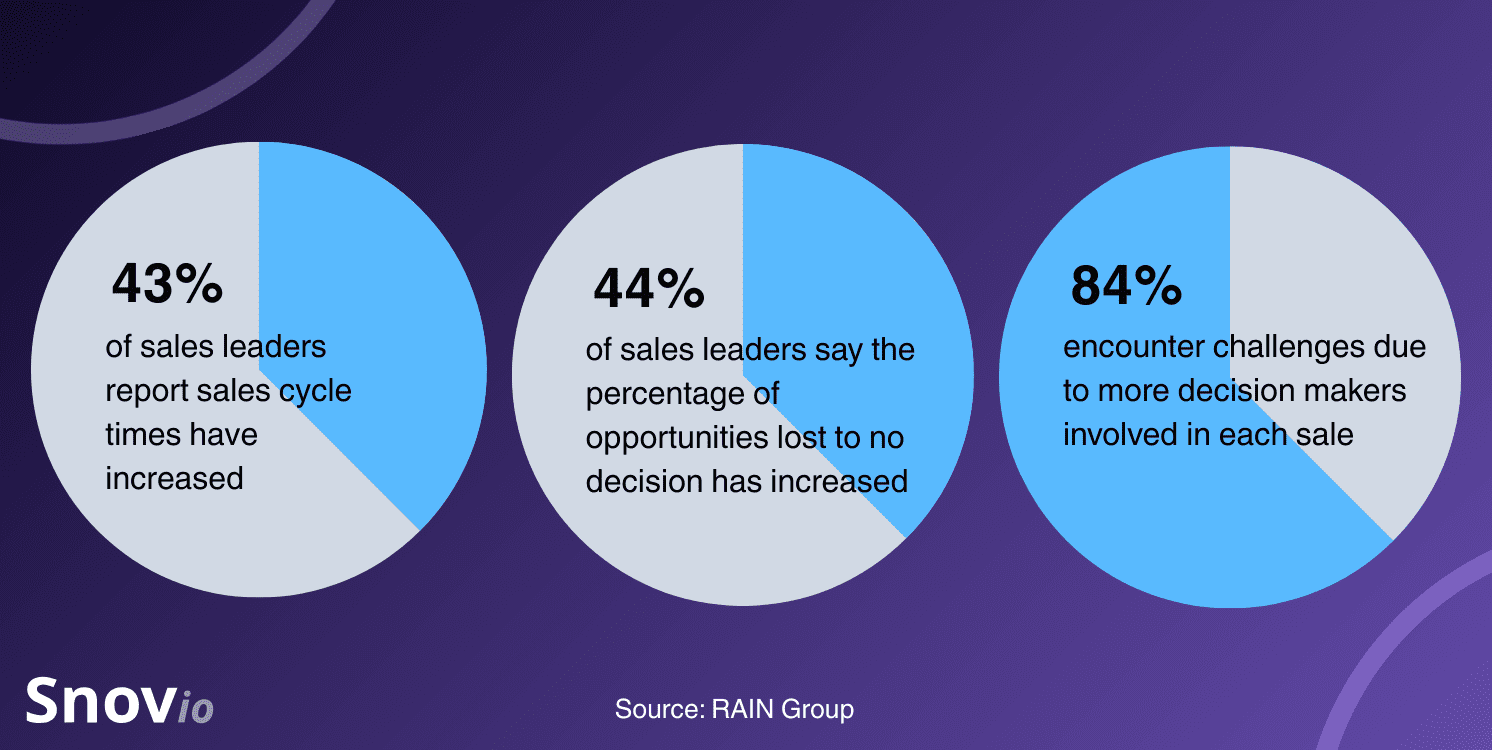
Outbound prospecting is a great way to streamline your work process and shorten the sales cycle. By proactively engaging decision-makers, you warm them up faster. Establishing a sense of urgency results in a faster sales process.
With outbound sales, you’ll also gain a deeper understanding of your target clients, which is crucial for minimizing sales friction and anticipating potential declines before they occur.
Outbound vs inbound prospecting (and a hybrid strategy)
Both outbound and inbound prospecting can be excellent growth strategies for your company. If implemented right, your business will attract a lot of quality clients and grow faster. But even though the result is the same, there are many differences between the two techniques when it comes to execution.
First of all, inbound and outbound prospecting are different by definition. Below is a detailed breakdown of each strategy in more detail.
That said, regardless of your company’s size and position, we recommend adopting a hybrid strategy. This way, you’ll get the best of both worlds. And if you’re thinking it will eat up the larger portion of your budget, don’t worry – it doesn’t have to.
How to implement outbound prospecting with Snov.io’s integrated platform
Whether you’re just beginning your sales journey or looking to enhance your existing strategy, it’s easy to implement outbound prospecting with the automated outreach system. That’s because instead of juggling multiple tools, you can open our app and start working.
Step 1. Define and research your ideal clients
The only way to be efficient with outbound prospecting is first to research and identify your target clients. A cold prospect who knows nothing about your company will only respond to you if they can see some value in your offering.
By developing an ICP, you’ll be able to personalize your outreach and tailor your offered solutions to the right prospects. That, in turn, is going to increase your response rate and help you close more opportunities in less time.
To best understand your ideal customers, you must first analyze your existing customer base. A closer look at current clients will provide you with much insight into demographic data and psychographic traits.
Some of the characteristics you might want to consider in your ICP are:
- Industry segment
- Location
- Size and budget of the company
- Period of business existence
- Details about decision-makers
- Needs and pain points
We recommend using the template below as a cheat sheet when you’re defining your ICP.
Each data point can significantly impact your sales performance with outbound prospecting. For example, specifying the job position allows you to focus on managers and key decision-makers in your target company. That is crucial for avoiding gatekeepers and shortening the sales cycle.
Learn how to define your ICP without manual research:
Step 2. Find leads with Snov.io Email Finder and LinkedIn Prospecting extension
Now that you’ve identified who you’re targeting in your cold outreach, you need to build a list of potential customers for your sales reps to work with. Doing it manually or via multiple disjointed apps can take a long time.
We recommend opting for Snov.io’s complete outbound prospecting system, where you’ll find everything you need at any stage of the process:
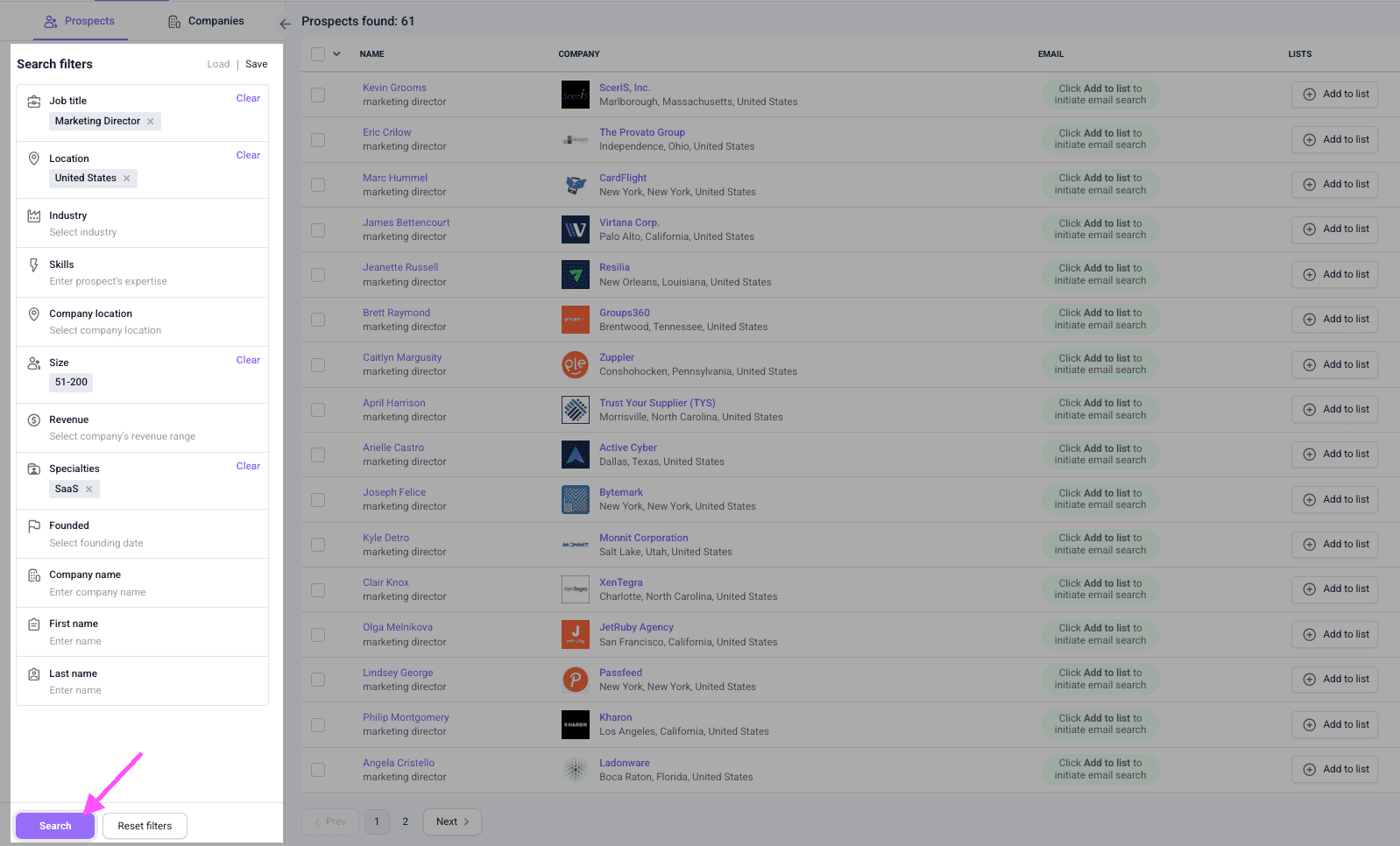
- Look for prospects in our extensive database.
Configure filters to match your ICP and instantly get access to dozens of relevant prospects.
Apply advanced parameters, such as company attributes, seniority, or tech stack, to narrow results to the most relevant profiles.
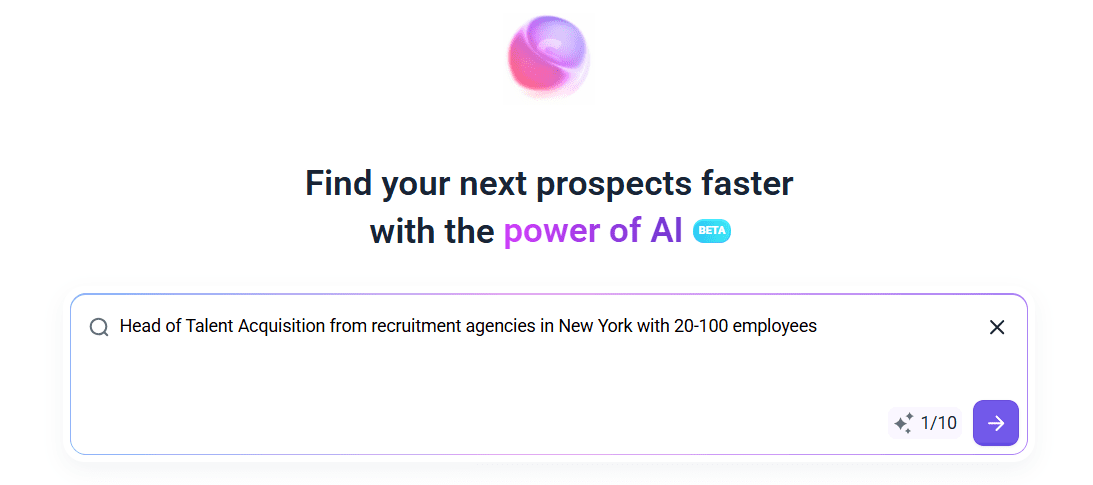
Or, if you don’t want to guess keywords or select fields manually, employ our AI Smart Search to streamline this stage. Simply describe your ICP in the prompt field and get matching prospects from the database.
Then, add prospects to your list to discover their details – and the system will verify the contact information in real time for you. Meaning, you’ll always get fresh and accurate data.
- Acquire emails with our Email Finder tool.
Already have some info about your potential clients, but not their contact details?
With the Email Finder tool, you can find leads based only on their name and company. If you’ve got a list of leads, upload it into the Snov.io app and run a bulk email search. You’ll get the most up-to-date contact info for your leads, which can be stored in the app or exported as a file.
You can also install and run the Email Finder extension to capture emails from websites you visit for prospecting on the go.
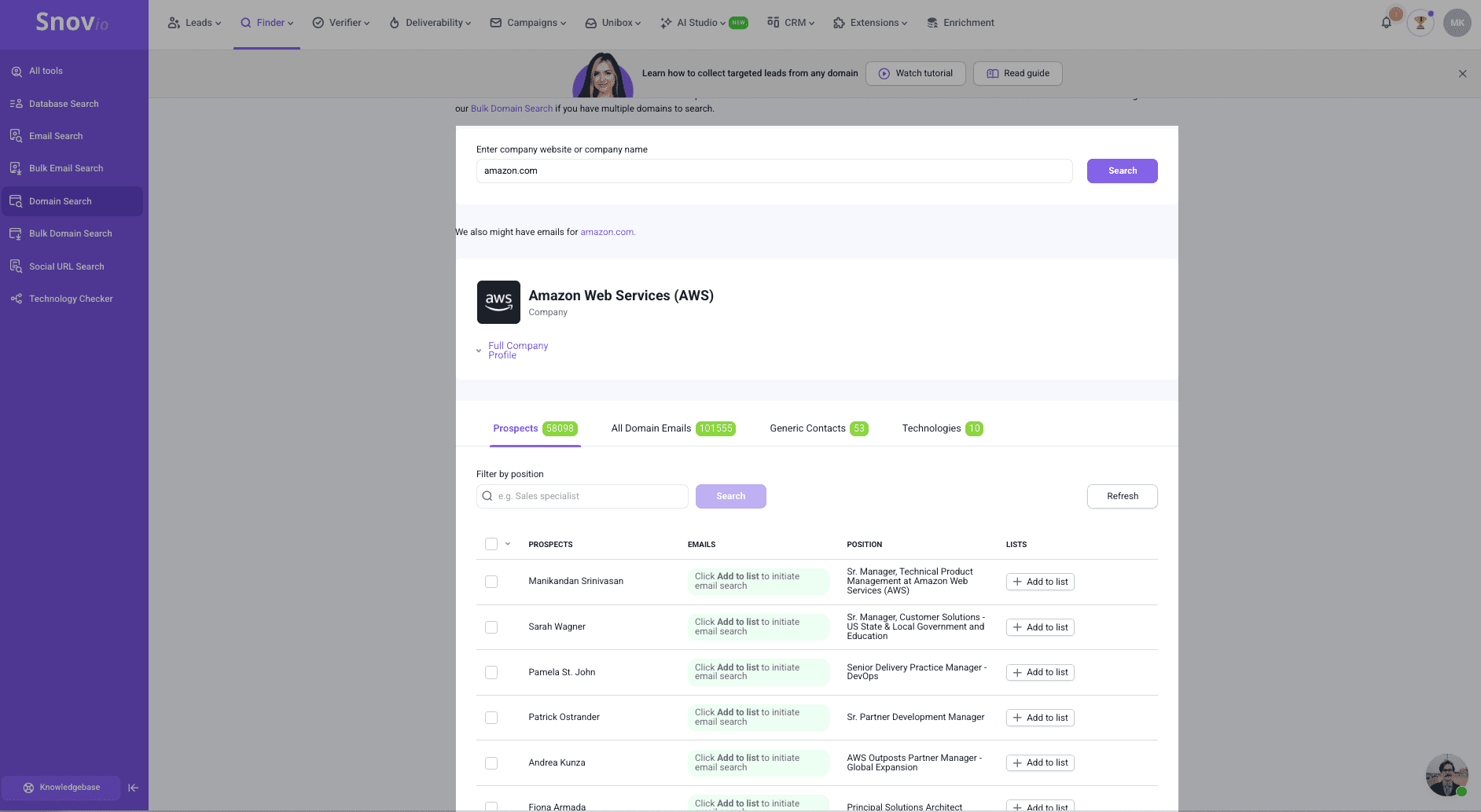
Or, research the entire company’s domain and view contact details of every employee. This way, you’ll be able to add a few leads from the same company to your prospect list.
- Scrape LinkedIn.
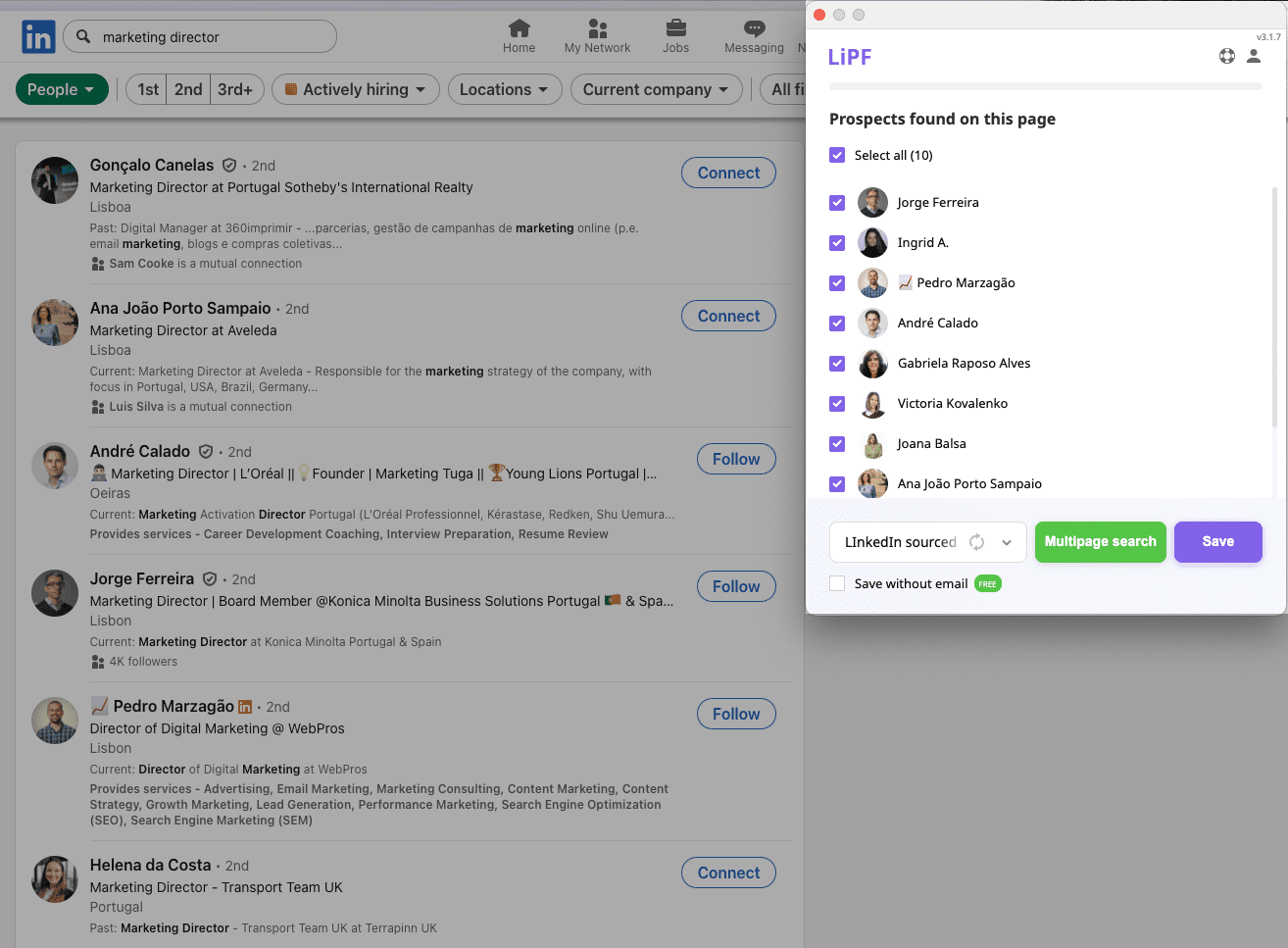
Leverage LinkedIn’s native search engine or the advanced search of LinkedIn Sales Navigator to find people matching your ICP. Then, you can download leads from your search via our LinkedIn Email Finder extension.
Or, alternatively, paste a link to your search into the LinkedIn Search inside the Snov.io app to create a prospect list right there.
Either way, all searches are designed to be safe and compliant. They rely on a safe process that runs according to LinkedIn’s limits and best practices. Meaning – you get accurate data without risking your LinkedIn account.
Once you’ve built your list of prospects, you can go ahead and create deals for each one in our free built-in CRM – no additional software required. However, if you already have a CRM system, don’t worry – Snov.io’s complete outbound prospecting platform seamlessly integrates with other sales and marketing software.
Step 3. Reach out to prospects with personalized messages
Despite being some of the oldest tricks in the book, email and phone calls are still among the best strategies for outbound prospecting today. Adding LinkedIn outreach through InMail and direct messages will help you stand out and make a lasting impression on potential clients.
Don’t go for overused templates, though. Make every prospect feel seen and valued by personalizing your outreach. We don’t mean just including the prospect’s name and industry. Real personalization touches every part of your outreach sequence:
- Choosing the right timing for each touch;
- Crafting a subject line that speaks to the prospect’s challenges;
- Referencing specific insights you uncovered during research;
- Matching the tone and message to the buyer’s stage, role, or urgency;
- Adjusting follow-ups based on their behavior (opens, clicks, profile visits).
You don’t have to spend ages writing hyper-personalized messages. Our AI email writer will help you craft the perfect email. All you have to do is tell our AI assistant about your company and product in detail, specifying what you do and who you help.
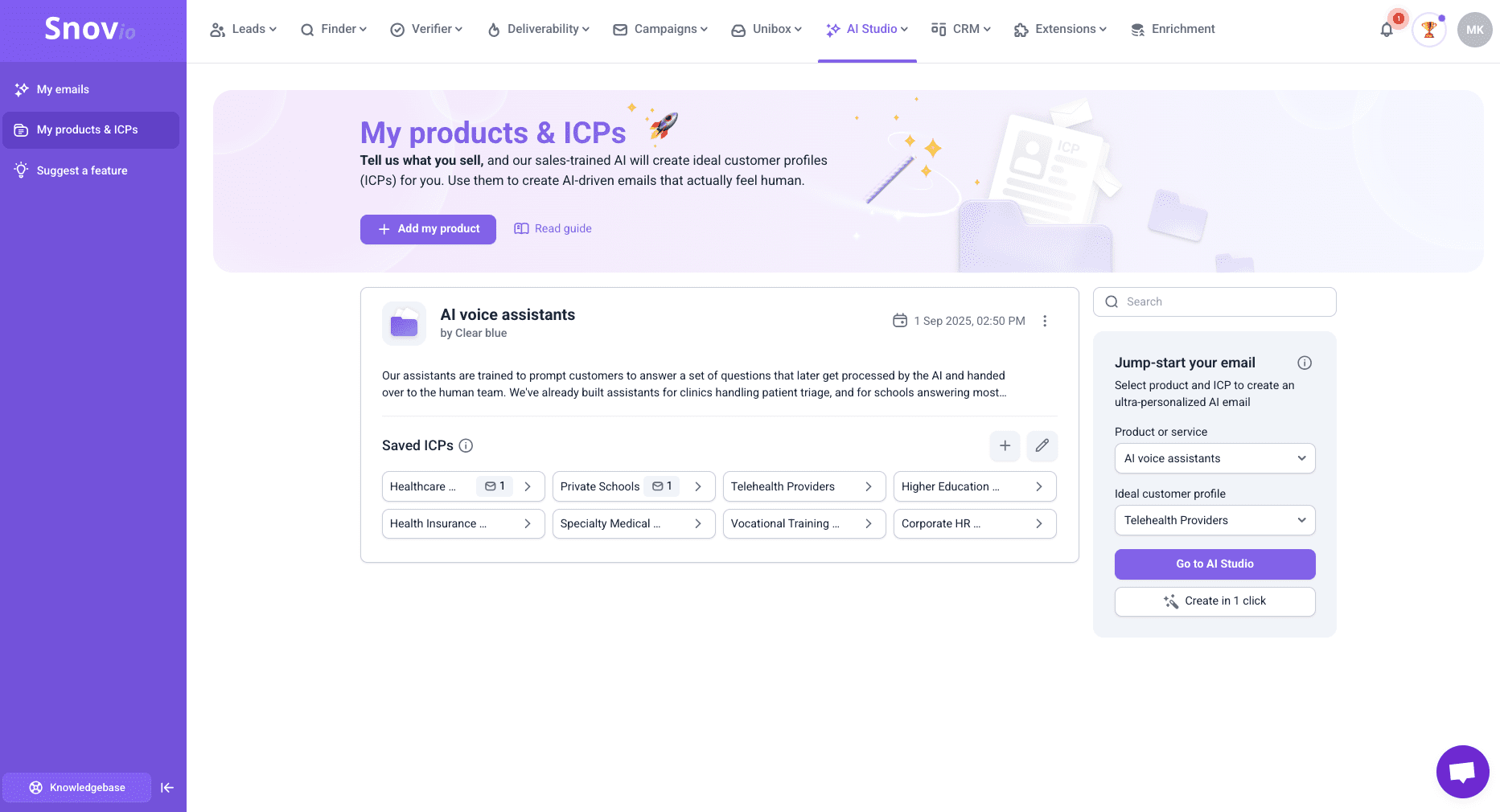
💡Remember: AI performs best when it understands your value proposition clearly. Include your product category, the problem you solve, your typical customers, and the outcomes they get from using your solution.
Then, define your ideal customer profiles (ICPs). List the roles, industries, company sizes, or specific pains you target. Our ICP-based email builder will use these details to shape messaging that speaks directly to the right audience.
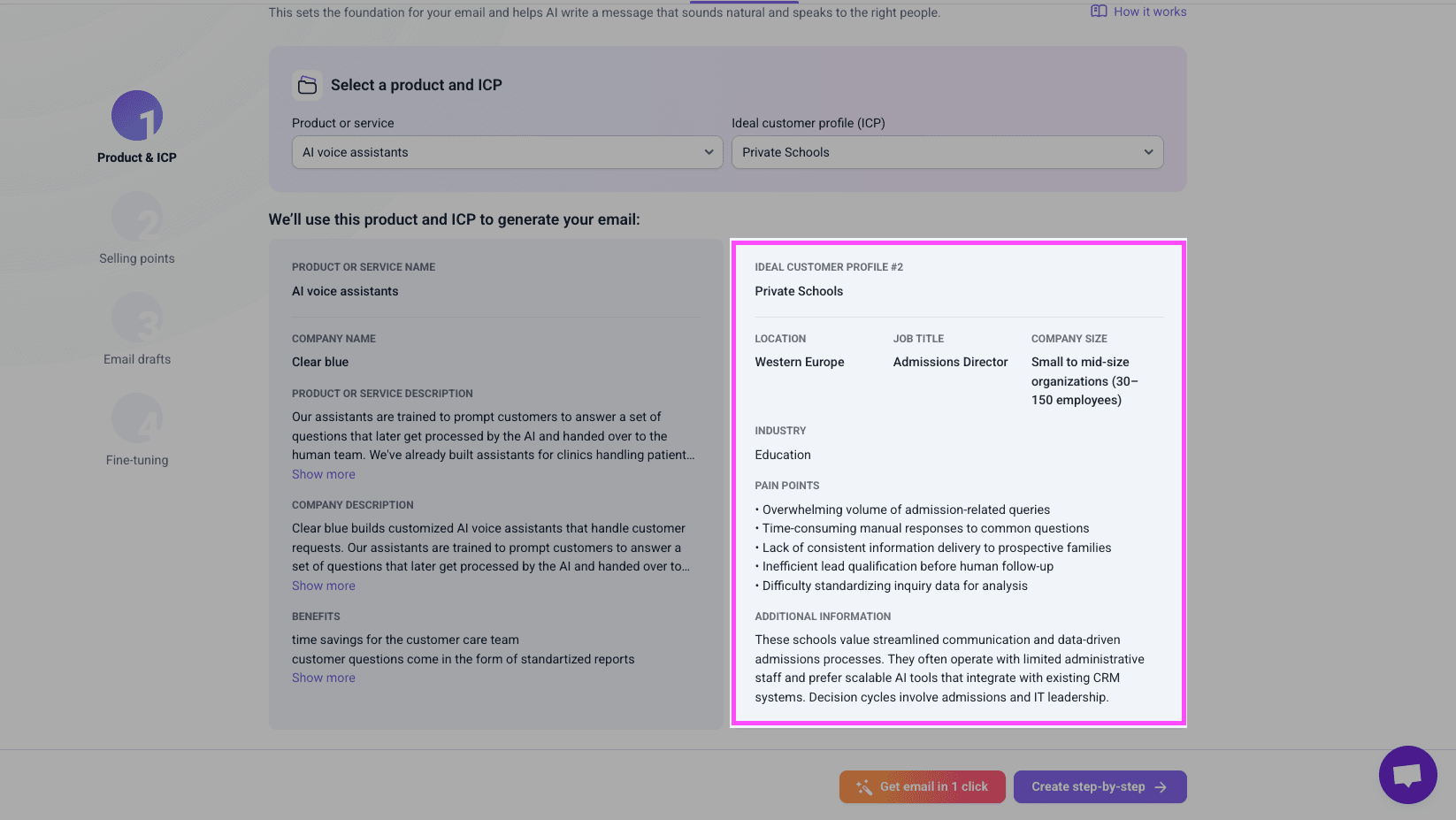
From that, you’ll be able to craft a tailored email for each ICP in just a couple of clicks. The system will generate a message based on your product and ICP. Don’t worry – our AI model is trained on the best cold email outreach best practices and guidelines.
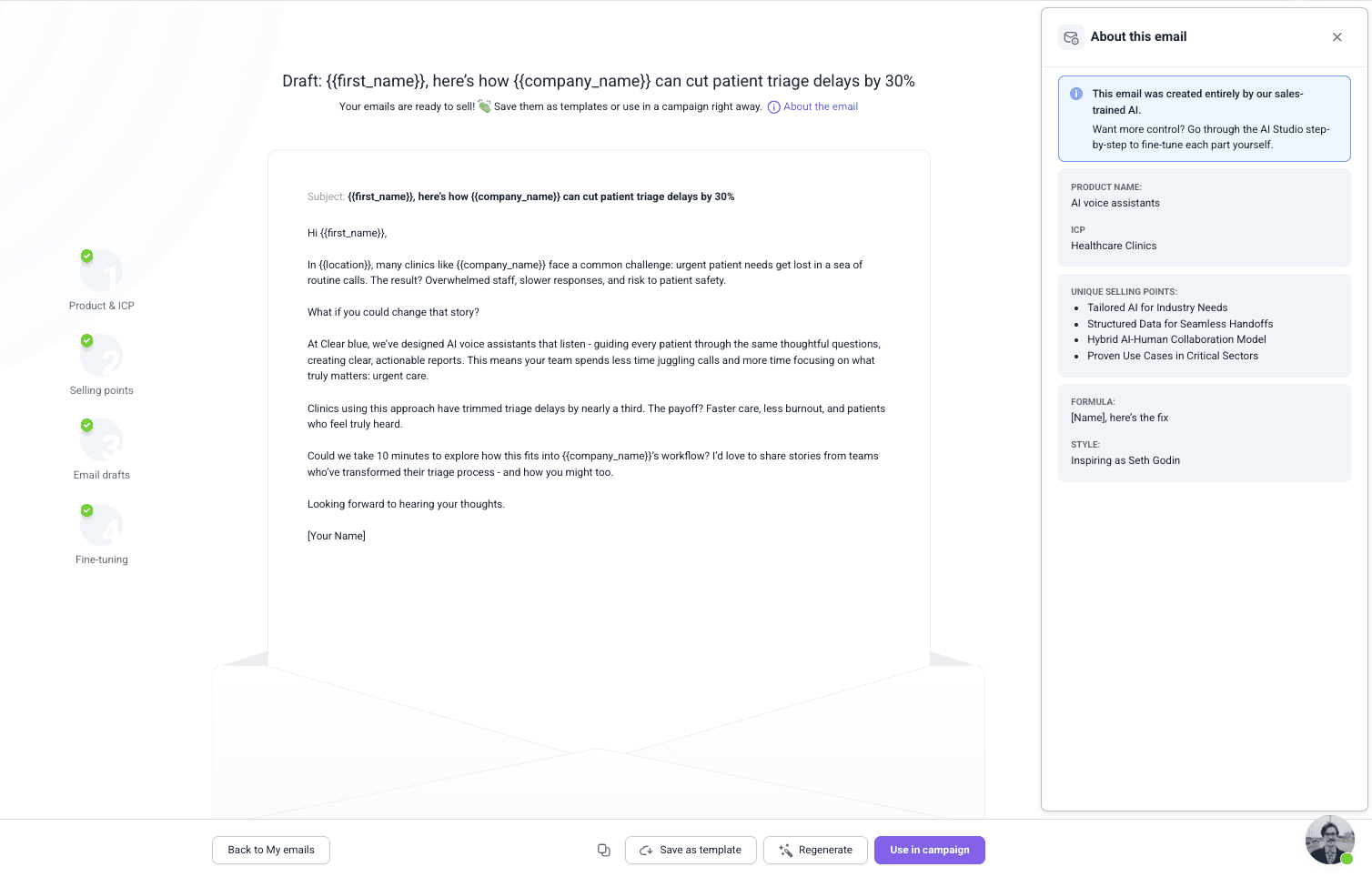
Still, you can always adjust the draft. Choose from suggested selling points or add your own, select one of the pre-defined tones of voice, or make adjustments that fit your niche – you’re in control.
🤝Intrigued? Sign up and start experimenting. We don’t charge extra for AI features: AI writing tools are included in every plan.
Outbound prospecting tools comparison: Why choose Snov.io
With so many prospecting solutions on the market, how do you select one for your business? To help you answer this question, we have compared the essential features and prices of the most popular tools in the table below.
*Pricing is subject to change. Always check the vendor’s website to discover the up-to-date pricing details.
As you can see, Snov.io offers prospecting features that cover the entire lead lifecycle at the lowest price. Other solutions, while powerful, are designed for a specific part of the sales cycle and have to be used in conjunction with other tools. Meaning, you’ll have to pay much more.
What our clients say
I love using Snov.io to optimize Salestech’s sales operations. This all-in-one lead generation platform is a perfect fit for my company. With Snov.io, we were able to generate R$100.000,00 in just four months
General Manager at Salestech

Salestech is a trading company that provides electronic security, digital security, and IT infrastructure solutions. Having a small sales team, Salestech needs to optimize sales operations to gain more customers.
The Salestech team is actively using LI Prospect Finder, prospect lists, campaigns, and CRM. The team claims these tools significantly help gather commercial intelligence and streamline sales routines.

Advanced outbound prospecting strategies for 2026
Now that we’ve covered all the basics, let’s talk about the strategies sales teams are incorporating to improve their outbound marketing further. Below, we gathered the techniques shaping outbound in 2026 and explained how you can apply them.
Intent data and buyer signal integration
Intent data shows when a company or individual is researching topics related to your solution: for example, visiting comparison sites or downloading industry guides. Buyer signals include behaviors like multiple email opens or repeat visits to your pricing page.
💡 How to gather intent data:
- Track signals on your site (repeat visits, form fills).
- Monitor your prospects’ social media.
- Utilize the Sentiment Analysis feature to get notified when a particular cold lead becomes warm.
When you draw conclusions from this data and apply them to your outreach, it becomes more timely and relevant. Instead of guessing who might be interested, you reach out when the buying window is open.
The best data comes from scraping where your ICP actually lives – places where 99% of your audience is hanging out anyway (and no, this is not always LinkedIn).
I mean:
- Marketplaces
- Niche platforms
- Industry directories
When you pull data from where your audience actually exists, you get:
- Cleaner fit by default
- And – most importantly – unique fields you can’t get anywhere else
This extra work pays off later. This additional, unique data can be anything:
- Account registration date
- Number of reviews or views
- Total earnings
- Rating or position in a ranking
- Tech stack
- Business category or niche
This gives you unlimited power for:
- Smarter segmentation
- Better prioritization
- More relevant messaging
After getting the data, during the outreach itself, I stay minimal. My basics:
- Name – always
- Specific info – almost always
- Company name – less
- Industry – rarely
The secret isn’t just having data. It’s having the right data that others overlook.
While everyone else fights for attention with generic lists and recycled info, you’re using insights they don’t even know exist.
Outbound Outreach Expert at Snov.io

Account-based prospecting with multi-threaded outreach
Instead of contacting a single lead, try to engage an entire account, mapping all decision-makers, influencers, and gatekeepers. You see, B2B deals typically involve 6-10 stakeholders. Multi-threading reduces the risk of losing momentum if one contact goes quiet.
💡 How to do it:
- Research the entire buying committee before outreach: decision-makers, influencers, end-users, gatekeepers, etc.
- Create role-specific messaging that addresses each stakeholder’s priorities. For example: ROI for finance, integration or security for IT, ease-of-use for operations.
- Reach out to multiple contacts in parallel or closely sequenced, rather than one by one.
- Track responses and engagement across the account so you understand which stakeholders are active, engaged, or silent. This helps adapt follow-ups and keep the deal moving.
The crucial thing here is for everyone on the team to communicate their steps. You don’t want to duplicate your messaging for multiple stakeholders.
→ Looking for ways for your LinkedIn account to bring more value to your business? Bridge the gap between marketing and sales objectives with our guide for account-based marketing (ABM) on LinkedIn.
Social selling and omnichannel engagement
Prospects rarely respond to just one channel. A multichannel outreach creates familiarity and credibility, making interactions feel less cold. So utilize multiple touchpoints – including LinkedIn, email, phone, and SMS – while also establishing a trusted online presence through valuable content.
💡How it may look in practice:
- Connect on LinkedIn before emailing.
- Share thought leadership posts that align with your prospect’s interests.
- Send a personalized message based on your prospect’s recent posts or activities.
- Combine email, call, and LinkedIn messages for follow-ups.
Omnichannel engagement is about being a familiar face across platforms – so you’re top of mind when the prospect is ready.
Key takeaways
Outbound prospecting in 2026 is about precision, personalization, and efficiency.
In a nutshell, an outbound sales strategy can be broken down into a few simple steps:
- Identifying ideal clients
- Building a targeted lead list
- Contacting those prospects via different outreach channels
To stand out from the crowd, you must thoroughly research your audience and tailor your messages to its different sectors. The most efficient way to do this is by using specialized prospecting tools. But instead of paying enterprise rates for a complex tech stack, consider joining Snov.io to get everything you need under one roof.